

- Translated with AI
Smothered at the source: Swiss meat producer decontaminates air and surfaces in production rooms with UVC radiation during operation
Hygiene in der Lebensmittelproduktion
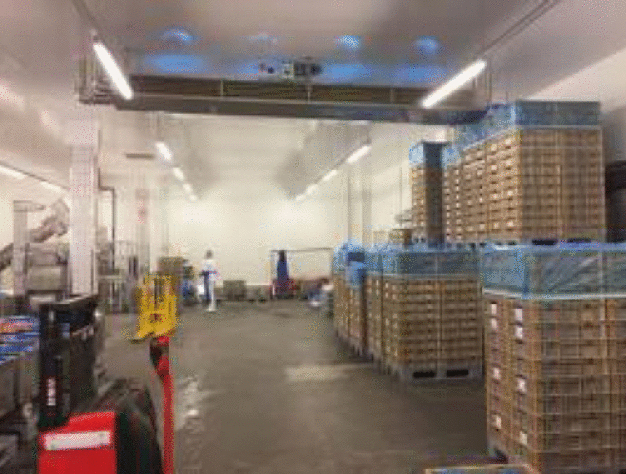
In food production, hygiene plays a major role. The fins of evaporators must also be cleaned regularly, which involves a high amount of labor and materials. (Source: sterilAir AG)
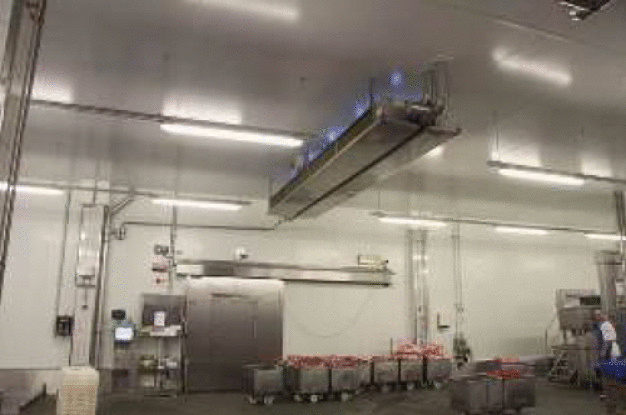
To reduce cleaning efforts and minimize future challenges, the Swiss food manufacturer Micarna SA decided to equip additional air purifiers with UVC modules. (Source: sterilAir AG)
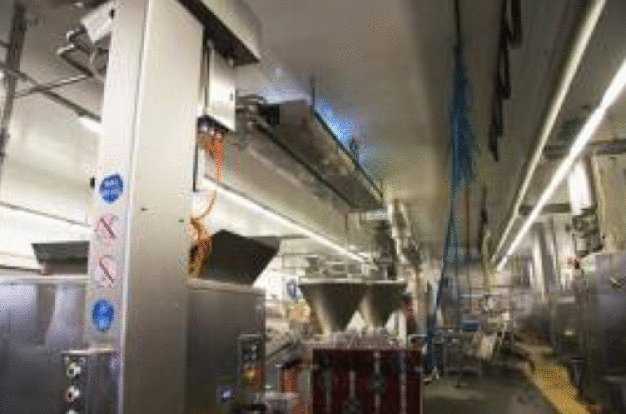
UVC disinfection devices from the E-Series of sterilAir AG are used. The Swiss company has been working successfully with Micarna for more than ten years. (Source: sterilAir AG)
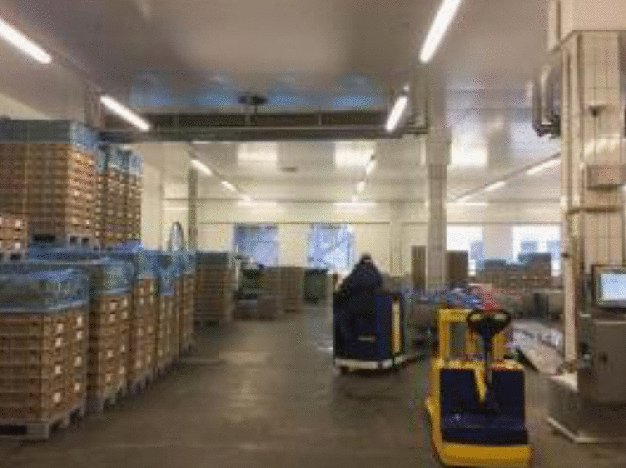
Originally, a band sterilization was planned by Micarna. However, more in-depth analyses revealed that a lamella sterilization in the overhead area of the production rooms at Micarna surpasses the effectiveness of a band sterilization. The sterilization units are installed directly in the evaporators and allow employees to stay safely even on the structures in close proximity to the units. (Source: sterilAir AG)
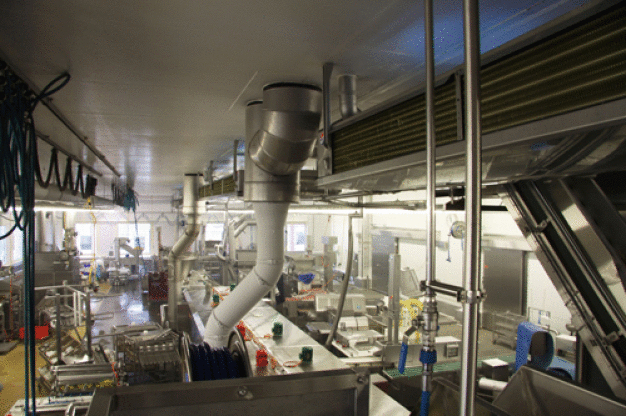
In March 2018, a total of 20 UVC modules for surface disinfection were installed. In November 2018, an expansion with eight additional units followed. (Source: sterilAir AG)
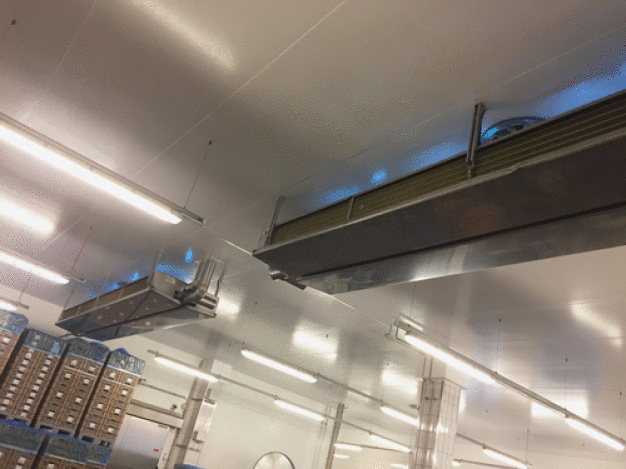
The installed sterilization devices successfully prevent the formation of biofilm on the fins. As a result, the outgoing air is not only hygienically clean, but the cleaning intervals of the air purifiers have also been extended. (Source: sterilAir AG)

"By comparing the customer's challenges with our know-how, a customized solution is developed, placing great importance on sustainability and partnership," explains Flurin Alexander-Urech, UVC expert and responsible for sales in Switzerland at sterilAir AG. (Source: sterilAir AG)
To produce flawless and health-safe products, the food industry worldwide is subject to strict hygiene regulations. At Micarna SA, one of the leading meat, poultry, and seafood producers in Switzerland, the responsible parties are constantly seeking new environmentally friendly and innovative methods to create hygienic production conditions. This includes, among other things, the manufacturing rooms themselves, where air conditioning units are installed. To prevent biofilm development on the fins, which could contaminate the air with germs, the evaporators must be regularly cleaned manually, which involves significant labor. Therefore, Micarna was looking for a way to simplify the assurance of high-quality standards and to extend the intervals between manual cleanings at the Courtepin production site. A solution is offered by sterilAir AG: The experts for UVC disinfection provide versatile modules. In this case, they reliably prevent the formation of biofilm on the fins and contamination of the room air with microorganisms. The shatterproof UVC lamps can be directly installed in the evaporator and ensure, through high disinfection performance, an extension of cleaning intervals. In this way, germs are sustainably killed without chemicals.
"Over two million consumers in Europe consume our products daily," explains Dirk Voss, head of the competence center at Micarna SA in Courtepin. "Therefore, we have a particular duty to deliver hygienically impeccable food and to ensure a clean environment during production." In the food sector, the temperature at which the goods are processed plays a crucial role. At Micarna, this is maintained constantly at 4 – 6 °C through the use of room air coolers, which are installed among other places in the production rooms on the ceiling. Additionally, both the conveyor belts and the air itself must always provide optimal and hygienic production conditions and therefore remain as free as possible from harmful germs.
A common disinfection solution is the so-called HEPA filters, which are used to capture airborne particles. However, these are often very expensive to purchase and also have high energy consumption, which leads to above-average costs over time. Since the decision-makers at Micarna were more interested in an environmentally friendly and efficient solution, in spring 2018, they initially considered installing devices for belt disinfection in the production rooms for hamburgers and fried products, which offer a better price-performance ratio than HEPA filtration. For this purpose, the company commissioned sterilAir AG, with which the food producer has been working successfully for over ten years. The Swiss experts for hygiene processes specialize in disinfection using high doses of ultraviolet radiation (UVC) and continuously develop their devices in collaboration with renowned Swiss institutes and their clients' representatives.
Surface disinfection in overhead areas as the most efficient solution
"Basically, we also offer devices for direct belt disinfection. However, in more detailed analyses, we found that lamella disinfection in the overhead area in Micarna's production rooms surpasses the effectiveness of belt disinfection," reports Flurin Alexander-Urech, sales Switzerland at sterilAir AG. "The focus was on the room air cooling systems, which distribute the air throughout the entire room, but their cooling fins are an ideal breeding ground for microorganisms. Installing UVC devices here effectively begins disinfection right at the source."
The development of biofilm on fins is not new. Therefore, the fins are cleaned regularly. This not only involves high personnel and labor costs; expensive cleaning agents are also required, and cleaning can only be performed when production is halted. "Our solution is to install the UVC lamps directly inside the evaporator housing, which essentially prevents the formation of biofilm at the source," explains Alexander-Urech. "Additionally, the outgoing air is not contaminated by bacteria or other unwanted microorganisms. For this purpose, our E-series, specifically the ET module, is suitable." The emitter is housed in a stainless steel tube with a glass fragment protection cover and equipped with a reflector, which gives the ET module a very high disinfection performance. The protective tube's one-sided opening allows the radiation cone to be precisely directed onto the surface to be disinfected. This also kills germs that require a high dose for inactivation.
More safety through patented glass fragment protection
UVC radiation disinfection offers additional advantages for Micarna: "When fins are cleaned manually, the results often vary despite strict regulations and professional execution. Ultraviolet radiation, on the other hand, provides a very consistent and reliable way to achieve uniformly high results. The measurability is essential for meeting food hygiene requirements," explains Voss. Furthermore, UVC disinfection is a purely physical process that avoids the use of chemical cleaning agents, which burden the environment. Food safety is also a major concern for Micarna. For this reason, Micarna and sterilAir opted for UVC lamps with glass fragment protection. In the event of a tube break due to manual damage, contamination of the food with glass shards is impossible, ensuring product safety at all times.
Additional installations due to excellent disinfection results
In March 2018, twenty UVC modules were installed in the evaporators. Since the results confirmed the promised high disinfection effectiveness of the UVC devices, eight more modules with two emitter units each were installed in evaporators at the end of November. Further installations of devices from the E-series are planned in other production areas at Micarna. Additionally, sterilAir supports the food company with maintenance and tube replacements. For this purpose, the specialists developed a tool that alerts Micarna after 12,000 hours of device operation when a tube change is necessary. Voss is very satisfied with the cooperation so far: "The disinfection performance and service from sterilAir convince us, which is why we have been partners for many years. More installations are planned for the future."
sterilAir AG
8570 Weinfelden
Switzerland