- Buildings & Rooms
- Translated with AI
Cooperation Concept "Cleanliness Laboratory": Eight companies work together for optimal component cleanliness
Indoor spaces for the mechanical engineering and automotive industry
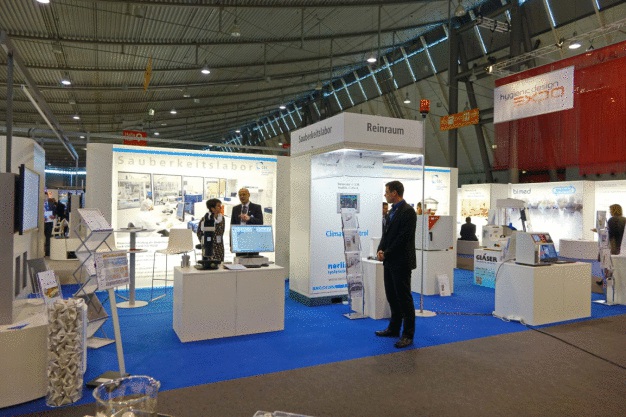
With the help of a total of eight component manufacturers for the cleanliness laboratory, a complete cleanliness laboratory including an entire process chain was presented for the first time. (Source: Nerling Systemräume GmbH)
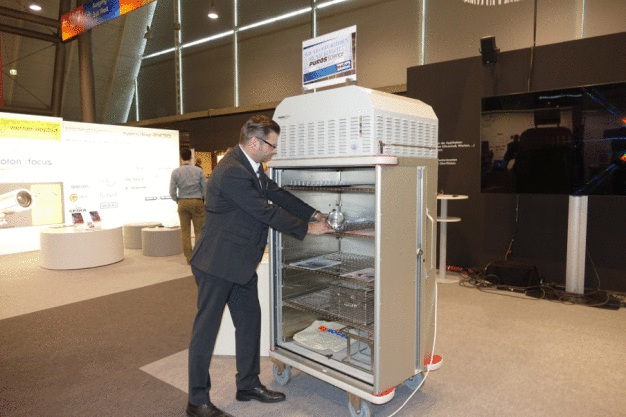
The PUROS Science lock transport cart from Kögel safely transports the parts to be tested into the cleanliness laboratory. (Source: Nerling Systemräume GmbH)
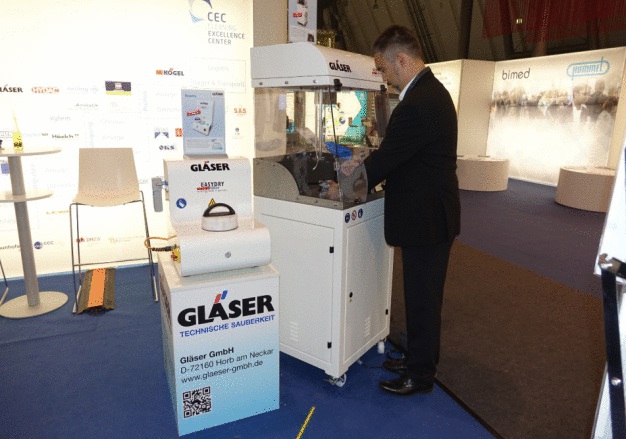
In the Glass Cabinet of Gläser GmbH, the particles are extracted from the components and then the filter membrane is dried in the Gläser EasyDry in just 7 minutes. (Source: Nerling Systemräume GmbH)
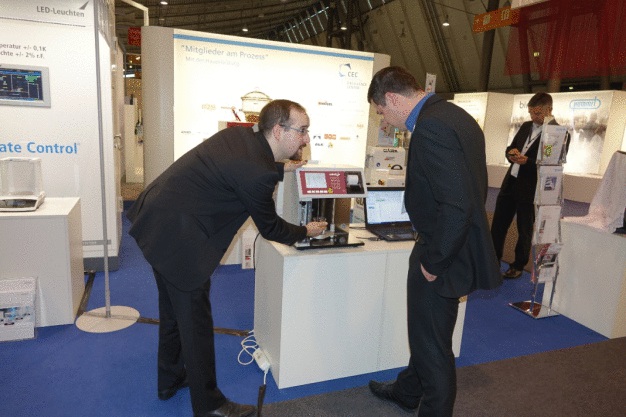
Very small particles are detected using the optical liquid-particle counter. (Source: Nerling Systemräume GmbH)
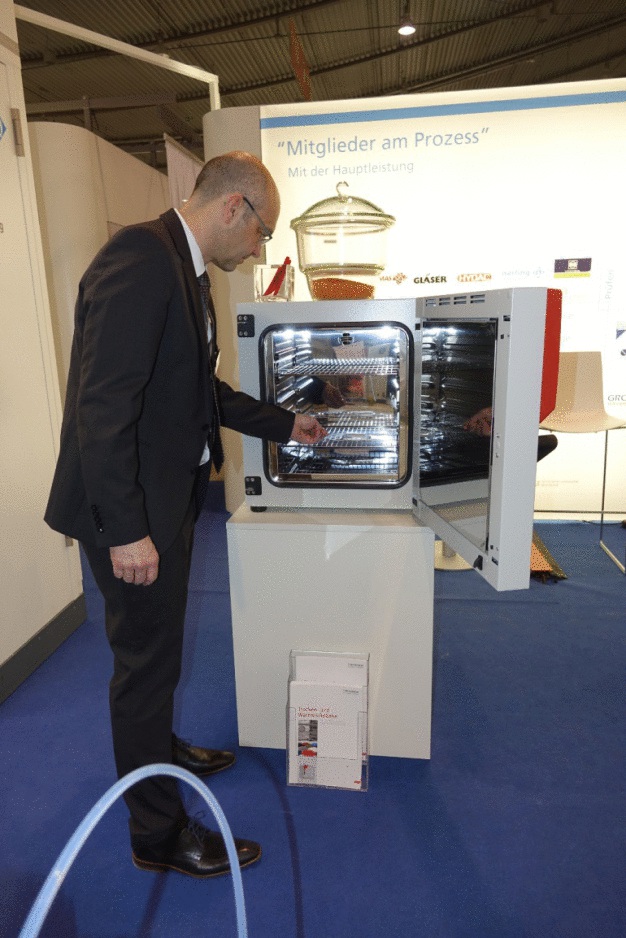
For particle sizes of 25 µm and larger, the previously used filter is dried in the drying oven of the company Binder and brought to the specified humidity in the so-called desiccator. (Source: Nerling Systemräume GmbH)
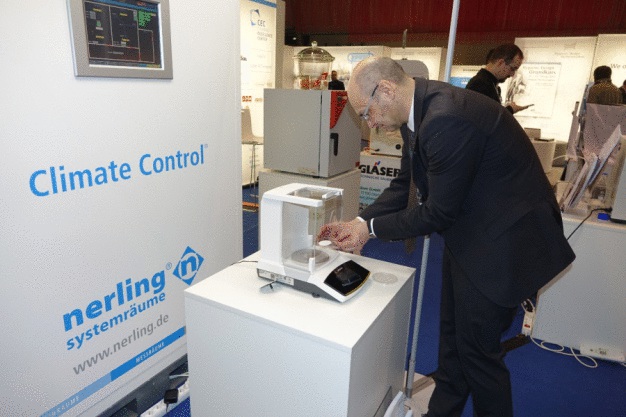
For the assessment of the particle quantity, the filter is finally weighed on a precision balance from Sartorius. (Source: Nerling Systemräume GmbH)
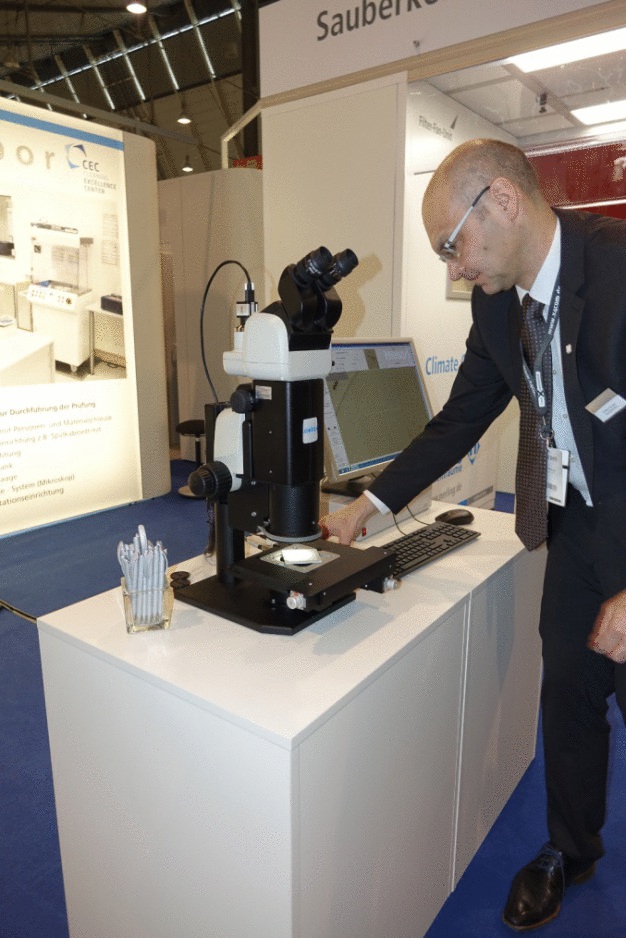
Using a microscope from Jomesa, particle type, size, and quantity are detected and automatically analyzed, followed by documentation by CleanControlling. (Source: Nerling Systemräume GmbH)
Microscopically small particles can impair the function of sensitive components and, in critical cases, bring the entire production to a halt. Therefore, clean workplaces are no longer "just" important in the food, pharmaceutical, and medical technology industries: more and more companies, for example in the automotive or mechanical engineering sectors, need to manufacture and assemble in clean environments. These processes are subject to strict guidelines, such as VDA 19 or ISO 16232. Until now, however, these industries lacked innovative ideas and customer-specific solutions for cleanrooms where the individual necessary components could be precisely coordinated and adapted to the specific conditions at the customer's site. Under the banner of the Cleaning Excellence Center, a system comprising all the components necessary for a fully functional cleanliness laboratory from a total of eight different manufacturers, including an entire process chain, was presented for the first time at this year's Lounges Fair 2017. The cleanroom ISO7 was designed by Nerling Systemräume GmbH.
Cleanrooms and sterile rooms are becoming increasingly important for industrial environments. With the guidelines VDA 19 and ISO 16232, requirements for control and compliance with technical cleanliness have been introduced for the automotive industry and mechanical engineering, which are binding for all companies in these sectors. Nevertheless, there is still considerable uncertainty about which limit values apply to which areas and where they must be adhered to. Often, there are also industry-specific differences. Component cleanliness is one of the most important quality features because it is crucial for the reliability and function of machines and production parts: it involves detecting possible contamination and quantifying harmful particles. With this know-how, employees can manufacture more efficiently while saving time and costs. Installing a cleanroom or cleanliness system helps ensure optimal component cleanliness. Its control can be carried out flexibly in terms of time. Additionally, it is equipped with the necessary devices to determine residual dirt levels.
New concept presented for the first time at Lounges 2017
When operating a cleanliness laboratory, it is important to implement it directly into the production environment. The location must be chosen so that the distances between the production steps and the cleanliness laboratory are short. This minimizes contamination and does not disrupt material flow. A customized overall solution that considers all these factors has so far only been associated with very high costs and extensive logistical planning. Furthermore, it has been difficult for manufacturers of individual cleanroom components to track what happens in the process chain before and after their own equipment is used. A comprehensive explanation of the process flow and extensive consulting for interested parties or existing customers were only possible to a limited extent. When individual devices and process steps were presented at trade fairs, visitors often lacked context because they were usually shown separately. At this year's Lounges Fair in Stuttgart, Nerling Systemräume GmbH introduced its proven concept of a technical cleanliness room as part of a complete solution for the first time: with the help of seven component manufacturers, a cleanliness laboratory including the entire process chain was designed and presented. This cleanroom concept can be individually adapted to the operational requirements of the customer and integrated into their respective premises.
Effective coordination of the integrated cleanroom components
Visitors could experience a process flow of the cleanliness laboratory at the trade fair booth under the banner of the Cleaning Excellence Center, as it would occur under real conditions: A sluice transport cart – manufactured by Kögel – first brought the parts to be tested into Nerling's cleanroom. There, particles were extracted onto a filter membrane in the ACM17 test cabinet of Gläser GmbH, which was then dried in the Gläser EasyDry in just 7 minutes. Subsequently, the cleanliness of the cleaning device was checked based on the dried membrane. For very small particles, this cleaning can alternatively be performed using the optical liquid particle counter from Pamas – this device also allows for comprehensive analysis of technical cleanliness. For particle sizes of 25 µm and above, the previously used filter was dried in a drying oven from Binder and brought to the required humidity in a so-called desiccator. Thanks to the wide temperature range from 5°C above room temperature up to 300°C, this heat cabinet is versatile. The prepared filter was finally weighed using a precision balance – manufactured by Sartorius – to determine the particle count. Using a precision microscope from Jomesa, the filter was then examined and measured in detail. During this process, particle type, size, and quantity were analyzed and recorded. Finally, the data collected during the process was evaluated using analysis procedures from CleanControlling, and a comprehensive report was generated, which visitors could review afterward. CleanControlling, with its independent accredited laboratory, is capable of covering the entire laboratory process chain as an external service laboratory if the number of parts to be analyzed does not justify a dedicated in-house lab. If the analysis results raise questions or if the particle specifications cannot be met because surface contamination exceeds the customer-set limits, CleanControlling's experienced consulting engineers can investigate the production process chain for particle sources and suggest measures to improve component cleanliness.

Nerling Systemräume GmbH
Benzstraße 54
71272 Renningen
Germany
Phone: +49 7159 16340
Fax: +49 7159 163430
email: ralf.nerling@nerling.de
Internet: http://www.nerling.de