



- Standards
- Translated with AI
Between two legal frameworks: What companies need to consider now
From the Machinery Directive to the new Machinery Ordinance
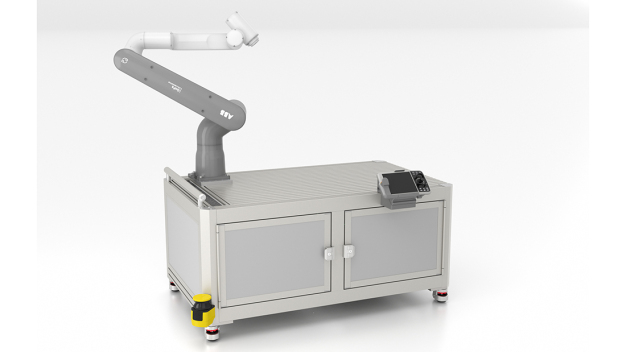
The new Machinery Regulation introduces significant changes regarding safety requirements for machine manufacturers. The focus is, among other things, on collaborative robots, which must be used as intended.
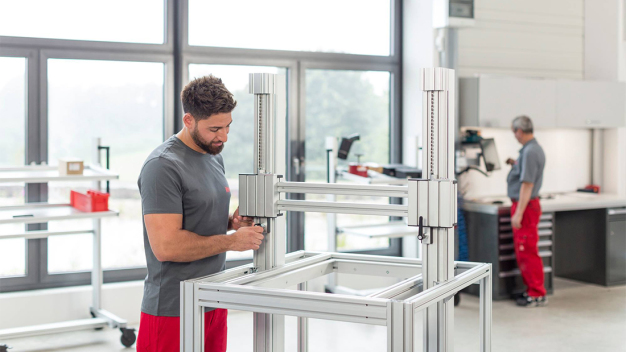
Moving parts of a machine must be designed and constructed in such a way that the risk of accidents caused by contact with these parts is prevented.
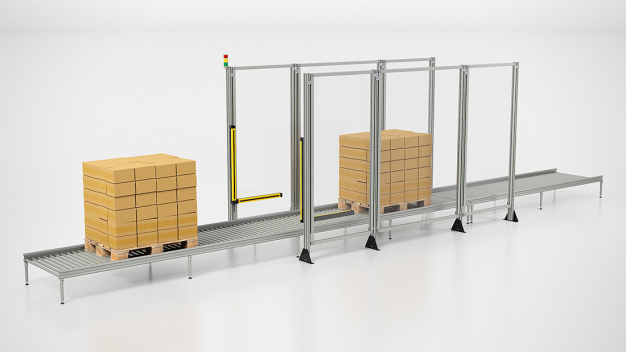
If there are risks from moving parts of a machine, these moving parts must be equipped with separating or non-separating protective devices.
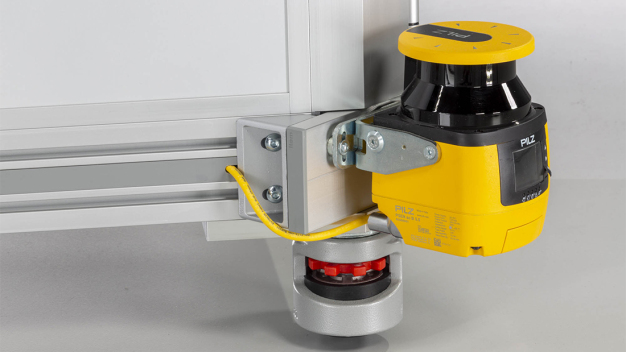
Secure areas with safety components such as laser scanners to provide enhanced protection.
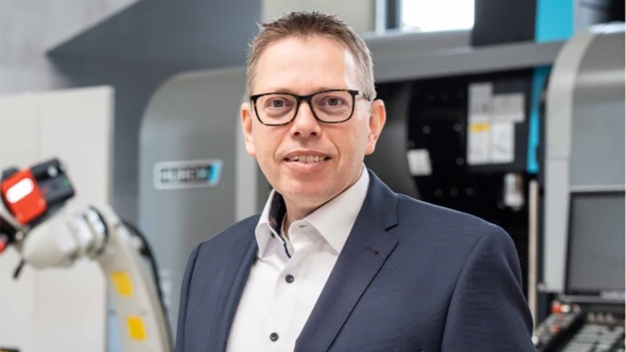
"The Machinery Regulation provides more clarity but is also associated with increased effort regarding documentation and risk assessment," says Jens Müller, Managing Director of Müller and Partner Experts and ISO/IEC 17024 certified expert for robotics and machine safety. "Companies should plan the transition early and start now." (Photo: Laura Boysen Photography)
Safe machines are the result of thoughtful design, a solid risk assessment, and clear legal requirements. Starting in 2027, a new set of regulations for machine safety will apply in Europe: the Machinery Regulation (EU) 2023/1230. The new requirements will, for the first time, address digital risks and impose higher standards for cybersecurity, software, and learning systems. Companies should already prepare for these changes now.
Currently, Europe still applies the Machinery Directive 2006/42/EC, which provides an established framework for the safety of machinery and related products. However, from January 20, 2027, it will be fully replaced by the new Machinery Regulation (EU) 2023/1230, which sets out significantly broader requirements and specifically covers digital developments, networked systems, and learning machines. For companies, this transition means not only adjusting technical documentation and safety concepts but also gaining an expanded understanding of risks that can now extend across the entire lifecycle of a machine.
Basics of the Machinery Directive 2006/42/EC
The currently valid Machinery Directive 2006/42/EC has been the central European legal framework for machine safety for many years. Its scope applies not only to traditional machines but also to incomplete machines, interchangeable equipment, safety components, as well as load-handling attachments, chains, ropes, lifting belts, and drive shafts. This means the directive regulates a broad range of safety-related products. In Germany, its implementation is carried out through the 9th Regulation to the Product Safety Act. Norms play a crucial role in practical application. The Machinery Directive provides a clear structure: A‑standards describe fundamental concepts and general design principles, B‑standards address safety-related components and protective devices, and C‑standards define specific requirements for particular types of machinery. This standards structure helps manufacturers systematically implement requirements and demonstrate compliance with the state of the art.
Transition phase until 2027: ensuring a legally compliant shift
The transition from the Machinery Directive to the new Machinery Regulation presents many companies with organizational and technical challenges. Until January 19, 2027, machinery will continue to be placed on the market according to the Machinery Directive 2006/42/EC. From January 20, 2027, only the new Machinery Regulation (EU) 2023/1230 must be applied. For manufacturers, this means a phase during which both regulatory frameworks will operate in parallel—especially relevant for ongoing product development or serial production. Since many machinery manufacturers cannot precisely predict whether a particular machine will be placed on the market before or after the deadline, the EU Commission has devised a pragmatic solution: the combined EC/EU declaration of conformity. This allows a single declaration to be issued, confirming compliance with both the Machinery Directive and, if all requirements are met, with the Machinery Regulation. The transition period offers companies the opportunity to adapt early to new requirements such as digital operating instructions, expanded risk assessments, or cybersecurity standards. At the same time, manufacturers can already check whether their products fall under new risk categories according to Annex I and update their conformity assessment procedures accordingly.
Importance of the conformity assessment procedure
The conformity assessment procedure is the primary proof that a machine has been designed safely and meets all legal requirements. It is a multi-stage process that begins during the design phase and considers the entire lifecycle of a machine. The resulting technical documentation often spans several hundred pages. Only a small part of this is later provided to the operator—for example, the operating manual, the EC/EU declaration of conformity, and additional safety information, such as for incomplete machines. The majority of the documentation remains with the manufacturer as an internal record, for instance, in case of damage or to support market surveillance authorities. A particular challenge is that not only the intended use but also "reasonably foreseeable misuse" must be considered. This includes deliberately risky behaviors such as climbing over low safety fences or tampering with safety devices using tools. Standards like ISO 13857 define minimum distances, heights, and design measures to effectively secure hazard zones even in cases of misuse. The organizational effort involved in the conformity assessment process should not be underestimated. Besides technical expertise and normative knowledge, careful documentation is required to clearly record all steps of risk assessment and risk mitigation. Especially in light of the expanded requirements of the new Machinery Regulation, it will be sensible for many companies to handle these tasks within interdisciplinary teams or involve specialized service providers. “Although the core content of the conformity assessment remains unchanged, the transition to the new structure of the MVO results in significant administrative effort,” says Jens Müller, CMSE® Managing Director of Müller and Partner, expert certified according to ISO/IEC 17024 in robotics and machine safety. “Part numbers, section references, and annexes have been completely reorganized. Therefore, technical documentation, declarations of conformity, and internal processes must be adjusted—even for existing products.”
What changes with the new Machinery Regulation
The new Machinery Regulation (EU) 2023/1230 clarifies two central aspects for the first time: the concept of "significant change" and an expanded risk concept that explicitly considers modern technologies. The previous Machinery Directive did not define "significant change," so national interpretations—such as the BMAS interpretation paper—had to be used. The Machinery Regulation now establishes a uniform European basis: a change is considered significant if it is not intended by the manufacturer and causes new or increased risks. In such cases, the machine must be treated as a new product, and a complete conformity assessment must be carried out again. At the same time, the regulation introduces a broader view of risks. For machines with autonomous, learning, or evolving functions—such as AI-supported controls—risks after market release must also be considered. Additionally, new types of hazards in human-machine interaction and shared workplaces, which are not covered by DIN EN ISO 12100, will emerge. Manufacturers will need to assess more proactively how a machine may change during operation and what impact this could have on human collaboration. The Machinery Regulation thus provides more clarity but also raises the standards for design, documentation, and risk assessment—especially for modern, software-controlled systems. With proper planning, safety requirements can be implemented in a compliant, modular, and understandable manner. “Companies should start planning the transition early and thoroughly review their processes,” emphasizes Jens Müller. “This ensures the efficient implementation of the new Machinery Regulation. Specialized service providers can support this process optimally.”
The content of this article is based on the white paper “Fundamentals of Machine Safety,” developed with the participation of Jens Müller, ISO/IEC 17024 certified expert in robotics and machine safety. For more information, including concrete examples of designing applications safely with item, see the full white paper: Fundamentals of Machine Safety.
item Industrietechnik GmbH
42699 Solingen
Germany