

- Translated with AI
Workpiece logistics: In a few steps to the right storage vehicle
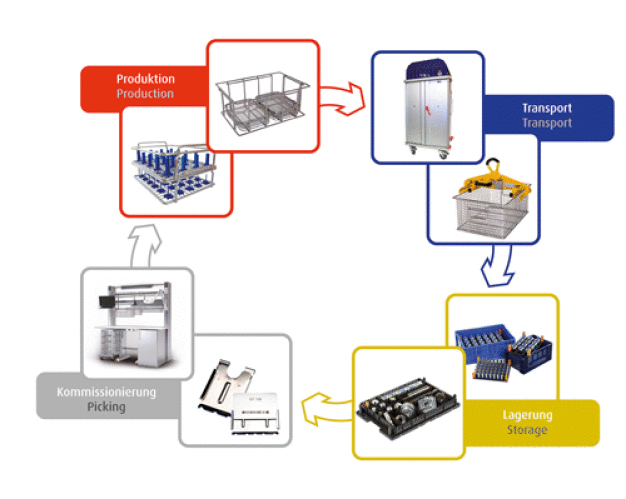
Example product solutions from Kögel for the entire component logistics.
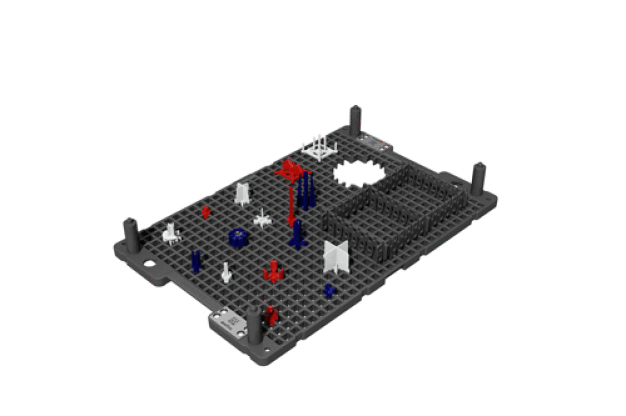
Plastic goods carrier system "TechTray" equipped with exemplary pins as well as an exemplary, component-specific cutout.
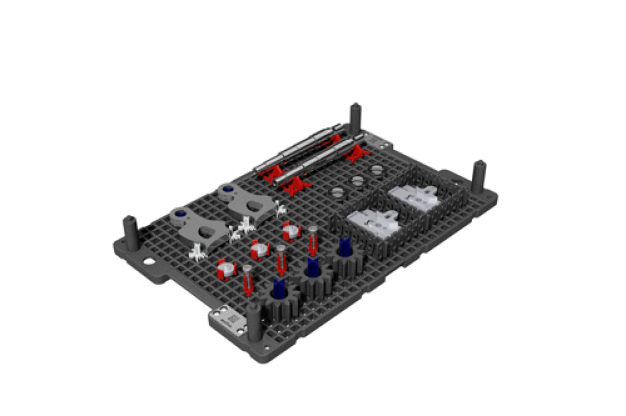
Plastic goods carrier system "TechTray" equipped with exemplary reference components.
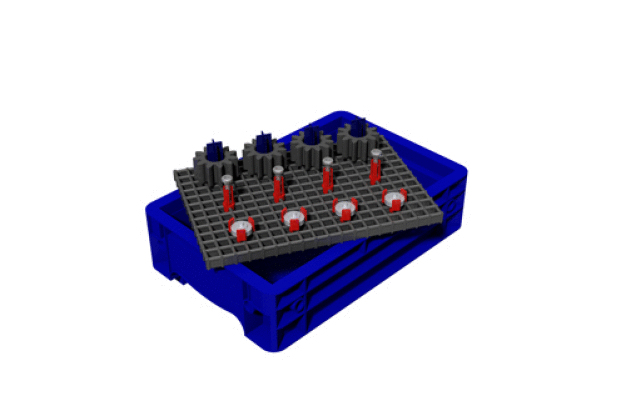
Plastic container system "TechTray" as an inlay, adapted to standard plastic boxes.
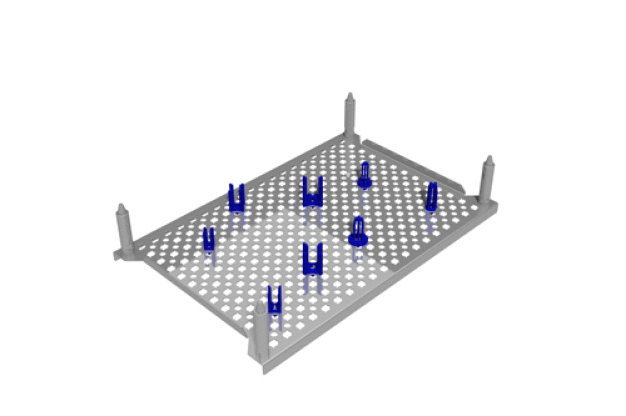
Blechware rack "TechVarioSpin" equipped with exemplary pins.
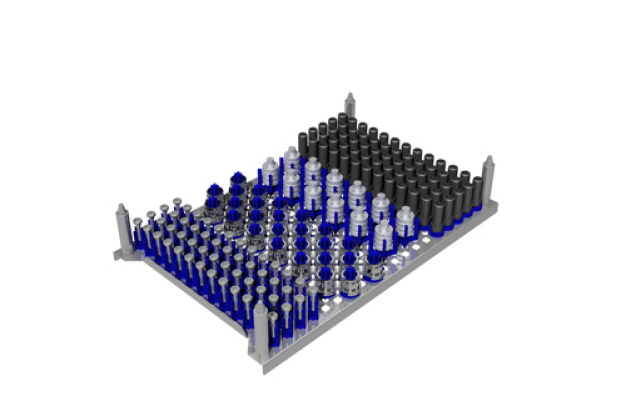
Blechware rack "TechVarioSpin" equipped with exemplary reference components.
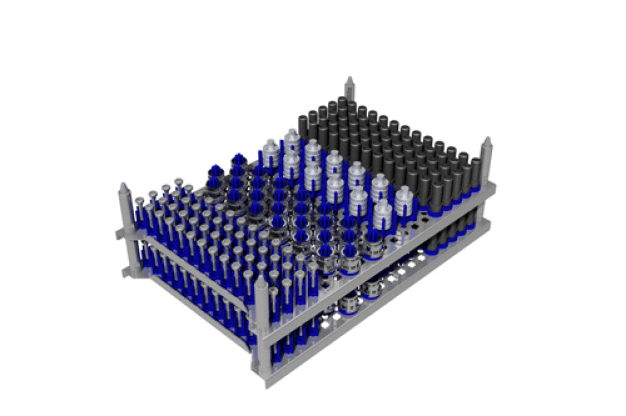
Stacked sheet metal racks "TechVarioSpin" equipped with exemplary reference components.
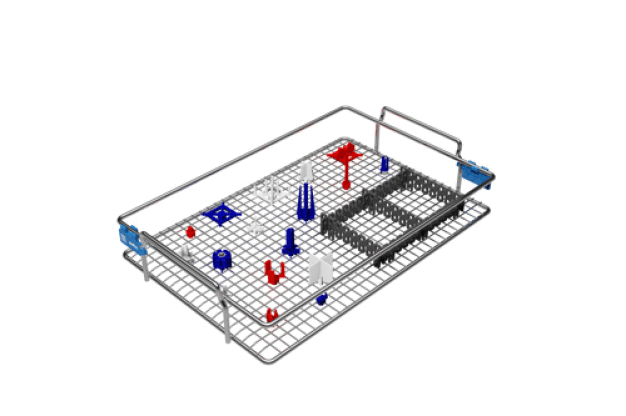
Wire door holder "GWT" equipped with exemplary pins as well as longitudinal and transverse parts made of plastic.
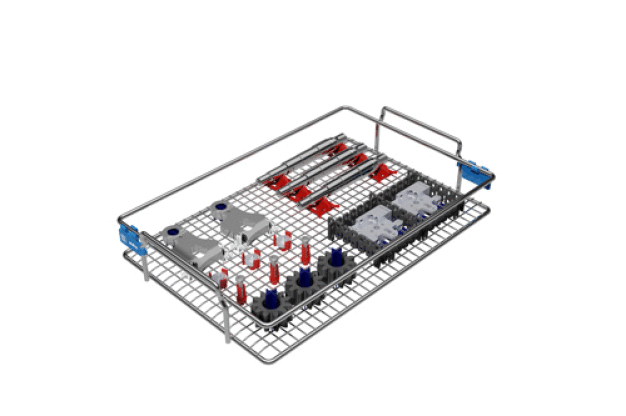
Wire door rack "GWT" covered with exemplary reference components.
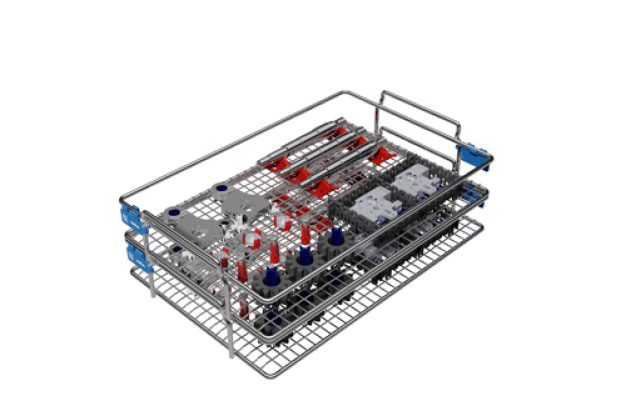
Stacked wire rack "GWT" covered with exemplary reference components.
Goods carriers in industrial component cleaning and workpiece logistics must always meet higher requirements. The variety of existing solutions presents users with a major challenge when selecting the right goods carrier. This technical article provides an overview of the products available on the market as well as important recommendations for optimal goods carrier selection.
The cleanliness standards required from an industrial perspective for components can usually only be achieved if the parts are "floating freely in the room" during cleaning, so that they are surrounded on all sides by the cleaning medium and unwanted contaminants can be removed from all surfaces. Since this is physically hardly possible, the contact surfaces used to fix the components within the selected goods carrier should be designed as small as possible.
In the past, almost exclusively component-specific goods carriers made of wire and sheet metal were produced for this purpose, which were coated or fitted with plastic overlays. However, these solutions often involve high development effort, long project durations, high overall costs, and low flexibility. Therefore, standardized goods carriers have been increasingly adopted over the past few years. These typically use plastic plug-in systems to secure the components, allowing different component geometries to be held securely. The modular systems offer a wide range of different holding contours. They are quickly available, cost-effective to implement, and reusable multiple times. Users can easily replace wear parts and adapt the goods carriers flexibly to changing components.
Ideal case: One system for all processes
The challenge for users is to determine the optimal overall system for each component and their own workpiece logistics from the multitude of solutions available on the market. Ideally, the goods carrier system can be used throughout the entire internal and external logistics chain – from cleaning, transport, and storage to commissioning and assembly. Time-consuming and costly re-packing and handling should be minimized or eliminated.
Several guiding principles are decisive for determining the optimal goods carrier system: Which component sizes and weights should be transported, stored, and cleaned at what loading density? What throughput of parts is required? How many parts need to be processed within a specific time? What external dimensions of the goods carriers and what batch weights must be maintained? Which production steps are to be performed using the goods carrier system? Is automation or robot handling necessary? What coding or markings are needed for clear batch identification? What cleanliness requirements are imposed on the component in each process step? Which cleaning and drying procedures and media are used? What ergonomic requirements are placed on the goods carrier? Are existing goods carriers used that need to be made compatible? And finally: What budget is available?
Once these initial questions are answered, it becomes possible to better narrow down the right goods carrier system, ensuring technical cleanliness and optimal workpiece logistics from process and economic perspectives. Basically, three different goods carrier systems made of sheet metal, wire, or plastic are available on the market.
TechTray: Lightweight, flexible, gentle on parts
The TechTray goods carrier system is made entirely of plastic. Its temperature resistance is approximately 80-120 degrees Celsius, depending on the specific application conditions. It is available in dimensions up to 600 x 400 millimeters. The weight of the goods carriers is around 0.8 kilograms, depending on size, which is significantly lighter than comparable metal goods carriers. This offers important ergonomic advantages.
With snap-on longitudinal and transverse dividers, various compartments can be formed very quickly and flexibly. For optimal surface and scratch protection, costly coatings or Teflon linings are not necessary. Furthermore, TechTray can be easily adapted to customer-specific dimensions. Different types of plastics with various properties are available, enabling, for example, inserts in the electronics sector. Additionally, partial recesses can be realized to accommodate various geometries, which is a significant advantage compared to other systems.
However, plastic workpiece carriers do not only offer advantages: Compared to stainless steel, they are less resistant to extreme temperatures and solvents. Improper use also carries the risk of plastic abrasion, which can lead to re-contamination of the parts.
TechVarioSpin: Resistant to heat and chemicals
With the TechVarioSpin system, Kögel also offers stainless steel sheet goods carriers with stamped or laser-cut contours. The temperature resistance of the sheets exceeds 200 degrees Celsius, and the pins can withstand around 100 degrees Celsius in continuous operation. There are no restrictions regarding dimensions. The weight of the goods carrier is approximately 1.1 kilograms with dimensions of 425 x 276 millimeters. TechVarioSpin allows very high flexibility in terms of goods carrier size and hole pattern. Very tight tolerance ranges are possible – particularly advantageous in automation, such as robot loading. The hole spacing for plastic pins can be infinitely adjusted to the component geometry and required loading density. Additionally, there is almost no material abrasion of the goods carrier, as stainless steel is highly resistant to high temperatures and all cleaning media. Users benefit from the lotus effect of the electrolytically polished surfaces. The use of plastic pins allows for sorted disposal.
However, this system generally has a larger proportion of enclosed goods carrier surfaces compared to wire carriers or the TechTray system. Compartment formation using longitudinal and transverse dividers is not possible. The flat sheet surface can also lead to a pooling effect, which may result in residual moisture accumulation. To prevent scratches or impact marks, additional surface protection such as coatings, Teflon sleeves, edge protectors, rotary or plug-in pins are necessary. Coated solutions also complicate disposal and may lead to undercutting or detachment of coating particles.
The Kögel basic workpiece carrier: Optimal cleaning effect
The Kögel basic workpiece carrier is made of stainless steel wire. It has the same temperature resistance as the TechVarioSpin. Standard maximum dimensions are 634 x 437 millimeters (special sizes available upon request). The weight of the goods carrier is about 1.1 kilograms with dimensions of 426 x 274 millimeters. This system experiences almost no material abrasion. The round wire surface allows for optimal drainage and easy runoff of cleaning media. The material is resistant to high temperatures and cleaning agents. Forming compartments with snap-on plastic longitudinal and transverse dividers is easily possible. The electrolytically polished surfaces achieve a lotus effect, and the use of plastic pins allows for sorted disposal.
To prevent scratches or impact marks, an additional surface protection such as coatings, Teflon sleeves, edge protectors, rotary or plug-in pins is necessary for the Kögel basic workpiece carrier. Coated solutions lead to more difficult disposal and may cause undercutting or detachment of coating particles.
For the final selection of the suitable goods carrier, early involvement of the intended goods carrier manufacturer is recommended. Only in this way can all three systems be tested, and independent, cross-variant consulting and free testing along the entire manufacturing and logistics process chain can be carried out. Only through intensive testing, competent consulting, and close coordination between logistics, possibly automation technology, cleaning equipment manufacturers, chemical suppliers, and goods carrier producers can costly and error-prone implementation processes be avoided, the required purity results achieved, and the entire process chain optimized.
Kögel GmbH
75038 Obererdingen
Germany