- Buildings & Rooms
- Translated with AI
When everything fits together: Cleanroom complete solutions reduce contamination risk and susceptibility to malfunctions
Competence network presents demo system including process chain for quality analysis
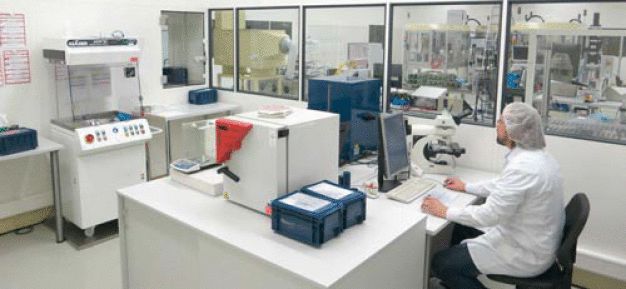
If the manufacturer opts for an in-house laboratory, it is advisable to directly implement the corresponding process steps into the production line. (Source: Nerling Systemräume GmbH)
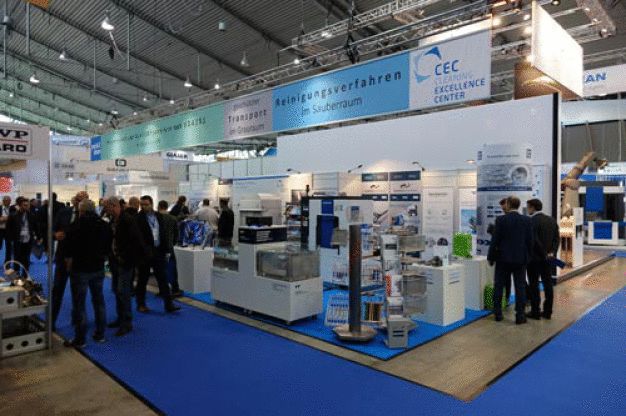
What a such implementation can look like is exemplified by the Cleaning Excellence Center using a demo setup at this year's parts2clean in Stuttgart. (Source: Nerling Systemräume GmbH)
Small Cause – Large Effect: Even microscopic foreign particles can significantly impact the functionality of sensitive components. Especially in industries such as automotive, machinery, or micromechanics, where ever-smaller components are required, component cleanliness is becoming increasingly important. To comply with the maximum permissible particle counts specified by VDA 19 or ISO 16232, companies must therefore incorporate appropriate measures into their manufacturing processes. This includes key processing steps such as deburring and cleaning, as well as logistics and packaging. However, despite strict guidelines, customer-specific cleanroom complete solutions are still rare. For this reason, the Cleaning Excellence Center (CEC) is presenting a demo system at this year's parts2clean, which includes a fully coordinated process chain from deburring to quality analysis. Interested visitors can learn about important factors influencing the selection of cleaning methods, the necessary process chemistry, and the individual stations during guided tours.
For the automotive industry, machinery, and micromechanics, component cleanliness is an important quality criterion because it determines the reliability and function of machines and production parts. The specifications according to VDA 19 and ISO 16232, as well as manufacturer-specific standards, therefore set maximum residual dirt limits for producers and suppliers. Compliance with these guidelines must be continuously demonstrated: “It's about detecting possible contamination and quantifying potentially harmful particles,” explains Ralf Nerling, General Authorized Signatory of the Nerling Group and Chairman of the CEC.
Proof through internal or external laboratories
Even seemingly minor everyday phenomena such as hair, skin flakes, and pollen pose a serious problem: if they settle on electrical contacts, for example, this can lead to severe functional disruptions. For this reason, the installation of a cleanroom system and regular checks of room conditions and products are usually mandatory. “A corresponding residual dirt analysis can either be commissioned to accredited laboratories by the component manufacturers or carried out in an in-house laboratory,” says Nerling. However, if the manufacturer opts for an in-house lab, it is advisable to directly integrate the relevant process steps into the production line. For example, if components have to travel long distances between processing stations, the risk of contamination or disruption of material flow increases.
How such an implementation might look is demonstrated by the Cleaning Excellence Center through an example demo system at this year's parts2clean in Stuttgart. The booth provides a comprehensive overview of the entire process chain for component cleanliness. During guided tours starting at the CEC booth, visitors are explained the individual stations and interconnections. “The tour begins at a clear MindMap tableau that shows the entire logic of component cleaning and the influencing factors to consider,” explains the chairman. This includes all key process steps – deburring, cleaning, logistics including packaging and transport, and cleanliness testing.
The Component as the Starting Point
Next, visitors are guided to a station with components made from various materials, differing in complexity and level of contamination. After selecting the components that most closely resemble those produced in their own operations, a suitable cleaning process is determined using a systematic approach. This process includes not only the appropriate process chemistry but also the corresponding provider from the pool of participating companies within the competence network.
Subsequently, the logistics section presents the requirements for guideline-compliant packaging and demonstrates the handling necessary to maintain component cleanliness. In the transition zone to the cleanliness laboratory, the focus is on the gowning procedure, including cleanroom-compatible clothing. Additionally, a quick-access door demonstrates the operation of a material lock suitable for cleanliness production. Finally, visitors receive an introduction to the equipment required for cleanliness analysis, such as rinse cabinets and filter scales. Naturally, representatives from the more than twenty participating companies are available at any time for further questions.

Nerling Systemräume GmbH
Benzstraße 54
71272 Renningen
Germany
Phone: +49 7159 16340
Fax: +49 7159 163430
email: ralf.nerling@nerling.de
Internet: http://www.nerling.de