

- Buildings & Rooms
- Translated with AI
Weakness in logistics: Optimal technical cleanliness up to final assembly is only possible with the inclusion of transportation, storage, and unpacking
Reduce the contamination risk of sensitive components
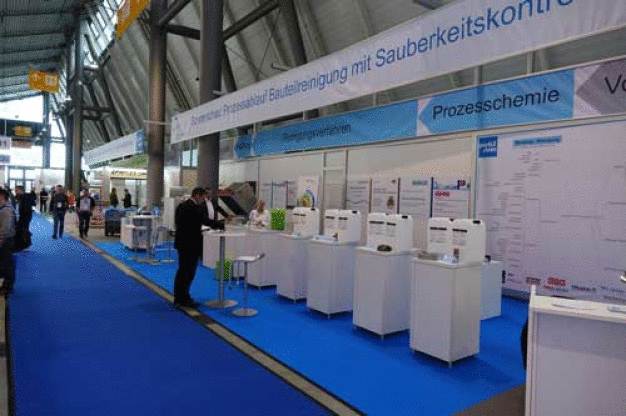
How the implementation of a cleanroom system can look was exemplified by the CEC using a demo plant at parts2clean 2018 in Stuttgart. (Source: Nerling Systemräume GmbH)
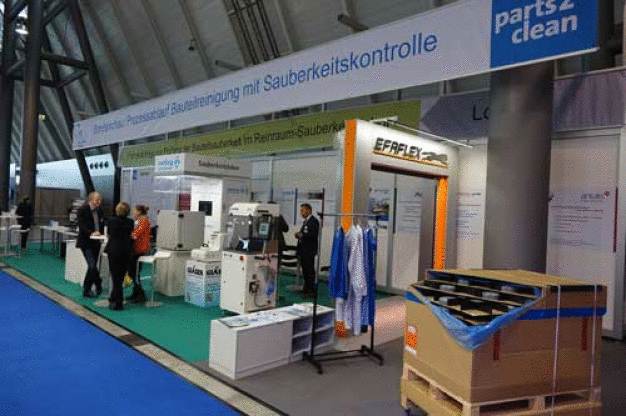
The stand network provided a complete overview of the entire process chain of component cleanliness, including quality assurance. (Source: Nerling Systemräume GmbH)
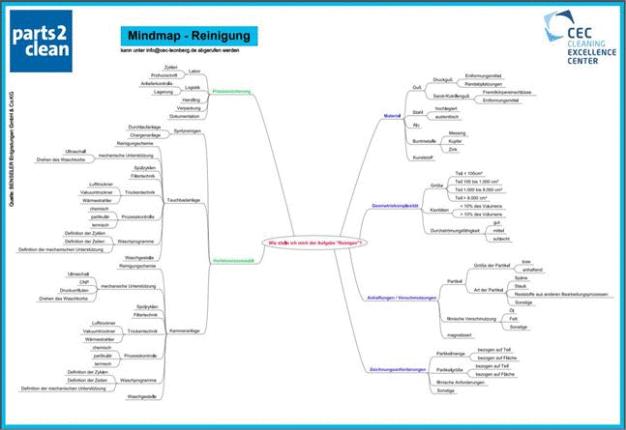
At the booth, two specially designed mind map displays on the topics "Cleaning" and "Inspection" were presented. They show the entire logic of component cleaning and inspection, as well as the influencing factors to consider. They are available for download on the CEC homepage. (Source: Nerling Systemräume GmbH)
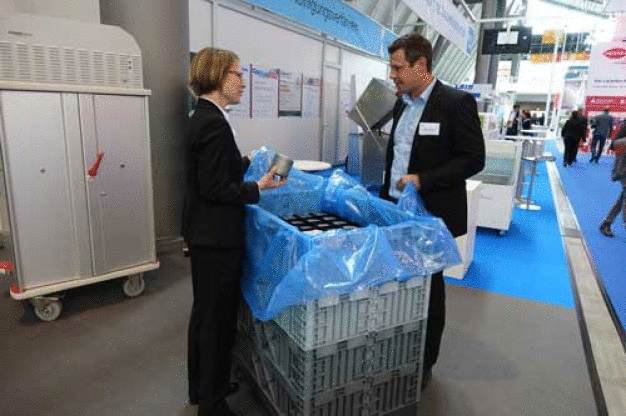
Critical point in unpacking: A weakness in the cleanliness chain emerged in the logistics sector – that is, the segment between the end of the cleaning process and the subsequent use of the component. (Source: Nerling Systemräume GmbH)
Microscopically small particles can significantly impair the functionality of sensitive components. In industries such as automotive, mechanical engineering, or micromechanics, where ever-smaller components are required, technical cleanliness is therefore becoming increasingly important. To ensure that the maximum permissible particle counts according to VDA 19 or ISO 16232 are not exceeded, companies must incorporate measures to ensure component cleanliness into their processes. This concerns not only critical manufacturing and assembly steps but also logistics and packaging areas. However, despite strict guidelines, customer-specific cleanroom turnkey solutions with precisely coordinated components and process steps are still very rare. An example of how such a system can be structured was demonstrated by the Cleaning Excellence Center (CEC) at parts2clean 2018: The competence network presented a demo system that included an aligned process chain from deburring to quality analysis. During intensive technical discussions, it became clear that currently, the steps of transportation, storage, and unpacking are particularly weak points in the cleanliness chain.
In many industrial sectors—including automotive, mechanical engineering, and micromechanics—component cleanliness is an important quality feature that is crucial for the reliability and function of machines and production parts. To minimize the risk of impairments, guidelines VDA 19 and ISO 16232, as well as manufacturer-specific standards, set maximum residual dirt limits for all relevant processes and components. Compliance with these requirements must be continuously demonstrated: "It's about detecting possible contamination and quantifying potentially harmful particles," explains Ralf Nerling, General Authorized Signatory of the Nerling Group and Chairman of the CEC. "For this reason, the installation of a cleanroom system and regular checks of room conditions and products are usually necessary."
Progress in implementing technical cleanliness
How the implementation of such a solution can look was exemplified by the CEC using a demo system at parts2clean 2018 in Stuttgart. The booth provided a comprehensive overview of the entire process chain of component cleanliness, including quality assurance. "The process status was divided into three sectors," says Nerling. "The first involved deburring and cleaning, including process chemicals; the second covered logistics, i.e., transportation and storage, including the sluice systems to the cleanliness laboratory." The final section involved testing the component cleanliness, including the associated facilities in the ISO7 cleanroom, such as systems for particle extraction, filter drying, and gravimetry. Guided tours explained the individual stations and their interconnections. Additionally, two specially designed MindMap boards on the topics "Cleaning" and "Testing" were discussed: "They show the entire logic of component cleaning or testing and the influencing factors to consider, and they received particular interest from visitors," the chairman explains.
Furthermore, in intensive discussions between visitors and exhibitors, it became clear that many companies are now very successful in handling the areas of deburring, cleaning, and testing. "From our perspective, this is a very positive development. However, a weak point in the cleanliness chain was identified in the logistics sector, i.e., the stretch between the end of the cleaning process and the further use of the component," says Nerling. "It appears that companies currently invest a lot of effort in cleaning and packaging, but this is largely negated by improper handling during transportation, storage, and unpacking." Companies face the challenge that these processes are often carried out by external service providers whose employees lack the necessary knowledge or training. The CEC therefore considers it sensible to educate all personnel involved in the entire cleanliness chain—from cleaning to final assembly—about the impact particles can have on the functionality of end products and how to prevent contamination. "Unfortunately, the necessary training is often viewed only as a cost factor, and the potential return on investment is assessed too conservatively," emphasizes Nerling.
Challenges for the future
Overall, the CEC identifies the following key tasks for companies to make the entire process from deburring to final assembly economically viable with regard to technical cleanliness:
1. The requirements for component cleanliness should be maintained at an economically justifiable level. Ideally, components and products requiring cleanliness levels up to the mid-range (200–400 µm) should be used, while the fine and more costly range up to a particle size of 200 µm should be avoided.
2. Production areas where increased cleanliness is relevant should be restricted for normal traffic to prevent unnecessary stirring up of dirt particles.
3. Draughts caused by open windows and doors should be avoided; possibly, access airlocks should be used.
4. Personnel should be equipped with clothing appropriate to the cleanliness requirements of the respective area.
5. Regular training of all personnel involved in the "clean production process" up to final assembly is recommended.

Nerling Systemräume GmbH
Benzstraße 54
71272 Renningen
Germany
Phone: +49 7159 16340
Fax: +49 7159 163430
email: ralf.nerling@nerling.de
Internet: http://www.nerling.de