

- Overall
- Translated with AI
Washing, ironing, folding? That was then!
Cleanroom clothing – old hat or a space for innovations?
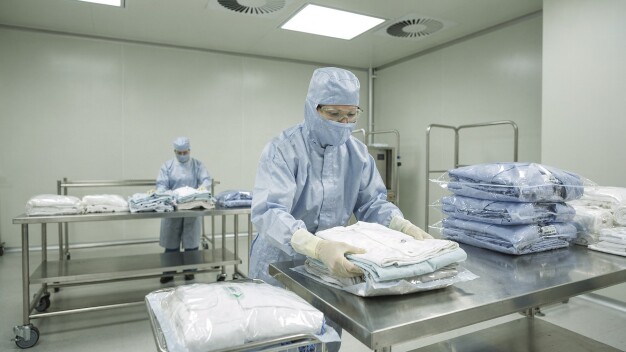
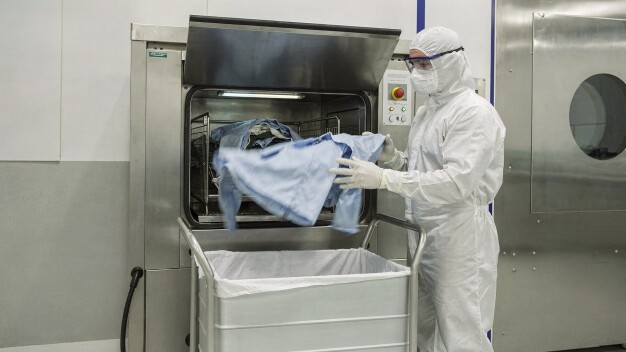


Cleanroom clothing is an essential component in the operation of cleanrooms, especially in the GMP environment. Those operating cleanrooms need suitable apparel for their staff – and not just since yesterday or since the new Annex 1 came into effect. But is cleanroom clothing therefore an "old hat"? Or is there still potential for improvements and innovations – for example, in the materials used, such as by incorporating recycled materials, in the design to facilitate the donning process, or in other areas?
Functionality and System Approach
Unlike personal protective equipment (PPE), cleanroom clothing primarily protects the product and process from contamination by humans and their personal clothing.
It should be viewed as a complete system. In addition to coveralls, coats, and hoods, factors such as undergarments, gloves, shoes, masks, the materials used, environmental conditions, wearing behavior, training, as well as cleaning and reprocessing influence the protective effect.
Cleanroom clothing acts like a filter and must therefore be properly maintained, monitored, and replaced if necessary.
Contamination Source: Human
Humans are a significant source of particles and microbes. Movement significantly increases their release. Studies in so-called body boxes have shown that a cotton jogging suit releases considerably more particles than cleanroom clothing made from synthetic fibers. Wearing a coverall can further significantly reduce emissions.
Appropriate undergarments also help reduce the release of particles and microbes. Therefore, they are an important, yet often underestimated, part of the overall system.
Requirements and Criteria for Textiles
The ISO cleanroom class alone is not sufficient to determine the requirements for clothing. Critical factors include, among others, the product group, the process, critical quality attributes, site-specific specifications, and requirements for personnel and occupational safety.
For example, the following should be evaluated:
– Particle filtration,
– Microbial impermeability in moist conditions,
– Migration,
– Abrasion and pilling tendency,
– Electrostatic properties,
– Wear comfort,
– Decontaminability, and
– Sterilizability.
Also to be considered are so-called pump effects, which can occur with particularly dense fabrics and may increase the risk of contamination.
Cleaning, Decontamination, and Aging Monitoring
Conventional washing is not equivalent to professional cleanroom decontamination. Defined procedures are required – from incoming inspection and sorting, pre-treatment, washing, and disinfection processes to drying, folding, and packaging under controlled conditions.
A suitable water quality and filtered air play an important role here. Procedures such as ASTM F51 or the Helmke drum test determine residual contamination but alone do not provide a final assessment of the protective performance of the finished clothing system.
Washing, wearing, mechanical stresses, and sterilization lead to aging of the clothing. Therefore, the replacement frequency must be determined based on qualification, testing, and risk assessment. Annex 1 requires replacement in case of damage or at a qualified interval, also considering damages that are not visually detectable.
A monitoring system or delegation of reprocessing to a laundry does not replace this assessment.
Costs and Sustainability: Disposable or Reusable Clothing
Disposable clothing can provide consistent performance and high impermeability. However, it is not inherently superior in terms of particle or microbial retention. Meaningful comparisons require identical testing conditions, experienced operators, a sufficient number of repetitions, and stable environmental conditions.
Furthermore, factors such as comfort, PPE requirements, logistics, costs, and environmental aspects must also be considered.
Reusable clothing can contribute to waste reduction over a long service life. However, it requires appropriate reprocessing and a robust strategy for aging and re-qualification.
Conclusion
Cleanroom clothing is not a single product but a qualified, site- and process-specific system. For Class A and B areas, sterile coveralls, hoods, boots, masks, eye protection, double gloves, and synthetic undergarments are typically recommended. The requirements for Class C and D areas should be adapted to the respective contamination levels and processes.
Clear guidelines on clothing wear, defined change intervals, qualified reprocessing, regular testing, and the transparent integration of the clothing system into the Contamination Control Strategy (CCS) are crucial.
At the Aseptikon event on October 6 and 7, 2026, in Mannheim, numerous experienced experts from industry, clothing manufacturers, and regulatory authorities will inform about current technological developments and possibilities in cleanroom clothing, innovations, and experiences in establishing clothing and reprocessing systems.
Take this opportunity to gain comprehensive insights into topics related to manufacturing, hygiene, quality assurance, and quality control.

CONCEPT HEIDELBERG GmbH
Rischerstraße 8
69123 Heidelberg
Germany
Phone: +49 6221 844415
Fax: +49 6221 844464
email: info@concept-heidelberg.de
Internet: http://www.gmp-navigator.com/