



- Disinfection | procedures, devices, agents, media (Wipers, Swaps,...)
- Translated with AI
Washing, care, gloves – they also belong to it
Hand hygiene: More than just disinfection
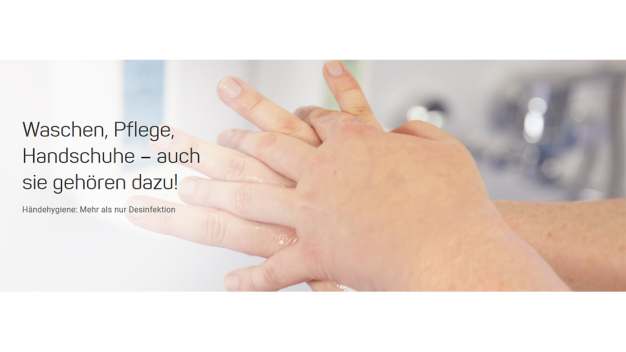
Since May 5, 2022, there is an international day of action dedicated entirely to the topic of hand hygiene. Because hand hygiene, when performed correctly at the right moments, is one of the most important measures to interrupt chains of infection. Therefore, hand hygiene, especially hand disinfection, is one of the essential measures in infection prevention. So, more than worth noting. And fundamentally also simple. We asked our experts what is most important to them regarding hand hygiene and which aspects should be particularly remembered.
In the interview, our colleagues from Research & Development, Marketing, and Sales with a total of five core questions on the topic of hand hygiene and their mnemonic for it:
1. Hand hygiene – what does it include, what makes good hand hygiene?
Dr. Henning Mallwitz: The term hand hygiene is often used synonymously with hand disinfection in healthcare. Hand disinfection is undoubtedly a cornerstone of basic hygiene: it demonstrably prevents nosocomial infections and significantly contributes to patient safety. But hand washing, skin care, and gloves are also components of hand hygiene. Because hands must also be cleaned, maintained, and protected. They are our most important tool. We touch many things and many people with our hands. In this way, contaminants and pathogens can be transmitted, which is why appropriate disinfection and washing of the hands protect both patients and staff. And the hands themselves must also be protected: e.g., with gloves to prevent contamination with body fluids or chemicals. Careful skin care helps to protect the skin and strengthen the natural barrier. All components of hand hygiene are thus important and complement each other. At the same time, they also influence each other. Only paying attention to all four components, adhering to the respective indications, and performing them responsibly lead to good hand hygiene. And thus to increased patient safety and good occupational health. When each individual considers all components equally, overall hand hygiene compliance increases—and infection risks decrease.
2. Hand disinfection – what should be considered?
Dr. Heide Niesalla: Thanks to the 5 moments of hand hygiene, everyone in healthcare should actually be aware of when hygienic hand disinfection should be performed. For patient safety, the indication "before aseptic activities" is especially important, as this is where pathogens could enter the patient's body. Unfortunately, this particular indication is the one most frequently forgotten in practice. Therefore, we advocate paying special attention to hand disinfection "before aseptic activities" in addition to the other moments. For example, before every contact with non-intact skin and mucous membranes, before contact with wounds, between removing an old dressing and applying a new sterile one, before placing any type of catheter, etc., hand disinfection must be performed.
But it is not only about indication-based hand disinfection but also about performing hygienic hand disinfection correctly. Here, everyone can contribute to patient protection by disinfecting their hands properly: Despite discussions about rubbing times (15 seconds vs. 30 seconds), effective hand disinfection only occurs if the hands are fully covered. Because only where the skin is in contact with enough disinfectant are pathogens inactivated. There are three factors influencing coverage: the amount or volume of disinfectant, the rubbing technique, and the rubbing duration. Accordingly, for effective hand disinfection, it is necessary to apply enough hand disinfectant to the dry (!) hands so that they are completely covered, and then rub thoroughly into the hands. We generally recommend following a personal rubbing technique rather than a fixed step sequence, as the coverage results are then demonstrably better. Since most pathogen transmissions occur via fingertips, these should be disinfected first if possible. Likewise, special attention should be paid to the thumbs and interdigital spaces, as these are often forgotten.
3. Hand washing – is it really necessary?
Merle Haldenwang: Children learn handwashing as their first hand hygiene measure, which should be sufficiently familiar to us. For private everyday life, handwashing is our preferred hand hygiene measure. But what role does washing play in healthcare?
In healthcare, the most common hand hygiene measure is hand disinfection. However, there are situations where hands should be washed. It is important that both measures are complementary: while disinfection inactivates pathogens to prevent infections, washing serves to clean the hands. Hand lotion often does not have disinfectant properties because it contains no antimicrobial agents; this role is taken over by hand disinfectants. This means that hands are usually washed when they are "dirty." Similar to private life: for example, when entering from outside at the start of work, after using the toilet, after sneezing, or when hands are visibly soiled for other reasons. Since washing with water and soap removes skin fats, you should only wash your hands when truly necessary. The choice of an appropriate product is also crucial.
A special case in healthcare is contamination with bacterial spores. Since hand disinfectants do not work against bacterial spores, transmission to other patients can only be prevented if spores are thoroughly washed off the hands. After caring for a patient with a Clostridioides difficile infection, handwashing is an important indication after hygienic hand disinfection to initially kill and then mechanically remove spores present on the skin.
The effectiveness of washing, as with disinfection, depends on the rubbing technique and duration. Hands are first moistened with water and then rubbed thoroughly with enough soap for at least 20-30 seconds, paying special attention to fingertips and interdigital spaces. Afterwards, hands are rinsed under running water and thoroughly dried with a disposable towel. Ideally, the water temperature should be lukewarm to avoid excessive skin stress.
4. Skin care – what is its significance in hand hygiene?
Dr. Sven Eggerstedt: Healthy skin is the prerequisite for all other components of hand hygiene. A smooth skin surface offers less surface area for microorganisms, whereas cracked skin favors their colonization. Furthermore, only intact skin can be effectively disinfected. Therefore, regular skin care should be part of your hand hygiene routine. Additionally, the condition of the skin is influenced by other components of hand hygiene: especially frequent handwashing impairs the natural lipid film and can lead to chapped and cracked skin. Wearing gloves for some time creates a moist environment under the glove, which causes the skin to swell. Skin care is particularly important here and becomes an integral part of good hand hygiene.
But how does proper skin care work? Are there specific indications and techniques for its application? First, one must distinguish between skin protection and skin care, which generally involve different products: Skin protection cream forms a "barrier" on the skin to protect against possible irritations from, e.g., moisture. It is used when more than two hours of skin-stressing activities are performed daily, before extended glove use, and before working with wet media. Skin care products prevent chapped and dry skin. Skin care is most sensibly performed after work, during breaks, after handwashing, and regularly as needed. Combination products that both protect and care are used accordingly in each of these moments. Products with as few ingredients as possible but with maximum nourishing properties are recommended.
It should also not be overlooked that the effectiveness of alcohol-based hand disinfectants can be impaired by the use of skin care products, so compatibility between the skin care product and hand disinfectant should be considered.
5. Gloves – what role do they play in hand hygiene?
Dr. Christian Jenke: Gloves are indeed a relevant component of hand hygiene. When using gloves, a distinction must be made between medical devices (MD) and personal protective equipment (PPE). Gloves primarily serve to protect the patient (infection protection) and, as part of PPE, to protect oneself. Because gloves protect staff from contamination with potentially infectious body fluids of a patient or chemicals. Accordingly, gloves should be worn during activities or in situations where there is a risk of contamination or pathogen transmission. For example, during blood sampling, when washing a patient, but also when administering cytostatics or applying disinfectant solutions.
Unfortunately, this is sometimes confused in practice, and gloves are not always used correctly; they are used when not necessary, i.e., without a direct indication. In these situations, gloves can even be counterproductive from an infectious disease perspective: they are often used as an alternative to hand disinfection or hand disinfection indications are ignored because gloves are worn. This can negatively impact patient safety, as there is a risk of transmission via contaminated gloves. Gloves do not replace hand disinfection but only complement it in certain indications as an important part of hand hygiene.
Complementarily, hand disinfection also supports glove use, because in certain processes, in addition to glove use, there are always indications for hand disinfection that must be observed: before aseptic activities, during blood sampling, after contact with potentially infectious material during wound care.
It is absolutely necessary to disinfect hands after removing gloves, as the risk of hand contamination with potentially infectious material, such as blood, is high when gloves are removed.
Recently, the topic of glove disinfection has been discussed. The KRINKO has already taken a clear position on this. Gloved hands should only be disinfected in exceptional cases when otherwise the work process cannot be guaranteed. From our perspective, a conscious handling of gloves is important. The user must be aware of when gloves are used and how to ensure that overall hand hygiene does not suffer. The duration of glove wearing should also be kept as short as possible to prevent skin impairment.
BODE Chemie GmbH
22525 Hamburg
Germany