- Buildings & Rooms
- Translated with AI
Vaccines from (your) container
New cleanroom for cancer therapy in animals
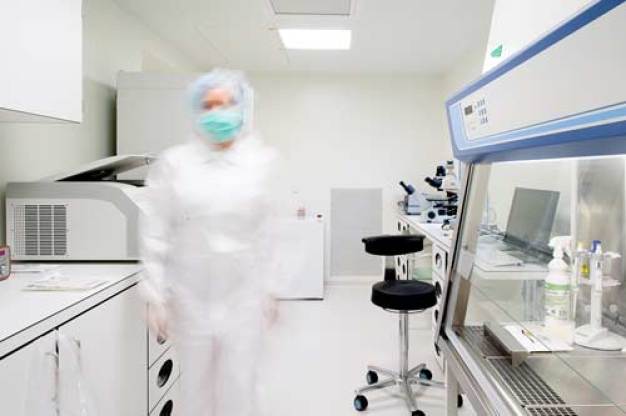
The industrial service provider WISAG was responsible as the general contractor for the entire planning and construction of the cleanroom container.
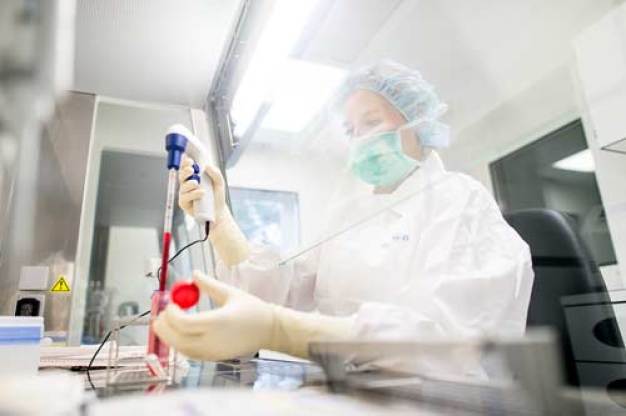
In the cleanroom laboratory, medications are produced for approximately 100 animal cancer patients.
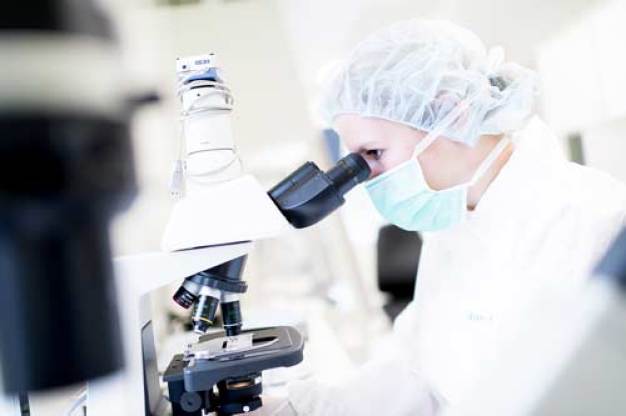
PetBioCell offers veterinary clinics the opportunity to manufacture medications with its cleanroom and laboratory personnel.
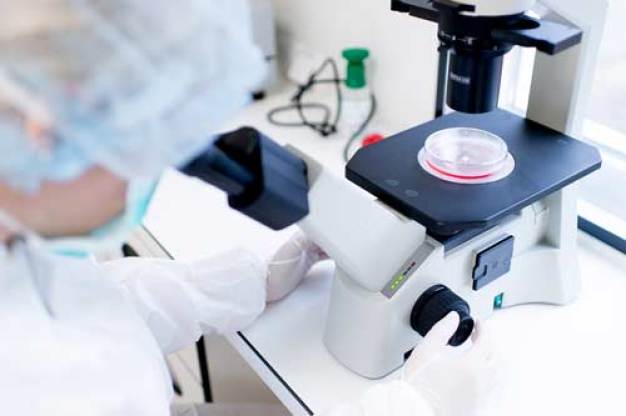
PetBioCell offers veterinary clinics the opportunity to manufacture medications with its cleanroom and laboratory staff.
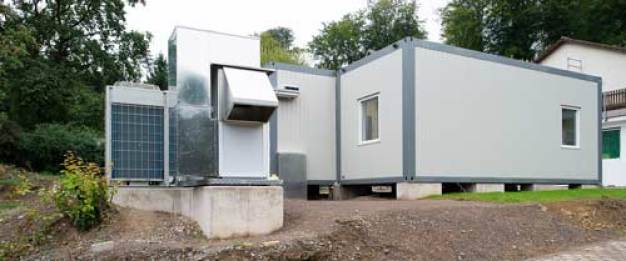
The total 50 m² cleanroom was built in the Dresden production facilities of WISAG and then transported to Osterode.

Axel Tesch
The implementation of a traditional cleanroom often involves lengthy planning times and also entails high investment costs for the participating companies. Cleanroom solutions in the form of special containers offer economic advantages.
Medications for cancer treatment in animals are subject to the highest quality standards and are only produced under cleanroom conditions. This is also the case at PetBioCell GmbH, a laboratory for the production of medications for cancer therapies in dogs, cats, and horses. For this purpose, the staff of the industrial service provider WISAG built a new cleanroom laboratory in a container within four weeks. Since September, it has been located on the grounds of the Veterinary Clinic Dr. Thomas Grammel in Osterode am Harz. PetBioCell GmbH was founded in 2012 and offers veterinary clinics like that of Thomas Grammel the opportunity to produce medications. Currently, about 100 cancer patients per year are treated with autologous vaccines, which are manufactured individually for each patient. The new cleanroom solution offers the laboratory operator a decisive advantage: "To ensure high product quality and professionalism in medication production, a high-quality cleanroom was a prerequisite. As a start-up company, it was also important for us to quickly create production capacities and keep the costs of the cleanroom within bounds," explains Simon Grammel, managing director of PetBioCell GmbH and son of the veterinary clinic owner. Overall, PetBioCell invested 300,000 euros in the container solution. Compared to the traditional cleanroom variant, investment costs could be saved, for example, by omitting usual fire protection measures required in existing buildings. Additionally, the containers are produced in series, which not only offers a cost advantage but also allows for better planning due to standard dimensions for the installation of equipment, material, and personnel access points.
Technically highest standards
WISAG, one of the largest German industrial service providers, was responsible as general contractor for planning and consulting, as well as the entire outfitting of the cleanroom container, including ordering and transportation. The container, approximately 50 m² in size, was built at WISAG's Dresden production facilities, airtight packaging was applied, and it was delivered by truck to Osterode. On-site, the technical components were connected, fine-tuning was carried out, and the entire GMP surfaces such as ceiling, walls, and floor were sealed. This posed a particular challenge for the cleanroom specialists: "The construction of a cleanroom as a container variant in the veterinary field was a new, highly demanding task for us. The confined space made the installation of the interior more complicated than with typical room concepts. Additionally, everything had to be built in such a way that nothing happens during transport and subsequent reassembly," says Fred Kühne, project manager at WISAG in Dresden.
The cleanroom in the container was equipped with high-quality metal cleanroom walls and a clean air system that filters out all particles from the laboratory air. It cools, humidifies or dehumidifies, or heats the air and supplies it via filter supply outlets into the mobile cleanroom. For the overpressure required in the rooms within the pressure cascade, more supply air than exhaust air is supplied. The pressure cascade must be maintained under all operating conditions. For this purpose, a complex control system and an independent monitoring system from WISAG were installed. This allows continuous monitoring of air pressure, temperature, humidity, and the number of germs and particles in the air. Temperature and humidity sensors were installed in the container cleanroom, as well as particle sensors at the workbenches. The individual parameters, which must be archived for at least ten years as proof of batch, can be securely stored on a computer or data logger without manipulation. The fresh air system ensures the hygienically necessary outside air exchange and supply of fresh air for overpressure maintenance. For the increased air exchange required, so-called FFU units are used, which clean the air via filters in recirculation mode instead of using outside air. This solution can significantly reduce operating costs.
Additionally, sterilized workbenches of cleanliness class A were integrated into the new cleanroom. These ensure absolute germ-free conditions during the manufacturing process. To enter the cleanroom, PetBioCell employees must adhere to strict hygiene regulations by changing clothes twice, washing, disinfecting, and wearing special cleanroom clothing in two personnel access areas.
The final acceptance by PetBioCell and the qualification measurements by the company GemLog from Dresden took place at the end of August. The cleanroom container was built according to EU-GMP guidelines for the intended processes, as only these rooms meet the high hygiene and safety requirements.
In the future, cleanrooms will continue to gain importance across numerous industries due to stricter regulations, such as in the pharmaceutical and food industries, as well as the increasing refinement of technology. The German cleanroom technology industry already employs around 15,000 people and generates an annual turnover of 2.5 billion euros, making it a global technology leader. Especially for small, medium-sized, and start-up companies, the container solution offers an industry-spanning alternative to the traditional cleanroom concept, as it avoids high costs and thus minimizes economic risks.

WISAG Gebäude- und Industrieservice Mitteldeutschland GmbH & Co. KG
Peschelstraße 28
01139 Dresden
Germany
Phone: +49 351 32019100
Fax: +49 351 32019105
email: falk.becker@wisag.de
Internet: http://www.wisag.de