



- Service
- Translated with AI
Klaus Eckardt
Use of insulators in the production of cytostatics requires a change to DIN 12980
New regulation could come into effect at the end of 2014
BDK_104-0424_IMG-xweb
Zyto-Isolator with 2 Locking Doors x_web
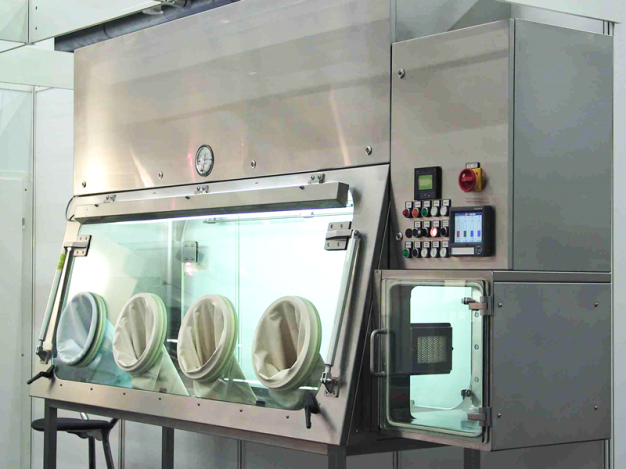
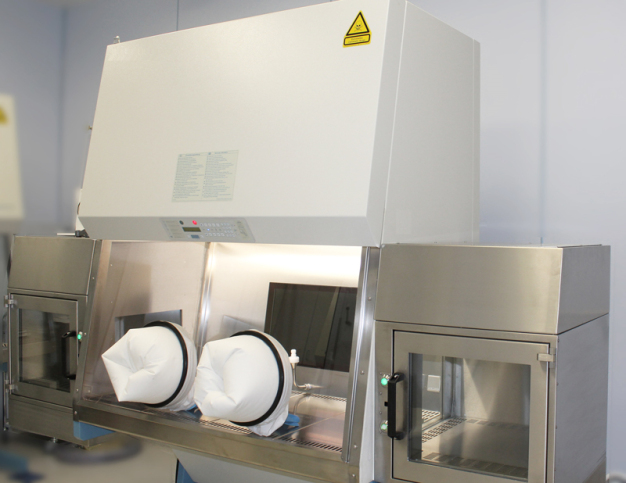
When manufacturing cytostatics, pharmacies are increasingly using isolators instead of conventional safety cabinets. This means that the DIN 12980 (Laboratory Equipment - Safety Cabinets for Cytostatics), which has been in effect since 2005, needs to be updated. Egon Buchta, chairman of the Cytostatics Cabinets Working Group in the Standardization Committee for Laboratory Equipment and Laboratory Devices at DIN, hopes that the new version can come into force by the end of 2014.
Currently, there are no binding regulations regarding the use of isolators. On the one hand, the pharmacy operational regulations since June 2012 require that the environment of these devices meet GMP cleanroom class D standards, but on the other hand, isolators—also called glove boxes—are not yet covered by the relevant DIN standard, nor are there type-tested devices available.
The standardization committee has so far discussed the new regulation in two meetings. About 20 representatives from manufacturers, service companies, users such as pharmaceutical companies and pharmacies, professional associations, and testing organizations like TÜV are part of the group. Egon Buchta, managing director of "Ingenieurbüro & Reinraumservice Egon Buchta GmbH" from Wannweil near Reutlingen, has been a member of the committee since 1985 and has served as chairman since 2000. He expects that the draft of the new standard can be published by mid-year. "Then all affected parties will have the opportunity to submit comments, which will be incorporated into further discussions." The revised standard will also provide a basis for type testing of the isolators. However, this process will also take some time.
Until the amendment of the pharmacy operational regulations in 2012, transitional provisions allowed pharmacists to operate glove boxes in environments that did not need to be tested according to cleanroom guidelines. Now, the regulations in the newly added § 35 explicitly require that the environment meet GMP cleanroom class D standards when parenteral drugs are manufactured in isolators. Within the isolator itself, the requirements of GMP cleanroom class A must be fulfilled.
"This," says Egon Buchta, "leads to many practical changes." He assumes that many small pharmacies will have to cease manufacturing cytostatics because they cannot meet the higher requirements. The consequence: they will need to purchase the medications and thus lose their previous profit margins.
While the use of glove boxes in drug manufacturing may seem practical at first glance, the practical consequences are diverse. Especially the direct transition from GMP cleanroom class A inside the device to class D in the environment imposes high demands. Egon Buchta illustrates this with the example of the gloves used. While conventional protective gloves, worn at safety cabinets in enclosed cleanrooms, are available for a few cents, he estimates that the cuffs of the isolators cost around 300 euros per pair. "Assuming a penetration time of one week, this means about 50 changes per year and thus expenses of approximately 15,000 euros per device." Additional costs for necessary leak tests are also involved. Due to the maintenance-related downtime of the devices, it may also be necessary to have not only a second isolator but also additional personnel on hand. Nonetheless, Buchta believes that isolators will become more widespread, even though they currently still play a minor role compared to conventional safety cabinets. A few years ago, the share of isolators in cytostatic production was about one percent; Buchta now estimates it at three percent. "In absolute numbers, that's not much, but the growth is noticeable," says the expert.

Ingenieurbüro & Reinraumservice Egon Buchta GmbH
Unterer Mühlweg 43
72827 Wannweil
Germany
Phone: 07121 4330090
Fax: 07121 43300999
email: egon.buchta@reinraumservice.de
Internet: http://www.reinraumservice.de