




- Service
- Translated with AI
Dipl.-Ing. Ralf Gengenbach
Trends in Asset Qualification
New Paths for the Pharmaceutical Industry
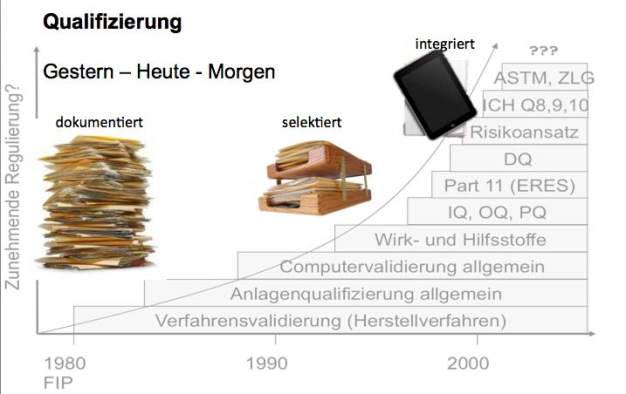
Fig. 1: Regulatory Development Qualification
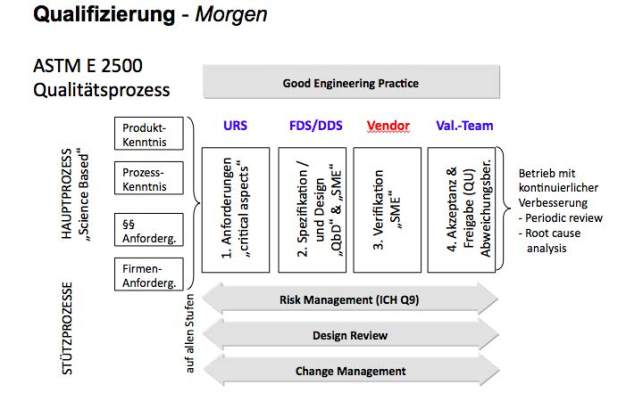
Fig. 2: Qualification process according to ASTM E2500
Qualification is an important instrument of quality assurance in the pharmaceutical industry, used to demonstrate the reliability of technical systems. Qualification involves significant effort, paperwork, time, and costs, and is therefore always a focus of efficiency discussions. For this reason, industry, authorities, and associations regularly deal with this topic and try to reduce the effort to what is necessary without risking quality losses. Since 2005, intensive approaches have emerged, but without yet achieving real success. The presentation examines this development and shows possible trends for a future concept of modern qualification. It also addresses the increasing importance of manufacturers of technical systems in these discussions.
1. Backgrounds
Qualification is the documented proof that a technical system is designed and installed correctly according to specifications and that it functions exactly as originally specified by the user. Qualification is part of validation, which additionally considers processes and procedures in the proof process. Both elements, qualification of the technology and validation of processes and procedures, are mandatorily required by the rules of Good Manufacturing Practice (GMP) in particular in the pharmaceutical industry and are a fixed part of regulatory inspections.
An initial guideline on validation practice (including qualification) was published in 1983 by the FIP (Fédération Internationale de Pharmacie) [1], providing initial hints and recommendations for implementation. Since then, 30 years have passed, during which the topic has evolved and become more detailed. A look at the timeline (Fig. 1) quickly shows how not only the topic but also the associated regulations and guidelines have developed almost exponentially. In the early days, regulatory updates occurred roughly every 3 to 4 years; this increased to 3 to 4 updates and related new guidelines and regulations appearing annually since around 2000. This frequency makes it difficult to keep pace, especially since new guidelines often come with new requirements for content processing.
But not only the multitude of regulations presents a challenge in the topic of "qualification"; also, the volume of paperwork generated during qualification (inspection, test plans, and reports) is significant. It is therefore not surprising that early efforts focused on how to manage or even reduce this paper flood. Initially, approaches aimed at "reduction through selection," i.e., qualification only of selected critical technical systems (e.g., targeted selection using risk analyses). Today, the trend increasingly moves toward "reduction through selection plus integration." This means that effort and paperwork are to be reduced not only through targeted selection of critical systems but also by considering and integrating as much as possible of the engineer-conducted inspections and tests into the qualification process, thus avoiding duplication of work.
The following sections explore the "Yesterday – Today – Tomorrow" of qualification and attempt to outline where the future of modern qualification might lie and what challenges this poses to technology, especially to suppliers.
2. Qualification "Yesterday"
Early on, the elements of installation qualification (IQ), operational qualification (OQ), and performance qualification (PQ) were distinguished. IQ verifies the correct specification and installation, OQ verifies the correct function, and PQ demonstrates and documents the performance capability of the respective technical system. It has always been a fundamental requirement that this proof is planned and documented in writing.
On the documentation side, a master plan (VMP = Validation Master Plan) was also early on required, outlining the overall project and listing the necessary individual actions, including required resources. Plans for individual actions (IQ, OQ, PQ) were and still are expected to describe the intended approach, details, and especially acceptance criteria. These plans, along with all related checklists and raw data documents, are to be reviewed by the validation team – an interdisciplinary team of experts – and formally approved by the quality unit of the system owner. After execution, a similar process applies for qualification results and the resulting report. This content review and approval process is also conducted by the validation team and ultimately by the quality unit.
For execution, very detailed and system-specific checklists were often developed, starting from technical documentation, specifying criteria with target values as the basis for testing. Often, details from the plant or technical documentation were incorporated into the checklists to verify that these details are indeed present on-site and in the documentation. Particularly in the systems developed in the USA, this paper-generating symptom was evident.
If a project involved, for example, only 10 technical components, then alone for these elements – without master documents – a total of 30 documents with all related checklists and attachments had to be created for IQ, OQ, and PQ. Projects typically involve significantly more than just 10 components.
3. Qualification "Today"
By the late 1990s and the beginning of the 21st century, industry became more self-critical and recognized that a strictly formalistic approach, while generating lots of paperwork and costs, did not necessarily improve quality to the same extent. On the contrary, the volume of paperwork and strict formalism often prevented the recognition of truly critical issues.
Accordingly, the philosophy of industry and authorities has changed significantly. One addition is the inclusion of Design Qualification (DQ) in activities, recognizing that most errors occur during planning and must therefore be eliminated there. Additionally, risk analysis has been introduced as the most important "GMP tool" to help identify which technical components are critical and truly require qualification, and which are less critical and do not need formal qualification. It has also been recognized that it is not always necessary or helpful to document all proof tests in detailed checklists. Instead, it makes sense to directly use technical documents (e.g., piping and instrumentation diagrams, construction drawings, electrical plans, bill of materials) as the basis for testing and to incorporate already performed tests from manufacturer and acceptance tests (FAT = Factory Acceptance Tests, SAT = Site Acceptance Tests) into qualification.
Despite these measures, the current qualification approach is still not perceived as optimal or effective. While the basic concept of Design Qualification is clear, the implementation varies widely. Some companies execute DQ very detailed and systematically, comparing operator requirements (specifications) with manufacturer instructions (requirements specification). Others understand DQ merely as reviewing execution drawings or creating a requirements specification. Risk analyses to identify critical, qualification-relevant systems are often very formalistic and more for show than for actual effort reduction. Qualification plans also lack uniform practice: some companies have already reduced scope to the necessary minimum, while others still follow the checklist principle. The integration of FAT and SAT results is often only considered feasible if good engineering practices (GEP) with properly conducted and documented tests are in place – which is unfortunately still rare.
The "White Paper" [2] from March 2005 by ISPE (International Society for Pharmaceutical Engineering) highlights this issue. An independently established "Qualification Task Team" bluntly states that, from the experts' perspective, there is currently no truly efficient and effective qualification system. The existing systems and procedures are still too formalistic, too elaborate, too costly, and do not sufficiently focus on patient safety. It emphasizes the urgent need to develop an appropriate modern qualification concept.
4. Qualification "Tomorrow"
The ISPE Qualification Task Team proposes a 10-point program to be implemented through updated standards and norms. Core elements remain risk-based approaches, integration of manufacturer tests (FAT and SAT), and pragmatic, practice-oriented qualification documents. The ISPE recommendations go further, suggesting, for example, that qualification could be drastically reduced for standard equipment, possibly replaced by supplier qualification. Generally, they aim to significantly reduce IQ and OQ activities and instead emphasize manufacturer testing. These activities are viewed as primarily the responsibility of engineering, not the main task of a pharmaceutical quality unit. The user’s focus should clearly be on PQ, the performance testing of the technical system.
A norm that explicitly pursues this goal is ASTM E2500, published in 2007 [3]. It deals with buildings, processes, auxiliary systems, and process monitoring, control, and automation systems, collectively referred to as "Manufacturing Systems." A comparable norm, ASTM E2537 [4], was published in February 2008, focusing on "Manufacturing." Both standards now use the term "Verification" to encompass both the usual technical standard tests and formal qualification and validation activities.
ASTM E2500 emphasizes the topics of "risk-based approach" and "use of manufacturer documentation and tests" as key elements. It also highlights "science-based approaches," "critical aspects" of manufacturing systems, "subject matter experts," and continuous process improvement. The core of the normative guideline is a flowchart, shown in simplified form in Figure 2.
This "idealized" process starts with main and supporting processes. For main processes, general requirements and "critical aspects" are defined based on product and process knowledge, considering regulatory and internal guidelines, and described in a User Requirement Specification (URS). Experts develop functional and detailed specifications (FDS, DDS), already considering all relevant quality requirements (QbD). After implementation, the familiar testing and qualification phase follows, now summarized under "Verification" and handed over to the "Subject Matter Experts" (manufacturers or suppliers). Only afterward does the quality unit formally approve the verification results and release the system, possibly accompanied by a deviation report. This process is supported by risk analyses, design review activities, and change management, which are essential supporting processes and require good engineering practices.
5. Qualification "Overmorrow"
At first glance, this normative proposal appears quite similar to the established processes. However, repeated reading and focusing on details reveal the true intent and planned process improvements.
A key focus is on identifying "critical aspects," intentionally not limited to "quality critical aspects." Instead, it aims to determine from the outset, under the aspect of "Good Engineering Practice," all essential and critical properties and elements of the technical system, and to pay attention to these during design and execution, which requires a corresponding quality awareness and system at the manufacturer.
An additional emphasis is on assigning "verification activities" to subject matter experts—those who know the system best and should ultimately verify and confirm its suitability. This is essentially an approach already practiced informally today. Often, the manufacturer or supplier conducts the critical tests and repeats them during qualification to meet formal requirements. In an ASTM E2500 approach, this would be formalized.
Finally, the concept clarifies that risk analysis is not a one-time activity but a continuous process, supported by ongoing design reviews at multiple project stages, always requiring "Good Engineering Practice."
The future concept could involve selecting qualified suppliers who are well-versed in quality and qualification, covering all IQ and OQ elements comprehensively and working according to ASTM E2500 or similar standards. Downloading a certificate from the internet would be the last formal step. The PQ, as a rigorous performance test, would still be performed by the operator, which is also within their competence.
6. The Challenge
The statements made in the ISPE White Paper [2] address a real and widely recognized problem. The future concepts described in the ASTM standards seem reasonable and realistic. The fact that discussions of these issues have already been ongoing for 8 years and that implementation—at least in Europe—is not yet apparent indicates that the core problems are deeper. They still lie in the largely absent "Good Engineering Practice" that would fully integrate qualification as a topic. They also lie in the lack of guidelines for manufacturers on how to conduct qualification or even formal verification in a compliant manner. Furthermore, they are rooted in the still conservative mindset of the pharmaceutical industry and authorities, which at this point—perhaps rightly—are reluctant to delegate a significant part of quality assurance to manufacturers. After 30 years of qualification and at least 8 years of ongoing optimization efforts, it remains a major challenge to develop concepts that are considered efficient, effective, and economical.
References
[1] FIP Guideline in Sucker, Heinz, Practice of Validation with Special Consideration of FIP Guidelines for Good Validation Practice, Paperback APV, Scientific Publishing Society, 1983
[2] ISPE – Risk Based Qualification for the 21st Century, White Paper, March 2005
[3] ASTM E2500, Specification, Design, and Verification of Pharmaceutical and Biopharmaceutical Manufacturing Systems and Equipment, June 2007
[4] ASTM E2537, Application of Continuous Quality Verification to Pharmaceutical and Biopharmaceutical Manufacturing, January 2008

gempex GmbH - THE GMP-EXPERT
Besselstr. 6
68219 Mannheim
Germany
Phone: +49 621 8191190
Fax: +49 621 81911940
email: info@gempex.com
Internet: http://www.gempex.de



