
- Translated with AI
Harald Martin
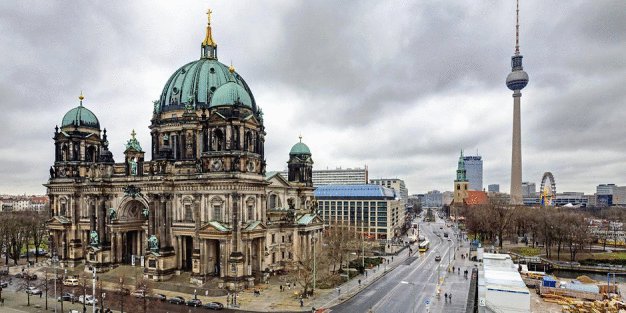
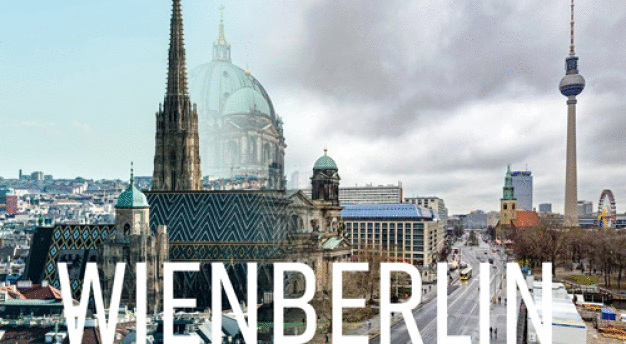
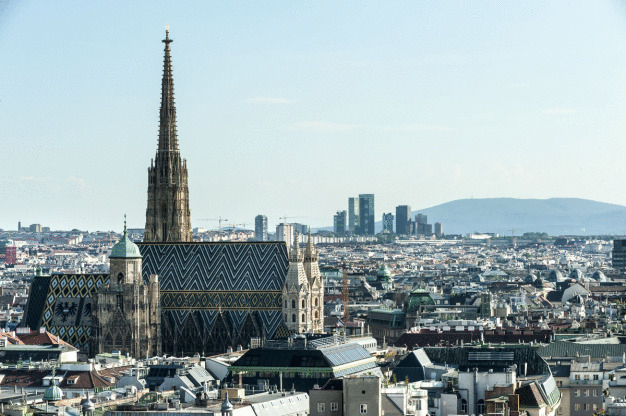
The LOUNGES on Tour are stopping in Vienna and Berlin
September 25 and 26, 2018, Vienna October 9 and 10, 2018, Berlin
A TOP Program - Planning – Realization – Operation
Two days full of professional expertise, divided into three topic areas, will comprehensively inform visitors with both theoretical content and practical presentations. The Lounges on Tour are precisely tailored to the needs of users and cover topics from the initial planning idea, through project realization, to qualified operation.
An interesting and innovative program
The program is divided into lectures, actions, and product shows and takes place on both event days in different areas of the hall and at the company exhibition stands.
Below is an excerpt from the lecture program:
Requirements as a basis, quality, and GMP compliance
Revision Annex 1 - Impact of Changes
An overview will be provided of the changes and updates to the draft of the new Annex "Manufacture of Sterile Medicinal Products" published in December 2017. Key topics such as the implementation of quality risk management and new technologies like closed disposable and single-use systems will be addressed. Opportunities for practical implementation will be presented.
REACH - Impact on Containment Requirements
The fundamentals, principles, and goals of the REACH regulation will be introduced, various exposure limits will be presented, and the different DNEL values will be discussed in relation to the limits. The conditions and significance for tightly controlled products and practical tasks will be discussed.
Lifecycle Risk Management – GMP compliant
Quality risk management is legally required in the pharmaceutical environment, and corresponding risk assessments are carried out within companies. However, a company-wide view of risks and internal risk communication – passing on risk knowledge across interfaces within the company and reusing risk knowledge – could be optimized.
This lecture will discuss, on the one hand, the efficient design and execution of risk analyses in the pharmaceutical environment using practical examples, and on the other hand, the topics of lifecycle risk management and risk communication.
Better Qualification through Optimal Documentation
Qualifications are often not optimally documented. It is not about the quantity of paper produced, but about its quality. Documenting for the sake of documentation or to impress inspectors with folders is neither efficient nor sustainable. When qualifications are sensibly structured, the necessary documentation well thought out, and organized, the time required can be reduced and sustainable benefits generated.
Microbiological Quality of PW/WFI: Precise Continuous Measurement of Microbial Count
The maximum number of colony-forming units (CFU) is defined as a critical microbiological parameter for PW, HPW, and WFI in USP and Ph. Eur. Its determination is currently almost exclusively through time-consuming and costly laboratory testing. USP and Ph. Eur. 5.1.6 endorse alternative (complementary) microbiological methods for monitoring the quality of purified water, even if their results do not directly correlate with CFU counts. Leading pharmaceutical companies organize themselves in OWBA and also promote these methods.
Options for Continuous Microbiological Process Control
The newly discussed Annex 1 draft now requires not only microbiological monitoring over entire production cycles but also process control related to this at all times. Traditional impact methods cannot achieve this process control, partly due to the time window – up to a week – between sampling and obtaining results. Time-resolved, highly efficient classical methods (slit-to-agar) and real-time methods offer extensive possibilities for production-related process control, avoiding critical interventions, evaluating microbiological risk points and entire risk analyses, root cause analysis, real-time disinfection and sanitization control, etc.
The Employee in Focus
Employee Qualification – Professionally Structured
Employee qualification is essential; without qualified staff, it cannot work. But where does it say that I need this, and how can I implement it? Besides legal requirements, internal influencing factors, and general possibilities within employee qualification, particular attention is paid to aspects applicable to personnel in cleanrooms. The basis for employee qualification is an established and suitable training system. How training can be sensibly structured and conducted, how content can be conveyed for maximum understanding and retention, and what to consider for success and effectiveness checks will be addressed in this lecture. It will also discuss difficulties in implementation and management responsibility. Employee qualification takes time and money, so it should be designed sustainably and effectively.
Stereotype Training vs. Principles-Based Education
Every year, companies invest enormous time and financial resources in training, education, and further qualification measures for their employees. The same applies in the cleanroom industry. Especially in GMP-regulated environments, employee performance and motivation are even more important. But how effective is this investment? Which measures were worth the time? Which truly benefited my company? Was hiring an external expert worthwhile? Based on proven and practical learning and teaching principles and methods, this program shows how to clearly increase the benefit of internal training and optimize resource use. The focus is on how to successfully plan training measures from the start. You will receive ideas and approaches to ensure the sustainable application of what has been learned. Building on this, you will gain insights for good selection and successful collaboration with a suitable external training partner. Be inspired by this refreshing "somewhat different" presentation.
The Dilemma of Choice
Disposable? Reusable? Solution Path
The lecture will compare the advantages and disadvantages of disposable and reusable textiles, supported by studies. When evaluating and choosing between a single-use or reusable concept, a comprehensive view of all factors is essential. This includes: performance (area coverage, cleaning efficiency, wetting), safety (purity suitability, process safety, hazards and risks), ecology (logistics, resource use, disposal), availability and usage frequency (availability, usage frequency, backup), and costs.
Cleanroom Clothing: Purchase vs. Rental System
Without people, almost no cleanroom operation works. Usually, only after the cleanroom project is completed and the premises are ready does the question arise: What does my staff actually wear in the cleanroom? This question often proves decisive for resource and time allocation in cleanroom operation. Once the customer has defined the clothing concept, the next question is about proper processing. Various options exist, all with their own justification, advantages, and disadvantages. This presentation will give a rough overview of these options and serve as an initial guide for the customer on how to align their cleanroom clothing concept and related service.
The Cleanroom in Focus
Cleanroom 4.0 – Integrated Solutions for the Cleanroom
A modern management platform combines building automation and monitoring in one system. Digitized information from all building services and process-related data are collected and analyzed. From big data, smart data is created – content-related data analytics optimize processes, functions, and energy consumption. System-integrated solutions enable interaction among all trades with solutions for the critical environment. Operators benefit from almost unlimited flexibility, increased productivity, profitability, efficiency, and energy savings.
Room Decontamination – System Comparison, Technology, Applications, and Risks
Vaporized H2O2 has been used for about 15 years for decontamination in sluices, chambers, and rooms. Many positive and negative experiences have been gained, and knowledge has been accumulated over this time. However, it is also clear that incorrect and confusing statements and opinions still occur today. The cause is clearly identifiable: lack of fundamental knowledge. Especially in the area of room decontamination, problems often occur whose causes can be clearly identified: The overall processes and effects are not sufficiently considered in research and development. Usually, each focuses on their own limited responsibility – interfaces and their impacts are not taken into account.
Application Areas in the Cleanroom: Overpressure Measurement and Laminar Flow Monitoring
Measuring airflow in the cleanroom is an essential parameter, as cleanliness and work safety often depend directly on the proper airflow through the rooms. The lecture will highlight the two main applications: laminar flow monitoring and overpressure measurement, and will present their specific requirements. Different measurement methods will be shown, their suitability for each purpose discussed, and interpretation aids provided to help avoid errors in evaluating measurement results.
Pharmaceutical Water in Focus
Drinking Water to WFI in a Membrane System. BWT Study with the University of Northwestern Switzerland
Since April 2017, with the revision of Monograph (0169), the cold generation of WFI has also been permitted in the European Pharmacopoeia (Ph. Eur.). Considering Ph. Eur. and the EMA Q&A document, a compact membrane system was developed that produces up to 6 m³/h of WFI from drinking water. To demonstrate the long-term safety and efficiency of the system, a comprehensive long-term test was conducted. This includes microbiological safety, online microbiology monitoring, antiscalant retention, effectiveness of thermal sanitization, and targeted stress tests.
Plant Planning and Design – From API to WFI
In the context of current new build projects in Belgium and Ireland, it will be shown how corrosive media in modern biotechnological processes for pharmaceutical active ingredient production necessitate adjustments to processing guidelines to ensure the hygienic and mechanical properties of the piping systems. Specifically, the projects concern the processing of 316L and AL6XN for fermentation systems. How can these materials be processed? What are the advantages and disadvantages?
Participation is free for visitors upon prior registration with a registration code.
Registered visitors can use the full range of the Experience Expo / LOUNGES on Tour. Visitors decide how to spend their day, either as a pure trade fair visit or as a continuing education forum. Important: Registration as a participant is a prerequisite for attendance.
Registration is possible at www.experience.expo.de.
Mark the dates and register for free as a visitor: Code: LOT2018
The free registration is only possible via the internet. Visitors can find the input form for their data under the Visitors / Registration section. After registration, visitors will find various contact options, news, and information about all exhibiting companies. This allows visitors to communicate before, during, and after the event, making their trade fair visit more effective and enabling preparation and follow-up.

LOUNGES ON TOUR
Inspire GmbH
Am Falltor 35
64625 Bensheim
Germany
Phone: +49 6251 706068
email: harald.martin@i-ec.de
Internet: https://cleanroom-processes.de/