

- Translated with AI
Harald Martin
The lounges are hitting the road with a top program
Precisely targeted and tailored to the industry "Cleanroom and Pharmaceutical Process"

01_Home
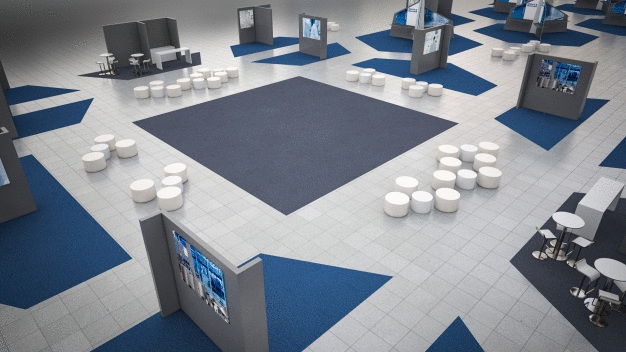
fraport_170704_v1a_detail_02
fraport_170704_v1a_kam01_plan
Logo Date Experience Expo
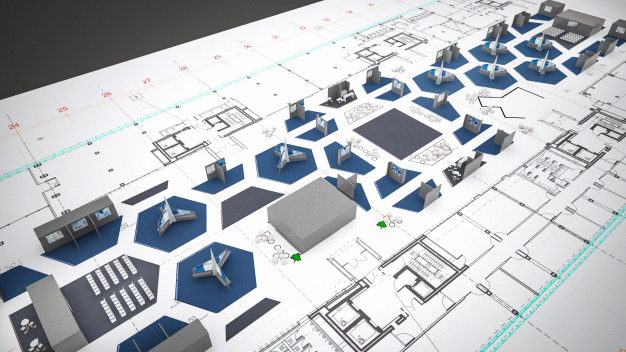
Two days full of information, divided into 3 thematic areas, providing both theoretical and practical insights. The Lounges on Tour are precisely tailored to the needs of users and cover topics from the initial planning idea through project realization to qualified operation.
The foundation is standards and guidelines
The basis consists of numerous standards and guidelines that must be adhered to and therefore need to be considered to pass inspections.
The Lounges on Tour provide an overview of all current changes and new publications across the GxP field and explain how new requirements and specifications are actually implemented.
A fundamental question: What is happening with Annex 1? What speculations are there around the new contents of the guideline document, which was supposed to be published in fall 2016?
Furthermore, information about the cleanroom environment is presented, and questions are answered: What consequences does the newly published test standard ISO 16890 for filter evaluation and classification entail, which is set to completely replace the previous standard EN 779 by mid-2018?
The revision of the first two parts of the most important cleanroom standard, ISO 14644, caused a stir in the GxP world last year. What has changed? How were the modifications implemented, and what effects will the publication of the third part "Test Methods" of ISO 14644 have?
The impact of the new ISO 14644-1 on cleanroom qualification is also discussed. You will learn what has changed in the new ISO 14644-1 and what influence this has on the planning and execution of your cleanroom qualification. How should the new requirements be implemented? What does it mean to set risk-based measurement intervals? Visitors will receive detailed and pragmatic answers to these and other questions.
A top topic that is increasingly gaining the attention of auditors, good distribution practice, also brings some new developments. The DIN SPEC 91323:2016-3, published in March 2016, impresses as a guideline for the qualification of vehicles for pharmaceutical transport.
Also discussed is the state of the art concerning the current VDI guideline 2083 sheet 9.2. Cleanroom clothing, gloves, wipes, etc., are considered so-called cleanroom consumables, which are used daily in significant quantities during ongoing cleanroom operations. Therefore, it is not surprising that these products can influence the quality of the cleanliness process. But how do you define cleanroom clothing, gloves, or wipes? What should be considered? Are there guidelines that decision-makers can refer to, and how relevant are these in the context of possible audits? These are exactly the questions users face, and they need to be answered.
Planning and implementing
This part deals with the process of project planning for a cleanroom in the GMP environment, from concept development to construction and execution. Recording customer requirements, what they want to produce, what basics are known, whether there is already a URS, what facilities and structural conditions are available, for example, when building in existing structures.
Thinking of everything from the start, from assembling a project and qualification team to developing a concept and creating room plans, zone plans for pressure, cleanliness class, and sluice concepts for personnel and materials.
And again, the note on aligning concepts with standards and legal requirements, up to presenting the concept to the approving authorities. Then, the planning, realization, commissioning, and approval follow.
During these steps, one often asks why a contractor does not implement what the client has ordered. A frequently asked question that needs to be investigated. Project success is the focus, and to achieve this, various factors must be considered. The known "magic triangle" with the interactions of time, cost, and quality is expanded by soft influencing factors that are crucial for a successful project course. For example, the person with their experience, education, and upbringing. But also the different roles and motives of the actors or the influence of specific, discipline-dependent ways of thinking, value systems, and cultures. Now, nothing should go wrong...
Qualified operation
The final part describes one of the most important points after project realization, aside from the classic quality assurance measures, which we want to omit here as they have already been covered extensively in numerous seminars by various providers. We want to focus on the fundamental things that enable the qualified state. One of these points is the correct behavior of personnel in the room. "The overall suit must fit well and be comfortable to wear!" Of course, this is important. But equally important is how it is put on correctly. And this is where the daily "battle" with cleanroom textiles begins! A well-known topic: How do I put on the overall without it touching the floor and without contaminating the outside with my hands?
Wipe once and it's "clean"? When it comes to high-quality cleaning wipes for cleanrooms, besides the complex selection of the right materials, the correct wiping technique is also required. The right cloth, in the appropriate process, with the suitable cleaning technique – this ensures the desired success. The application method is decisive if you want to ensure that the cleaning result meets your demanding requirements.
Have you also looked more closely at the mop? The mop: it is the actual "main actor" in cleaning and disinfecting floors, walls, and ceilings. It is wrung out, must handle various chemicals, and is literally pulled through the dirt. Nevertheless, it is expected to deliver maximum surface coverage and a reproducible cleaning result every day. Or, to return to a more factual perspective: it is demonstrated how reproducible, validated, and ergonomically optimized cleanroom cleaning and disinfection can work today, significantly reducing the risks of cross-contamination through process-safe design, while also contributing to substantial cost savings. Because: cleanliness is in the detail!
Without this, it simply doesn't work! Calibration and test equipment management are indispensable tools in cleanroom and GMP environments for quality assurance, ensuring precise measurement values in all control and regulation processes. The calibration management approach according to GAMP goes at least one step further with a lifecycle model. But a bit more technical, to not forget an important point... In the cleanroom, measuring airflow is essential, as cleanliness and occupational safety often depend directly on the proper airflow of the rooms. To accurately record these values, not only the choice of the correct measurement method, a suitable sensor, or its absolute measurement accuracy is crucial. Equally important is the correct interpretation of the measurement data, which can only be achieved if there is sufficient background knowledge about the application and the sensor's functioning.
Program draft: As of 17.08.2017
Adherence to standards and control
News from the GMP world - Standards & Regulations
Peter Furtner, Managing Director CLS Ingenieur GmbH
New standards - Impact of ACC on air balance 14644-15 - Process suitability
Dr. Udo Gommel, Fraunhofer Institute for Production Technology and Automation IPA
The impact of the new ISO 14644-1 on cleanroom qualification
Stefan Erens, Testo industrial services GmbH
State of the art also concerning the current VDI guideline 2083 sheet 9.2
Carsten Moschner, DASTEX Cleanroom Equipment GmbH & Co. KG
Regulatory requirements - Serialization in Europe – Am I already too late?
Titus Krauss, Systec & Services GmbH
Design and planning
9 factors for project success
Rino Woyczyk, Drees & Sommer AG
Design and planning of air conditioning systems in GMP environments
Jürgen Stark, Weiss Klimatechnik GmbH
Buildings and equipment
GMP-compliant solutions for different cleanroom classes - The choice for safe and durable equipment based on practical examples
Ingo Sternitzke, Trespa International B.V.
Cleanroom floors - The right choice for your project
Christoph Haas, Gerflor Mipolam GmbH
Flexible solutions for smooth operation - Floor systems in cleanrooms for safety – from the ground up
Christian Fleuren, nora systems GmbH
Monitoring and surveillance
GRM comprehensive cleanroom monitoring – Practical monitoring solution
Matthias Alber, BRIEM Steuerungstechnik Gmb
Airflow measurement and laminar flow monitoring
Thomas Axmann, SCHMIDT Technology GmbH
Real-time microbial counting in air and water – Possibilities, limitations, and case studies from the pharmaceutical industry
Ricco Scheibel, PMT GmbH
Practical calibration management according to GAMP®
Frank Mager, Testo industrial services GmbH
Buildings and processes
GMP Monitoring PLUS in practical use
Steffen Röh, Weiss Klimatechnik GmbH
Planning and integration of HMI systems into the cleanroom environment
Patrick Kühle, Systec & Solutions GmbH
Hygiene as a requirement
Residual contamination measurement on cleanroom clothing
Carsten Moschner, DASTEX Cleanroom Equipment GmbH & Co. KG
Inspection and testing methods for products and consumables in focus
Alina Waldner, CCI – von Kahlden GmbH
The path of the mop
Dietmar Pfennig, Pfennig Reinigungs Technik GmbH
Guiding Hands - What do the changes to the European PPE glove standards mean for you?
Christian Stiebritz & Frank Schmidt, Kimberly Clark Professional
Wipe once and it's "clean"?
Rolf Zimmermann, pure11 GmbH
The overall suit must fit well and be comfortable to wear!
Rolf Zimmermann, pure11 GmbH
Compensation fee – Save costs with reusable clothing
Tamara Helmling, WZB – Workshop Center for Disabled People of Lebenshilfe gGmbH
Experience the cleanroom live
VIP3000 presents live actions around the themes Planning – Realizing - Operating
Recognize GMP-compliant cleanroom facilities made of stainless steel
Christoph Mützel, Friedrich Sailer GmbH
The perfect cleanroom door from HPL
Ralf Stahl, KEMMLIT Bauelemente GmbH
Flexible workstation solutions made from EBC compact materials
Ingo Sternitzke, Trespa International B.V.
Laying of cleanroom floors with cove and renovation of floor coverings during ongoing operation
Christoph Haas, Gerflor Mipolam GmbH
Cleaning a cleanroom and the associated clothing procedures
Hans Schallinger, compri Cleanroom trade and training GmbH
Simpati (control software) with reference to current projects
Steffen Röh, Weiss Klimatechnik GmbH
Integration of qualification activities from the perspective of the plant manufacturer
Michael Habenicht, Zimmer & Hälbig GmbH

LOUNGES ON TOUR
Inspire GmbH
Am Falltor 35
64625 Bensheim
Germany
Phone: +49 6251 706068
email: harald.martin@i-ec.de
Internet: https://cleanroom-processes.de/