
- Clothing & Packaging / Films
- Translated with AI
Dipl. Ing. (FH) Margarete Witt-Mäckel, Dr.-Ing. Kolja Wulff
The closed MopScoop PROTECT cleaning and disinfection process
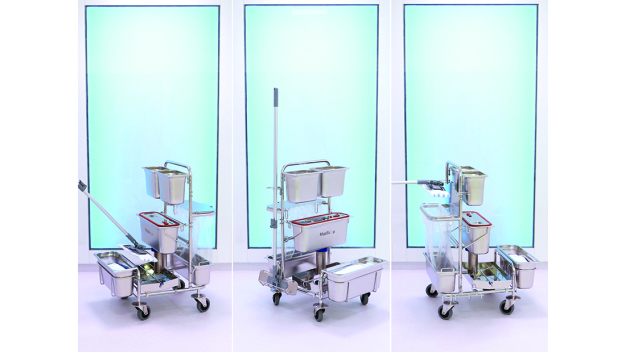
Figure 1: MopScoop PROTECT with all system components
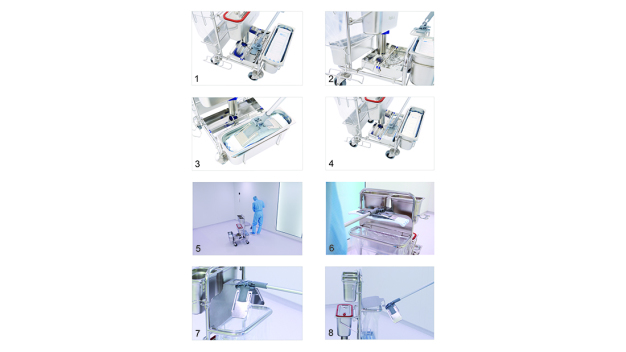
Figure 2: Visual representation of the work steps of the MopScoop PROTECT cleaning and disinfection process.
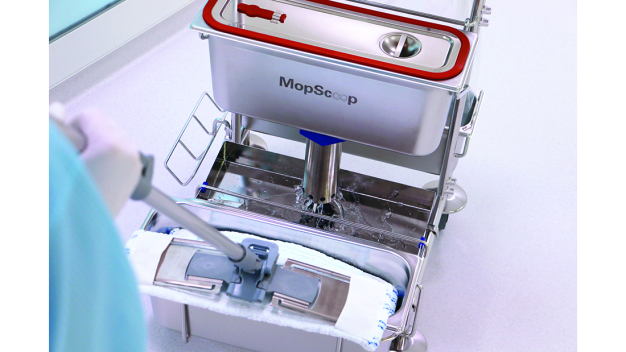
Figure 3: The dosing and filling system MopScoop. The illustration shows the dosing of the specified liquid amount.
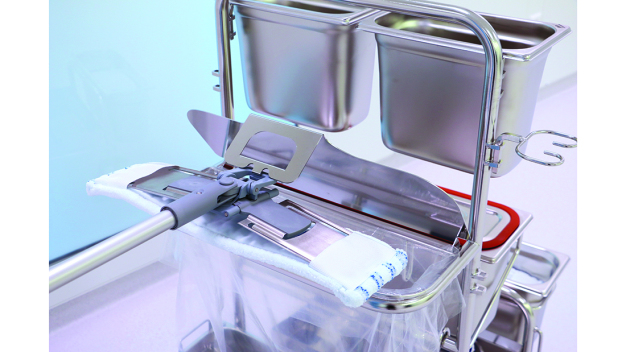
Figure 4, Figure 4.1: Opening the lid with the mop holder.
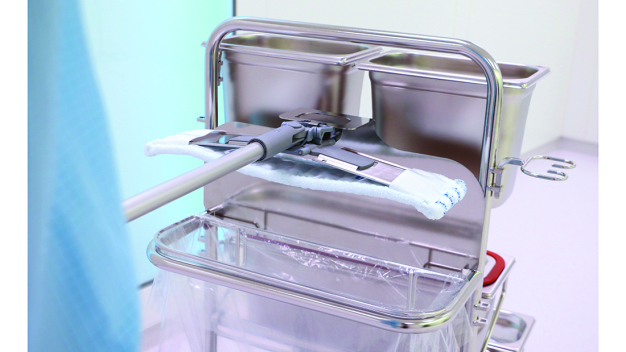
Figure 4, Figure 4.1: Opening the lid with the mop holder.

Dr.-Ing. Kolja Wulff, Pfennig Cleaning Technology GmbH
A flawless, hygienic, and contamination-free working method prevents the formation of infection chains, stops cross-contamination, and ensures the protection of product, process, and user. Fundamental to this are hygienically appropriate design of the equipment, correct use of cleaning and disinfecting agents, as well as error-free and professional work organization. Hygienic work practices not only concern production personnel but also those tasked with cleanroom cleaning and disinfection. The goal of cleaning and disinfection measures is to achieve a certain level of cleanliness, which is why equipment and materials used for cleaning cleanrooms must not pose a risk of spreading contamination. The introduction of contamination into solutions through storage in open containers and the subsequent transfer of these contaminations onto surfaces is just as undesirable as the transfer of dirt via wiping cloths onto hands and from hands to clean equipment or surfaces. It is also not hygienic if disinfectants do not achieve the specified microbiological efficacy due to improper application, for example, because of insufficient surface wetting or active substance loss caused by prolonged contact times.
Cleaning and disinfection of room surfaces are generally performed manually using wiping procedures. This presents the challenge that, despite the difficult-to-quantify human factor, a valid procedure is needed that guarantees impeccable hygienic working, offers high process safety, and contributes to the complete achievement of cleanliness standards in the cleanroom.
Development of a closed system
The company Pfennig Reinigungstechnik GmbH took this challenge as a basis to develop a closed procedure for manual cleaning and disinfection of cleanrooms, which eliminates all known weaknesses resulting from manual activity.
The following requirements were addressed in the development:
- Coordinated system components for a contactless, process-safe, ergonomic, and easily understandable workflow, and results independent of the user
- Consideration of relevant regulations during development (e.g., EU-GMP guidelines with annexes, especially the new draft of Annex 1; Hygienic Design recommendations of the European Hygienic Engineering Design Group EHEDG; DIN EN ISO 14644 series standards; VDI guidelines family 2083; DIN 13063)
- Highly precise dosing system for complete transfer of wiping cloths, and validated cleaning and disinfection measures for effective contamination control
- Closed storage of the active substance solution for a validated extension of usability
- Hygienic and contamination-free process safety to ensure the required purity of the manufacturing environment
Central system components
The core of the MopScoop PROTECT process are three system components (see Fig. 1):
- The validated dosing and transfer system for providing a defined liquid amount for wetting wiping cloths
- A specially developed lid with integrated actuator
- A mop holder, which can be opened contactlessly in conjunction with the actuator mechanism to load or unload mop cloths.
Functionality and process flow
The dosing and transfer system mainly consists of a container for the solution, a dosing tube with a gravity-driven dosing piston that can move up and down, and a basin that rotatably holds a release lever. When the mop holder is pressed down on the release lever, the dosing piston moves upward in the dosing tube (see Fig. 2, 1). In this position, the piston protrudes into the container from above, sealing the outlet tube downward, and the solution fills the dosing tube in a defined manner. When the mop holder is removed from the release lever, the piston moves downward by gravity, seals at the top, and discharges the predefined liquid volume into the basin (see Fig. 2, 2). The dosed liquid is now available for contactless attachment or defined wetting of a mop cloth. A simple and maintenance-free displacement principle is used here.
With the system-compatible mop holder, after dosing the liquid, a wiping cloth is contactlessly stretched over it (see Fig. 2, 3), the cloth is laid flat in the basin, and the pre-dosed liquid is taken up from the basin (see Fig. 2, 4). During this process, the piston moves upward again, dosing the desired amount of liquid for the next wiping cycle.
After wiping, the used cloth is hygienically and contactlessly disposed of by opening the lid with the mop holder and activating the integrated actuator to drop it into the designated wash bag (see Fig. 2, 5-7). The lid-integrated ejection collar allows the lid to be closed silently and contactlessly (see Fig. 2, 8) – ending a working cycle of the MopScoop PROTECT process.
Valid liquid quantities
The task of the dosing and transfer system MopScoop (see Fig. 3) is to provide a predefined and validated liquid amount with high dosing accuracy for uniform wetting of the wiping cloth. Validity not only refers to precise dosing accuracy but also to ensuring high accuracy independent of the user and uniform wetting of the cloth with the entire dose.
The significance of these parameters is again crucial for guaranteeing the microbiological efficacy of disinfectants and the performance of cleaning agents. The dosing accuracy was verified through a continuous operation test. This endurance test, for which a special testing stand was developed, confirms the high precision of the dosing unit. Thanks to the clear, understandable workflow and sophisticated technology, user errors are virtually impossible, and an independent result quality is guaranteed.
Hygienic design, cleanliness suitability, and cleanability
All equipment used for cleaning and disinfection in cleanrooms must not be a source of contamination themselves and must not contribute to spreading contamination. Therefore, the entire design of the MopScoop PROTECT adheres to Hygienic Design recommendations and cleanliness requirements. Dead spots, hard-to-access areas, as well as unwanted abrasion or particle generation, have been avoided throughout. All materials are thermally and chemically resistant according to their intended use and are autoclavable. To enable effective cleaning and disinfection, the components can be disassembled with minimal effort and without tools, and reassembled just as easily after cleaning. The dosing and transfer unit MopScoop has only two moving parts, guided in cleanroom-compatible bearings, with material pairing chosen to prevent particle release through friction.
The excellent cleanability and optimal implementation of Hygienic Design principles have been confirmed by the Fraunhofer Institute for Production Technology and Automation IPA in Stuttgart. The durability of the materials used, especially those components made from materials that may lose their properties over time due to aging or external influences, was tested and confirmed during the endurance test. No wear was observed over the entire testing period, so no parts needed replacement.
Hygienic process safety
Hygienic process safety means that a procedure is controllable regarding contamination risks, especially from microorganisms. This implies that, on one hand, the active solution is protected from contamination entry, and on the other hand, the spread of contamination from soiled wiping cloths is prevented. During the workflow, no transfer of contamination should occur. The separation of the cleaning trolley into a clean and a dirty area, storage of the solution in a closed container, and a closed disposal area fulfill these requirements with the entire MopScoop PROTECT unit.
A scientific study was conducted to demonstrate hygienic process safety and to test the shelf life of disinfectant solutions. The reason is that proof of microbiological efficacy is particularly important for qualified and microbiologically monitored production areas and is required by regulations. This study confirms the required hygienic process safety and verifies the microbiological stability of the disinfectant solution as well as the preservation of its efficacy over the defined shelf life.
Prevention of cross-contamination through coordinated system components
The greatest source of contamination in manual activities is human hands. The combination of the opening mechanism of the foldable mop holder and the innovative, integrated actuator in the lid enables operation completely without hand contact, eliminating the risk of spreading contamination.
The front, reshaped part of the lid over the disposal unit is designed so that it can be opened contactlessly with the mop holder (see Fig. 4 and Fig. 4.1). At the same time, this tab functions as an actuator to fold open the mop holder contactlessly. Due to the arrangement of the ejection collar, the mop holder is always outside the disposal bag (during opening and closing of the lid, opening of the mop holder, disposal of used cloths) and does not pose a contamination risk during the work process.
Performance security
Cleaning and disinfection, especially in cleanrooms, require a high level of motivation. Otherwise, consistent and quality-relevant execution of tasks is not possible. User-friendly design of cleaning equipment can significantly enhance work motivation. The contactless workflow, the consistent implementation of ergonomic principles, and the use of very lightweight materials lead to optimized ergonomics and comfortable handling. The entire process can be almost completely performed without physical effort, as dosing and liquid uptake are driven by physical forces such as gravity and capillary action or by the force conversion of a lever. Simultaneously, the simple handling, clearly structured steps, and the closed process virtually eliminate user errors and increase safety despite the difficult-to-quantify human factor.
Conclusion
The MopScoop PROTECT process optimizes hygienic and contamination-free cleaning by personnel in cleanrooms and increases the safety and effectiveness of manual wiping procedures. The self-contained and easy-to-understand process, with proven suitability of all system components, addresses all known issues in cleanroom cleaning and solves all requirements for cleaning and disinfection in cleanrooms in an innovative and motivating manner.
Further Literature
Witt-Mäckel M., Pfennig D. (2020): MopScoop - Simplify your cleanroom cleaning! Cleanroom Yearbook 2020. pp. 36 – 38. Online: Stuttgart.
Witt-Mäckel M. (2020): Hygienic process safety in the wetting of wiping cloths. CleanRoom Technology 5/2020. pp. 40 – 41. GIT-Verlag: Weinheim.

Pfennig Reinigungstechnik GmbH
Heubachstr. 1
87471 Durach
Germany
Phone: +49 831 561220
Fax: +49 831 61084
email: info@pfennig-reinigungstechnik.com
Internet: http://www.pfennig-reinigungstechnik.com