

- Knowledge & Events
- Translated with AI
The cleanroom: increasing quality requirements demand a rethinking in the field of product cleanliness
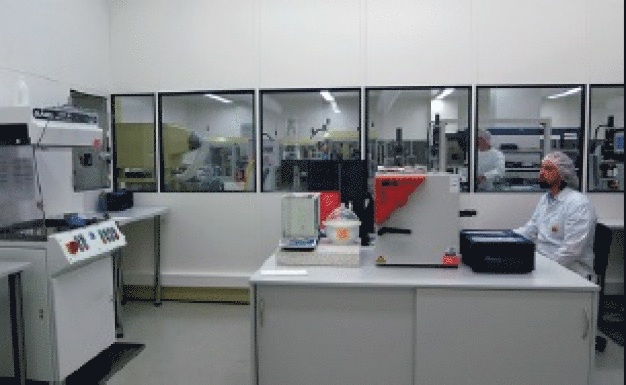
On September 18, 2014, the specialized seminar "Cleanroom Purity Requirements" will take place at ReinraumAkademie in Aschaffenburg. Deepening on the fundamentals of dust- and particle-free production is the focus of the event. Additionally, a process analysis from construction to transportation and storage will be conducted. The seminar will also thoroughly address contamination prevention as well as cost considerations when creating and operating cleanrooms.
The requirements for technical cleanliness in production and assembly are steadily increasing. Cleanliness standards are no longer limited to just a few industries. To meet these increased demands, production concepts and environments must be appropriately adapted. Cleanroom production is already indispensable in many sectors such as electronics, packaging, pharmaceutical manufacturing, food industry, automotive, and supplier industries. Not every cleanroom requires expensive technology. The focus in a cleanroom is on the technical cleanliness of the products. The effort involved should not be higher than necessary to achieve the required cleanliness.
Important information about product cleanliness
Ralf Nerling, founder of Nerling Systemräume GmbH and one of the seminar speakers, explains how component cleanliness can be tested: “The cleanliness of components is determined by washing the parts and extracting dirt from the wash solution, followed by identifying the type and size of particles using microscopy and gravimetry. Air pollution with sedimenting particles can also be detected using particle counters and then microscopically measured.” It is important to start considering the required level of product cleanliness and its influencing parameters already during the planning phase. It is not uncommon for production rooms and equipment to be built or planned, only to be met with surprise upon commissioning because, for example, dirt falls downward due to gravity or is dispersed by unwanted air drafts. It is also important to incorporate the process flow into planning and considerations. The longer products or product parts remain in the process chain, the longer they are exposed to environmental conditions. The risk of contamination is always present here as well.
Contamination prevention
Ulrich Paar, another seminar speaker and managing director of the engineering firm for quality and production consulting, explains the key steps to prevent contamination: “The first step must focus on avoiding sources of dirt in the rooms, machinery, and the production process itself. Depending on the process flow, complete avoidance is not always possible. Therefore, the second step is to reduce the influence of dirt sources on product quality. Active management of dirt and cleaning of the products then constitutes the third step. This is achieved through properly directed airflow and/or cleaning processes. Naturally, this involves the greatest effort. For this reason, great emphasis should be placed on measures from the first and second steps.”

Reinraum Akademie
Teil von CWS Cleanrooms
Dreieich Plaza 2A
63303 Dreieich
Germany
Phone: +49 173 2898950
email: reinraum-akademie@cws.com
Internet: http://www.cws.com/reinraumschulung