




- Translated with AI
Standards for the protection against cytostatics: Are you asking the right questions?

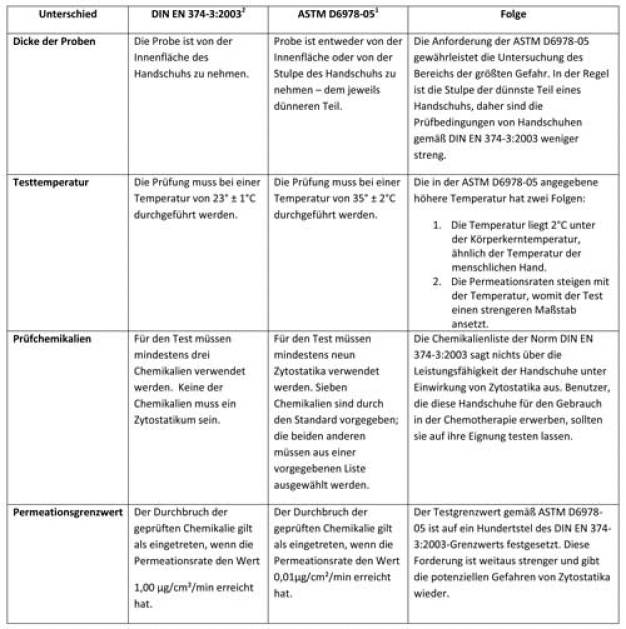
Table 1: DIN EN 374-3:2003 compared to ASTM D6978-05
Are you confident that your gloves provide the best protection when handling cytostatics? Do you have to settle for an average safety standard? Are companies that purchase gloves tested according to DIN EN374-3 for handling cytostatics truly concerned about the safety of their employees?
Many individuals working in hospital pharmacies unknowingly expose themselves to hazards when handling cytostatics because their protective gloves have not been tested according to the latest, most safety-relevant standard ASTM D6978-05.1 Nitritex Ltd, one of the leading manufacturers of protective gloves, stands out from all other producers and offers a range of high-quality gloves under the brand name BioClean™, which not only avoid the risk of latex allergy but have also been tested for demanding use scenarios. The BioClean P-Zero™, Ultimate™ Emerald™, N-Plus™ and Indigo™ gloves were specifically designed for cytostatics and tested according to the standard ASTM D6978-05. This internationally recognized standard is specifically used to assess the resistance of medical gloves against the permeation of cytostatics. In contrast, the European standard DIN EN374-3:2003 is not specifically designed for cytostatics and does not require testing for cytostatics.
Given the hazards associated with handling cytostatics, the ASTM D6978-05 standard states that breakthrough of the active substance is considered to have occurred when the permeation rate reaches 0.01 µg/cm²/min. In contrast, the DIN EN 374-3:2003 standard uses a test limit value of 1.00 µg/cm²/min; thus, the test limit of ASTM D6978-05 is 100 times stricter than its European counterpart. Currently, most protective gloves and protective clothing are tested according to DIN EN374-3, which determines the resistance of protective gloves against permeation by chemicals and microorganisms. While DIN EN374-3 has some relevance in assessing safety, there are several key differences between the two methods, as shown in Table 1.
The protection offered by gloves is a fundamental factor for individuals working with cytostatics. DIN EN 374-3 is an acceptable standard for chemical protection in general. However, to ensure the highest possible safety for people handling cytotoxic agents, the D6978-05 standard must be followed as the primary test method for cytostatic gloves.
Source:
1 ASTM D6978-05 Standard practice for assessment of resistance of medical gloves to permeation by chemotherapy drugs (Standard practice for evaluating the resistance of medical gloves against permeation by cytostatics)
2 DIN EN 374-3:2003 Protective gloves against chemicals and microorganisms – Determination of resistance to permeation by chemicals

VWR International GmbH
Hilpertstraße 20a
64295 Darmstadt
Germany
Phone: + 49 6151 39720
email: info.de@vwr.com
Internet: https://de.vwr.com



