




- Translated with AI
Shorter Time to market: US-American contract manufacturer produces high-precision silicone component for in-vitro fertilization in China
Flexible quality production of medical instruments for the Western market
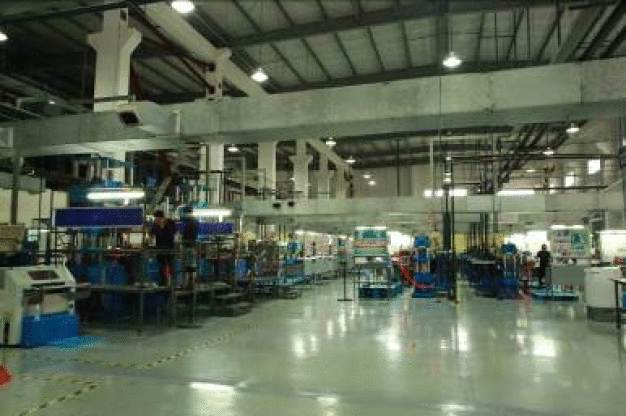
For a medical device used in in-vitro fertilization, a European OEM required a special injection-molded silicone component. The responsible supplier, Polyfluor Plastics bv, decided to commission the Chinese branch of the renowned US contract manufacturer Flexan. (Source: Flexan)
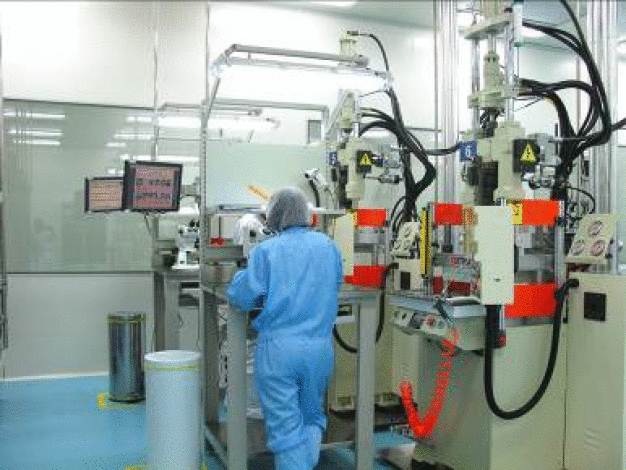
Flexan's offer for production in Suzhou provided the best conditions, for example in terms of tooling costs and delivery time. (Source: Flexan)
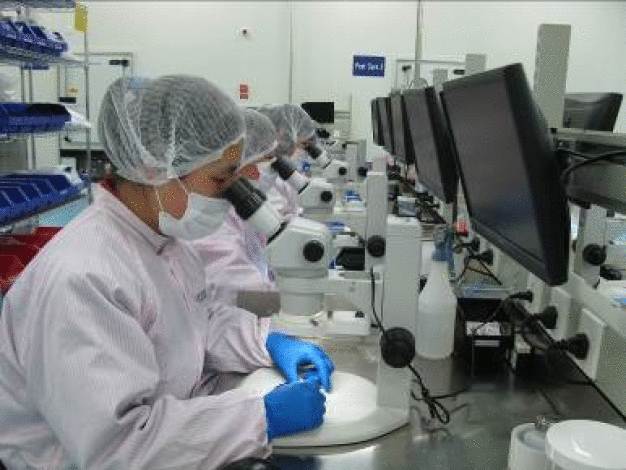
The advantage of the Chinese branch regarding Time to Market can be attributed to an industry-wide development: Western production sites are currently so fully booked that there are long waiting times for tools and products. (Source: Flexan)
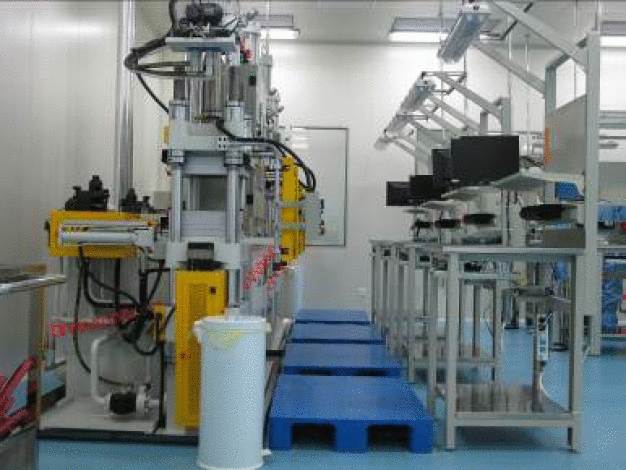
As a "wholly owned subsidiary of Flexan, LLC," the operation in Suzhou combines the cost and capacity advantages of the Chinese location with US corporate standards. (Source: Flexan)
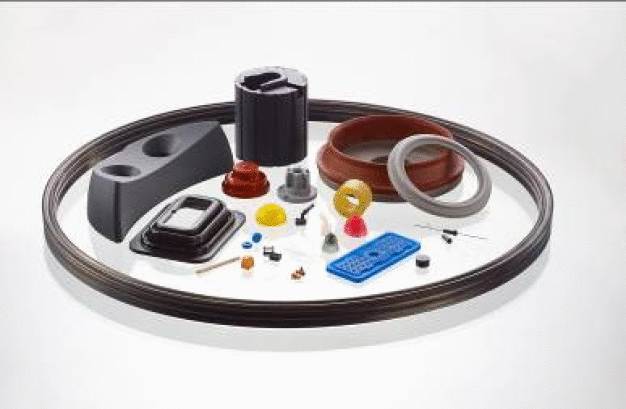
The branch in the Middle Kingdom can draw on the decades of company-wide expertise of Flexan in the production of industrial and highly precise medical silicone components. (Source: Flexan)
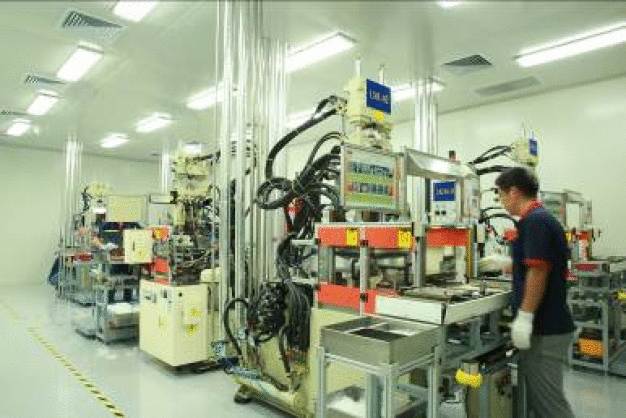
Manufacturing, development management, and quality assurance in Suzhou are internationally integrated. (Source: Flexan)
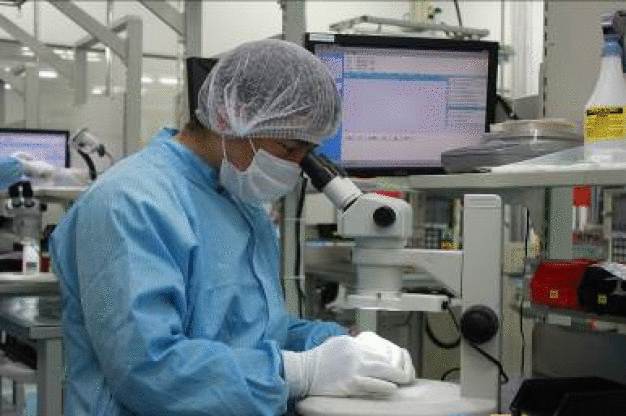
Like all other Flexan facilities, the Chinese site complies with quality standards according to ISO 9001/13485 and undergoes audits to verify this conformity. (Source: Flexan)

"Through our collaboration with Flexan Suzhou, we received our component very quickly, in the right quality, in high quantities, and at a competitive price," says Eric Wetzels, Managing Director of Polyfluor Plastics bv. (Source: Polyfluor Plastics bv)

"The difference between the American Flexan locations and China is simply that Suzhou is more focused on manufacturing many different tools and parts in large quantities, while the US plants specialize in producing even more complex parts and providing services for the final product such as secondary operations and assembly," explains Werner Karau, European Commercial Leader at Flexan. (Source: Flexan)
For a medical device used in in-vitro fertilization, a European OEM required a special injection molding component made of silicone, which should not only have high quality but also precise dimensions and specific surface properties. Since the part was to be produced within a tight timeframe and budget in a quantity of 400,000 units, the responsible supplier Polyfluor Plastics bv decided to commission the Chinese branch of the renowned US contract manufacturer Flexan. The company, closely connected to the Chicago headquarters and operated according to strict Western quality standards, is based in Suzhou and can draw on over 70 years of expertise from its parent company. It also offers clients the cost advantages of the Chinese location. Additionally, Polyfluor was able to drastically shorten the time to market with this decision. While industry-wide, at American and European production sites, there are often waiting times of up to six months just for tooling, the project with Flexan Suzhou proceeded significantly faster: the plant produced the injection molds within five weeks and delivered the first samples after just five more days.
“We were commissioned by an OEM to manufacture components for a product used in in-vitro fertilization,” explains Eric Wetzels, Managing Director of Polyfluor Plastics bv, a Dutch supplier of polymer products. This includes a special silicone injection-molded part, which is not very complex in itself but poses a challenge to produce in a cleanroom according to the tight specifications of the customer. “On the one hand, very small tolerances are required for the dimensions; on the other hand, it must feel pleasant and smooth to the touch. This requires extensive know-how, as the raw material must be injected and cooled correctly in the molds,” he says. The customer initially needed this component in a quantity of 400,000 units, but an increase to up to 3 million units is possible later.
“We contacted several manufacturers; with regard to the requirements for the component as well as the specified time and cost frame. The offer from Flexan for production in Suzhou provided the best conditions, especially concerning tooling costs and delivery time,” Wetzels continues. The advantage of the Chinese branch in terms of time to market can be attributed to a broader industry trend: Western production sites are currently so busy that there are long waiting times for tools and products. “At other manufacturers, it would have taken 4–6 months to build the injection mold,” confirms Wetzels. In contrast, Flexan could promise a period of two months for the Suzhou plant. “In Europe and the USA, for example in our Chicago plant, express tooling is still possible — but with additional costs,” explains Werner Karau, European Commercial Leader at Flexan, responsible for the project with Polyfluor. “Here, the client must weigh carefully, especially if the same quality can be offered at the Chinese site.”
Injection molds completed after only five weeks
The particularly short delivery time in Suzhou is also due to the fact that the plant sources many different injection molds and therefore has fixed capacity commitments from numerous qualified mold makers. “These reserves generally allow us to produce molds quickly,” says Karau. At the same time, the Chinese branch can also draw on the extensive company-wide know-how in manufacturing highly precise medical silicone components, which has been built up since 1946. Thanks to these various factors, the injection molds were completed within approximately five weeks, and the first samples could already be shipped to Polyfluor five days later. “The component for Polyfluor is produced by us using a hybrid LSR process,” explains Karau. The liquid silicone rubber used as the raw material is a pasty two-component mixture with short curing times, suitable for use in a temperature range from -55 to +210 °C. The two components are poured directly from the original containers into the injection molding machine. After curing, the molded parts are removed from the cores, a defined sample is taken for inspection in the measurement laboratory, and after preparing the mold, it is refilled. If the sample measurements are within specifications, the production volume is checked through visual inspection, all tests are documented, and if everything meets the requirements, the parts are packaged in a cleanroom and stored.
The challenge with the silicone component for Polyfluor was to consider both tight tolerances in dimensions and the achievement of certain tactile and optical properties: “Even if all measurements are within tolerance limits, a part can feel different from what the customer desires. This can be identified after the first prototypes,” says Karau. “If the molded part feels too firm, we can modify the mold; for example, by approaching the lower tolerance limit to have less material in affected areas.” Essentially, the surface is influenced by the mold but also by temperatures, cooling, and other parameters. During the initial sampling, a slightly finer surface was desired; to achieve this tactile quality, process parameters were adjusted, and the mold was finely polished.
Compliance with Western quality standards
“Through our collaboration with Flexan Suzhou, we received our component very quickly, in the right quality, in high quantities, and at a competitive price,” says Wetzels. As a “wholly owned subsidiary of Flexan, LLC,” the plant combines the cost and capacity advantages of the Chinese location with US corporate standards: “In management, Western structures prevail, and all procedures are largely identical across the group,” confirms Karau. Manufacturing, development management, and quality management are internationally integrated. Like all other Flexan plants, Suzhou complies with ISO 9001/13485 quality standards and undergoes audits to verify this conformity. “The difference between the American sites and China is simply that Suzhou is more geared toward producing many different molds and parts in high volumes, while the US plants focus on manufacturing even more complex parts and providing services for the end product, such as secondary operations and assembly,” adds Karau.
For Polyfluor, the project with Flexan Suzhou is another positive experience with the production of medical components in China. Wetzels, however, notes from practical experience that dealing with manufacturers in the People's Republic who are not foreign-owned and/or subject to strict Western standards requires some caution: “We once had a case where a Chinese partner assured us of a specific process. It was followed a few times, but during the third or fourth delivery, they secretly changed the procedures and produced cheaper for their own benefit. This would not happen with a German supplier, for example.” Wetzels does not want to generalize, acknowledging that there are always black sheep in the West as well, but admits: “We control Chinese suppliers somewhat differently than Western ones. Before each shipment, it is examined even more thoroughly by a testing company than industry standards require.”
After successfully producing the silicone component, Polyfluor plans further collaboration with Flexan and its plant in China.
Polyfluor Plastics bv
4817 ZL BREDA
Netherlands



