




- R+D & Community of Interest
- Translated with AI
Security skepticism hampers Industry 4.0
Study: »Functionally and Data Secure Cyber-Physical Systems – FuDaSi CPS«
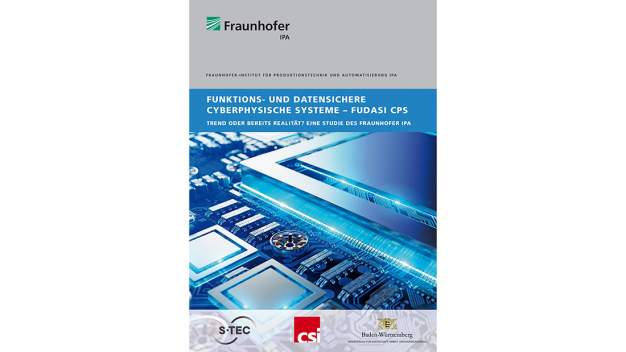
The media have long declared the industrial revolution "Industry 4.0" along with its offshoots like "Mobility 4.0," but little of this has yet been felt in everyday manufacturing. The biggest obstacle is safety concerns, while the technical possibilities for entering digitalization and networking are largely available. This was the result of a study conducted by the Fraunhofer Institute for Production Technology and Automation IPA together with the auto supplier CSI Entwicklungstechnik GmbH. Experts from more than two dozen companies were surveyed.
Connecting intelligent devices to each other presents a security problem. The smart home owner faces the danger of burglars; the smart car could be remotely controlled by hackers; entire manufacturing plants could be manipulated by saboteurs. Of course, the system itself must not cause harm. A robot must not injure an employee, and the car's brakes must always function. To ensure the necessary safety, convincing tools are currently lacking. Most of the respondents in the study indicated this. A certification mark could provide a remedy, which companies see as highly beneficial, and most are willing to participate in its development. However, such an initiative is not only labor-intensive but also organizationally difficult to implement, especially since the mark should have international validity.
Demand for more effective security systems
Further results of the study: For safety reasons, most companies are reluctant to store their data in an open cloud. They prefer a private cloud or require a certificate that guarantees security. Blockchain is all the rage, but this technology also encounters little interest. It is considered to have no relevant significance. An important step toward Industry 4.0 is online simulation, which runs on a control device parallel to the physical device. More than half of the companies are already active in this area.
Data value difficult to estimate
The vast amounts of data generated by digitalization pose not only risks but also opportunities. "They are worth money," says Dr.-Ing. Jürgen Henke, Deputy Head of the Automotive Business Unit at Fraunhofer IPA. For example, in the future, fleet sensor data could be marketed, such as information about traffic jams or outside temperatures. However, the participants in the study are still cautious about this topic, partly because they have so far been unable to accurately assess the value of the data. The cloud also enables the business model of pay-per-use, where only the usage of a product is paid for. Most respondents are open to this— even if it means they can no longer sell their products in the traditional way.
Study conducted as part of an Exploring Project
The study was conducted as an "Exploring Project" at the Center for Cyber-Physical Systems. "We posed the question for discussion: 'How do we ensure safe (vehicle) systems from development in a connected and autonomous mobility or production world?'", explains David Breunig from Fraunhofer IPA. "Exploring Projects enable easy and free access to publicly funded research," says the responsible IPA expert. Companies from Baden-Württemberg can thus collaborate with Fraunhofer IPA to realize projects on cyber-physical systems. FuDaSi CPS was funded by the Ministry of Economic Affairs, Labour and Housing Baden-Württemberg as part of the S-TEC project Center for Cyber-Physical Systems.

Fraunhofer-Institut für Produktionstechnik und Automatisierung IPA
Nobelstraße 12
70569 Stuttgart
Germany
Phone: +49 711 970 1667
email: joerg-dieter.walz@ipa.fraunhofer.de
Internet: http://www.ipa.fraunhofer.de