
- Realisation
- Translated with AI
Refrigeration in focus of current food trends 2025
Refrigeration in focus of current food trends 2025. © Lorenz Consult ZT GmbH
Refrigeration in focus of current food trends 2025. © Lorenz Consult ZT GmbH

Refrigeration rooms in focus of current food trends 2025. © Lorenz Consult ZT GmbH

Christian Lorenz, Managing Director of Lorenz Consult. © Lorenz Consult ZT GmbH
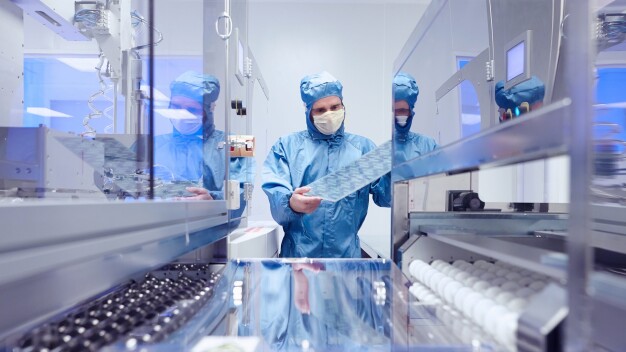
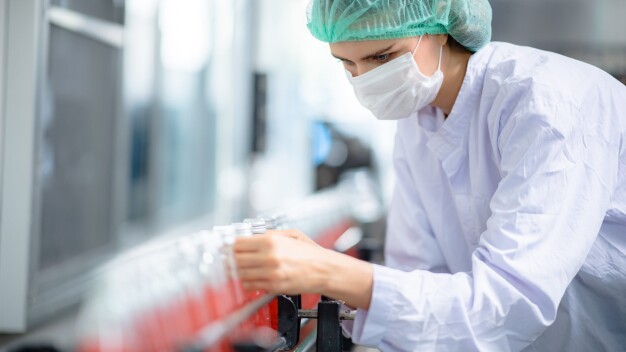
What are the current food trends for 2025, and what impact do they have on the manufacturing, processing, and packaging of food? Central to this are: cleanrooms. They are increasingly used in the food sector, with their main advantage being the reduction of particle and bacteria concentrations in the air, and thus also in and on the product itself. "Especially in view of current food trends, cleanrooms play a crucial key role," says Christian Lorenz, Managing Director of Lorenz Consult.
Trend: Fresh, organic, and unprocessed foods
More and more people prefer organic and unprocessed foods. This current food trend has significant implications for the requirements of cleanrooms in the food industry to meet safety and quality standards. This necessitates increased hygiene measures. To avoid contamination, cleanrooms must meet even stricter standards regarding air quality, surface materials, and cleaning protocols. The diversification of product lines requires flexible cleanrooms that can easily adapt to various production processes and sizes. Digitalization and automation in food production demand the integration of state-of-the-art technologies into cleanrooms. Automated cleaning systems and monitoring technologies are indispensable for ensuring efficiency and hygiene. In terms of sustainability, it is important that cleanrooms are designed to be energy-efficient. This applies to heating, ventilation, and air conditioning (HVAC) systems as well as the materials and construction methods used. Well-trained personnel are needed for handling specific food forms. Therefore, cleanrooms should be designed to support workflows and training measures.
Trend: Plant-based products
According to the Future Institute, this is a sector that is just beginning. (1) Products made from plant-based alternatives are already approaching the taste and texture of meat or fish. Large food companies have been launching their own brands in this area for some time. With the rise of plant-based products, specific challenges arise in cleanroom planning: plant-based products can contain allergens that must be controlled during production. Therefore, cleanrooms must be designed to prevent cross-contamination, which requires special considerations regarding material selection and cleaning systems. The use of different plant-based raw materials necessitates various, flexible production lines. To process these efficiently, cleanrooms must be adaptable. Many plant-based products also require specific conditions, such as temperature and humidity control, which must be taken into account. Plant-based products often have shorter shelf lives and require special packaging and storage conditions. Therefore, hygienic areas for storage and packaging must be integrated. Residues from ingredients, such as legumes, lead to increased and thorough cleaning processes and cycles. Sustainable production of plant-based products requires efficient resource use.
Trend: Sustainability
Re-use Food, Zero Waste, or Circular Food are also among the food trends for 2025. All aim at sustainability across the entire food sector. However, this affects not only consumers but especially the food industry and production. The Circular Food trend involves a completely new perspective on food. In production, there is no longer a distinction between main and secondary lines. Components of raw products that are not used in processing certain foods (such as shells, seeds, pomace, etc.) are regarded as valuable resources and are returned to the biological cycle. This also requires appropriate storage options, which need to be planned accordingly. Sustainability significantly influences the planning of cleanrooms as well. Energy-efficient systems, including modern HVAC systems that minimize energy consumption, as well as well-thought-out water and waste management, should be implemented. Environmentally friendly, recyclable materials should also be used. To reduce lifecycle costs, it is important to rely on durable and easy-to-maintain materials and systems.
Trend: Innovative procedures in food manufacturing
Food manufacturers have developed various innovative methods for production in cleanrooms to meet the increasing demands for hygiene, quality, and efficiency: Ultra-high temperature processing heats foods very quickly to kill microorganisms without impairing nutrients or flavor. Microbial fermentation uses specific microbes in controlled fermentation processes within cleanrooms to improve quality and nutritional value. Cryopreservation involves freezing foods at extremely low temperatures to preserve freshness and nutrients. Spray drying breaks liquids into fine droplets and dries them in a hot air stream, resulting in powdered foods with long shelf lives. 3D food printing, used for example in plant-based fish alternatives, involves layering food into three-dimensional objects or printing them. Cleanrooms provide the necessary hygiene and precision for this. New procedures also create intelligent packaging that extends freshness or provides information about the product's condition. Automated cleaning systems utilize technologies such as robotics or UV light to efficiently clean cleanrooms.
"The requirements for cleanrooms in the food industry have changed significantly over the past 15 years. Stricter hygiene and safety standards, technological advances such as automated cleaning and monitoring systems, the increased demand for flexible and modular cleanroom systems, and specific adaptations due to the expanded product range, such as plant-based products and the sustainability trend, shape development. By considering these aspects in planning, cleanrooms can meet current trends while also fulfilling the highest safety and quality standards," says Lorenz.
(1) See zukunftsinstitut: https://www.zukunftsinstitut.de/zukunftsthemen/food-trends-hanni-ruetzler
Lorenz Consult Ziviltechniker GmbH
8010 Graz
Austria