


- Universities
- Translated with AI
Ready for the future with Kaiserslautern University of Applied Sciences
Innovative concepts for vocational training in the high-tech sector
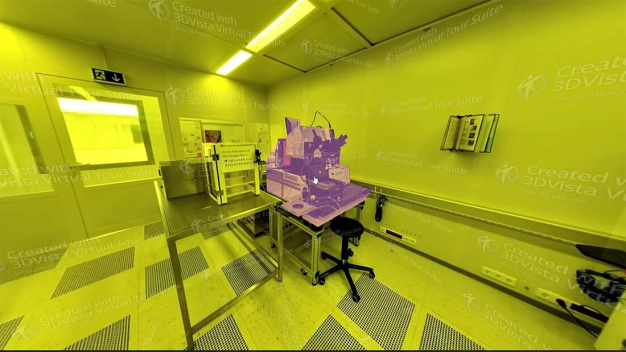
The exposure system for lithography as part of the virtual cleanroom (Photo: HS KL)
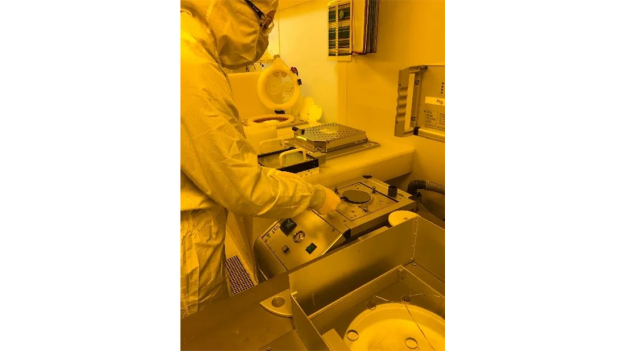
Trainee in the real cleanroom at Kaiserslautern University of Applied Sciences (Photo: HS KL)
With the InnoVET project BM=X³ funded by the Federal Ministry of Education and Research, training and further education in micro- and nanotechnology (MNT) are being elevated to a new level. BM=X³ stands for vocational education in micro- and nanotechnology through excellent careers, excellent learning environments, and excellent collaborations. The project develops future-proof training, continuing education, and professional development programs for specialists in MNT. A digital learning platform forms the core of a supra-regional vocational training academy for the high-tech sector, enabling individual and customized educational offerings. Companies, educational providers, and research institutions are networked together to effectively leverage existing skills and infrastructures.
Micro- and nanotechnology is one of the key technologies of the 21st century. It is the interface to the megatrends of the future and creates the prerequisites for innovations. However, the MNT industry is highly diversified and characterized by complex manufacturing techniques and elaborate process systems. The qualification needs of personnel are very company-specific and subject to constant change. Accordingly, commercial educational service providers in MNT are rare. To keep pace with technological change, the industry requires high-quality and flexible vocational training opportunities.
The BM=X³ Project and the Role of Kaiserslautern University of Applied Sciences
Kaiserslautern University of Applied Sciences is a partner in the BM=X³ consortium, which includes eight renowned research institutions and vocational training centers. It is responsible for developing and implementing a platform for virtual cleanroom and process experience training.
"At Kaiserslautern University of Applied Sciences, we have many years of experience conducting demanding internships in process technologies for microsystem and nanotechnology," explains Prof. Dr. Antoni Picard, who heads the office of the training and further education network for process technologies in microsystems at the university. "For example, at the Zweibrücken campus, there is an excellently equipped cleanroom available," he elaborates. "In addition, the practical hands-on experience is supported and complemented by a web-based learning environment, the so-called Virtual Technology Laboratory," Picard continues.
With this project, Kaiserslautern University of Applied Sciences also fulfills its regional educational policy mandate by strengthening the field of microsystem and nanotechnology in the Rhineland-Palatinate/Saarland region and promoting the permeability and interplay between vocational and academic education.
First Consortium Meeting of the innoVET Project BM=X³ at Zweibrücken Campus
The first consortium meeting recently took place: 16 representatives from the consortium of eight renowned research institutions and vocational schools gathered in person at Kaiserslautern University of Applied Sciences' Zweibrücken campus to reflect on the project and its progress so far, and to plan the next steps.
The consortium partners from Itzehoe, the Regional Vocational Training Center of Steinburg district, and the Lise-Meitner School from Berlin traveled together with nine apprentices in microtechnology and their instructors. Besides project reflection and planning, an immediate goal of the meeting was also to convey theoretical knowledge and practical hands-on experience on the topic and learning module "Photolithography."
"The learning module on photolithography is based on a blended learning concept, where apprentices could already prepare for the practical lab course online at home using our Virtual Technology Laboratory," explains Professor Picard. "The Virtual Technology Laboratory offers not only instructional and learning texts and multimedia representations of real cleanroom systems and manufacturing processes but also interactive, realistic machine simulations." "Thanks to effective preparation with virtual machines, the apprentices were able to successfully complete a very demanding lithography internship in the university's real cleanroom despite the relatively short time of the excursion and gain real hands-on experience," summarizes Professor Picard, highlighting the very positive and concrete experience with the training concept.
Hochschule Kaiserslautern
67659 Kaiserslautern
Germany