


- Building technology
- Translated with AI
Ready for the future: Insulators in the era of Industry 4.0
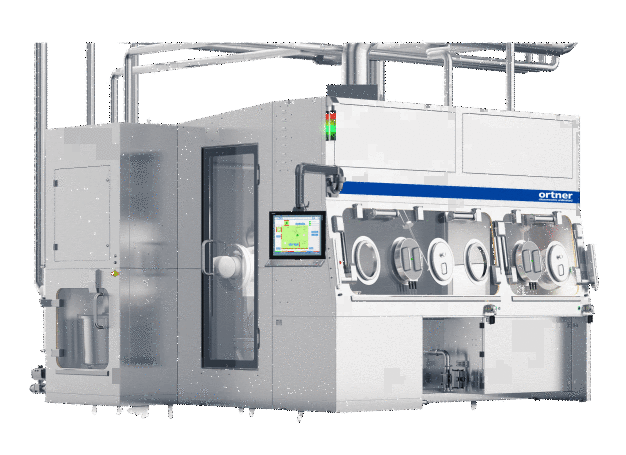
Image 5
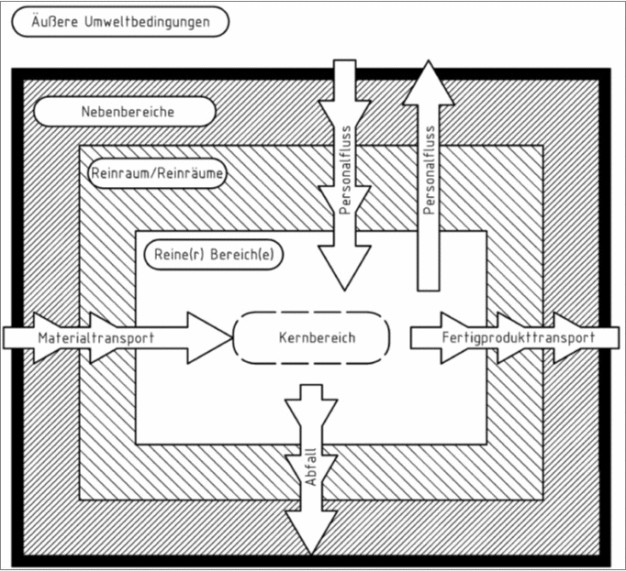
Image 1: Cleanroom zone concepts (onion shell) according to ISO 14644: Complex room design with high effort in operation, costs, monitoring, and time.
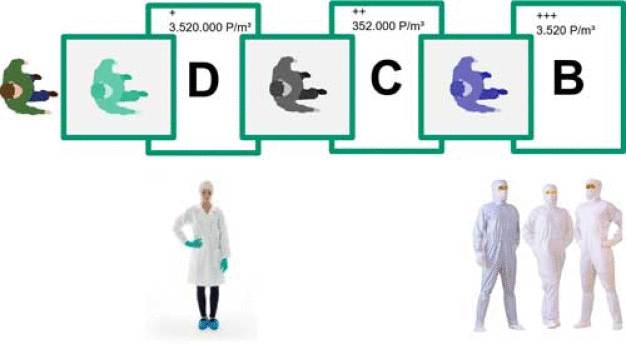
Image 1: Cleanroom zone concepts (onion shell) according to ISO 14644: Elaborate room design with high effort in operation, costs, monitoring, and time.
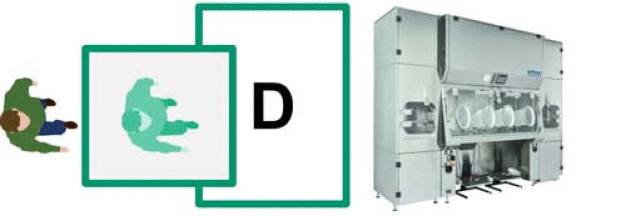
Image 2: Class D insulation solution in A.
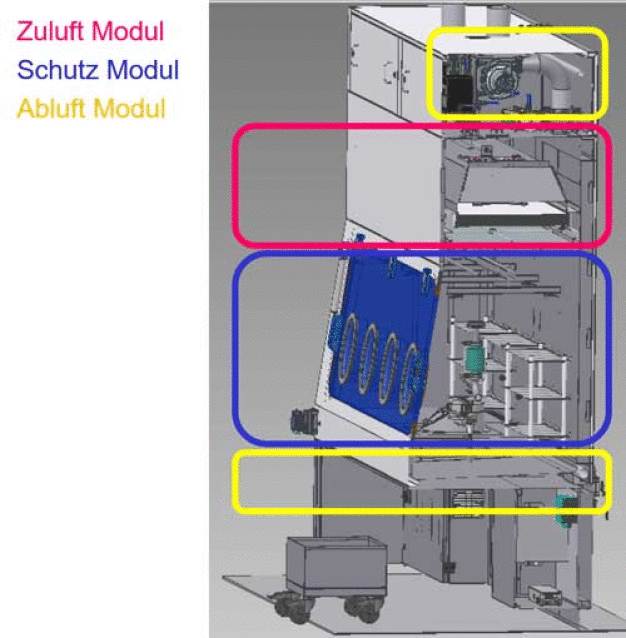
Image 3: Module Structure
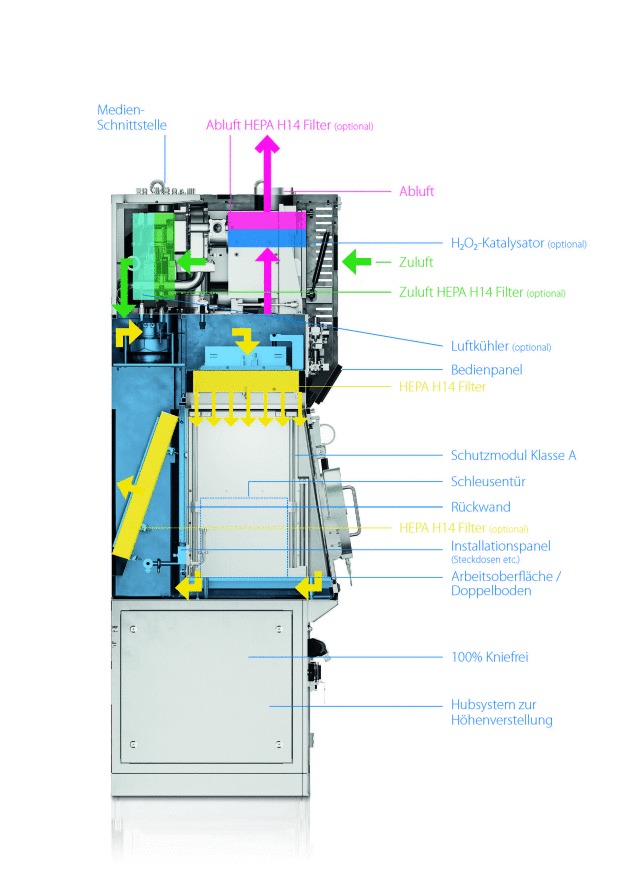
Image 4: Isolator Cross Section and Airflow using the example of an Ortner Aseptic Isolator
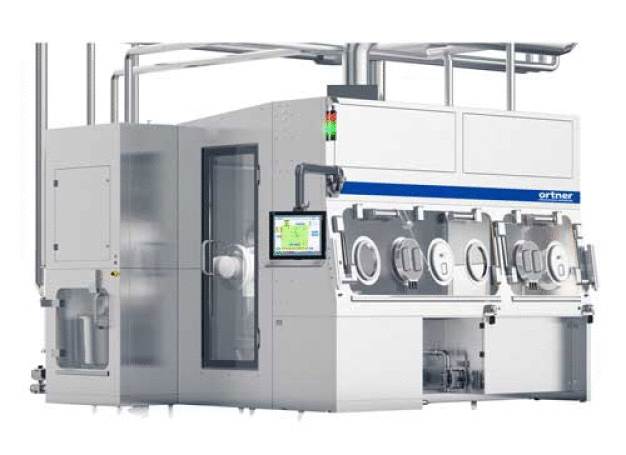
Image 5: Isolated Cluster System with 6-Axis Robot
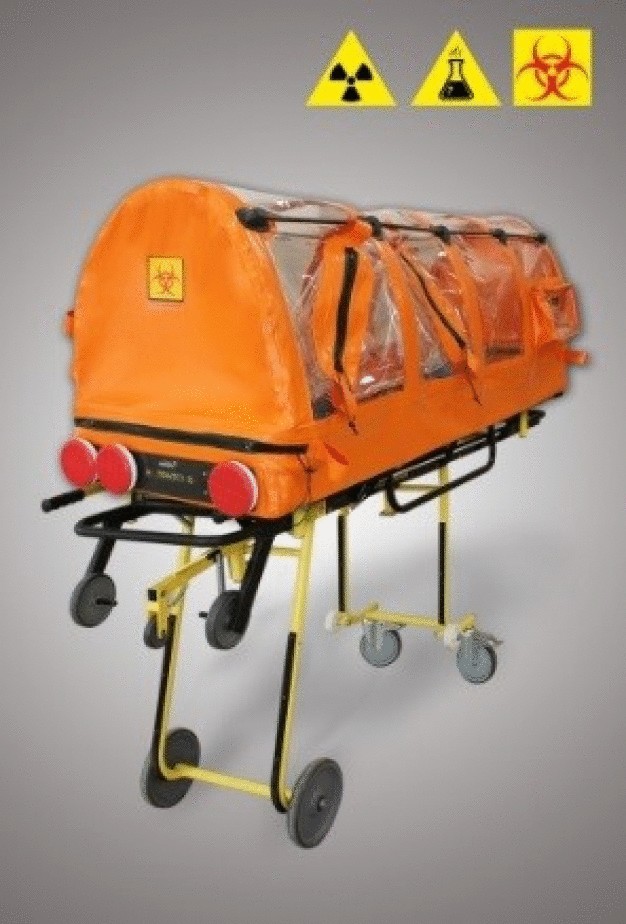
Image 6: Sheet Insulators
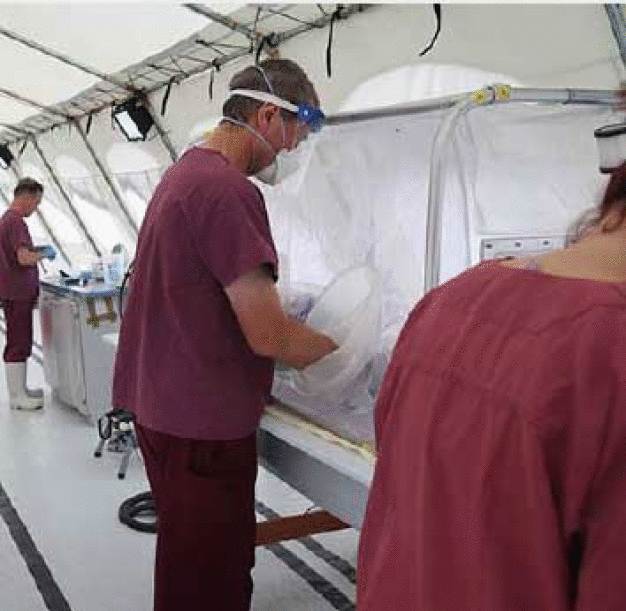
Figure 7: Foil Insulators
In isolator technology lies enormous potential: it can revolutionize cleanroom technology in certain areas and thus bring about significant improvements. It is essential to have the courage to interpret conservative regulations innovatively. Only then can isolator technology realize its full potential.
Cleanroom technology is a cross-sectional technology encompassing over a hundred professions and core competencies. The cleanroom industries differ significantly in some areas and require specific know-how. They also demand the ability to adapt to the conditions and influences of each industry. Cleanroom technology for cleanrooms in mechanical manufacturing sectors such as microelectronics, electronics, or mechatronics has been largely standardized and simplified. Filter Fan Unit (FFU) technology has contributed significantly to this.
However, the situation is different in the fields of pharmaceuticals, medicine, and BSL laboratories. Here, cleanroom technology is still often based on conservative solutions. It is frequently based on specific requirements, customer standards, or local customs. The courage to interpret regulations and develop modern, safe solutions is not particularly pronounced. However, isolator technology could revolutionize this large market.
The future belongs to isolators
Isolators have three decisive advantages:
1. They are energy- and space-efficient: the process can be better carried out in the isolator instead of halls and complex cleanrooms.
2. Isolators offer more safety, increased productivity, and minimized costs.
3. Digitalization and automation are 'state-of-the-art' in isolator technology.
Especially in the life sciences and pharmaceutical industries, traditional regulations and customs are still meaningful and necessary. This is primarily because cleanroom technology currently offers too few safe solutions and alternatives. Not only is isolator technology a driver of innovation, automation, and safe production techniques, but through increasing standardization, it also becomes more versatile and cost-effective.
Standardization versus innovation
Corporations and market leaders have the logical desire to set their techniques as standards or influence standardization and regulatory processes. However, standards, especially when established too early, can hinder innovation processes. At the same time, standards and state-of-the-art technology also significantly reduce costs and greatly increase safety. The art lies in the following balancing act: to establish standards at the right time while leaving room for innovative development.
Custom versus standard systems
In the past, isolator systems were often built according to individual customer wishes. This generally led to high costs and long project phases. Currently, however, a noticeable trend toward standard systems and mature catalog products can be observed. The need for custom systems tailored to manufacturing processes remains significant. The influence of proven modules, components, and design details has a positive effect on costs and, above all, on safety. Particularly encouraging is the development of standard systems for different requirements and applications. The range extends from very complex, high-end isolators to simple, cost-effective systems that have prompted a rethink among users and providers.
Meaningful versus counterproductive regulations
Isolator technology can significantly change standards and guidelines: regulations often lag behind technological development. Additionally, requirements from cleanroom concepts are often applied to machine solutions, which frequently lose their sense. For example, in practice, a full-surface, uniform laminar flow or chamber pressure specifications, as are common in rooms, are prescribed or applied, even though the systems are demonstrably tight and sterile. Of course, such specifications are justified and sensible— but only in special cases and after a proper risk analysis. Simulation results clearly show that a full-surface, turbulence-free displacement airflow can be counterproductive for certain work processes within the protection module.
Few cleanroom manufacturing processes can be assessed and planned as well and safely as with isolators through risk and hazard potential analyses. Isolators offer the potential to successfully apply mature, highly secure technologies from other fields such as aerospace, automotive industry, or defense and weapon technology, among others. Revolutionary trends like Industry 4.0 or digitalization can automate manufacturing processes and monitor and control them in every detail securely.
Cleanroom solutions or isolator technology:
(see Figures 1 and 2)
The effort to define the isolator is relatively low compared to the overall engineering effort. The investment costs are generally well below those of the room solution.
Isolator concepts: structure and function
The purpose of an isolator is simply explained: it should make the work or production process as small as possible while maximizing safety. Regardless of whether the isolators are custom solutions, cluster systems, or smaller standard systems: the basic structure is always similar. The differences lie in the technical details and configuration. It must often be noted: discussions about selecting isolators quickly lead to overestimations, and the original purpose falls into the background. Because it does not always have to be highly technical systems. Simple, but safe solutions are also acceptable if they fulfill their purpose. A forward-looking perspective is certainly required here: only then can the scope of action and expected developments be anticipated. An exaggeration often bears no relation to the actual investment.
Future isolators
Industry 4.0 or justified simplicity: While isolator technology was previously focused on a few manufacturers, today many reputable producers are involved. It is worth mentioning positively that companies are working with very simple and cost-effective solutions. This covers one side of the market, while on the other side, isolator technology is increasingly being broadened. To revolutionize the pharmaceutical and life sciences market and replace conservative regulations with safe technology, modern solutions are needed. The industry in all its diversity already offers all procedures and techniques. Pharmaceutical manufacturing processes from start to finish, in closed and fully monitored systems, are already feasible today. However, it requires a network of people willing to face this challenge. Similar to the automotive industry in the 1970s, all competence and decision-makers, authorities, scientists, and suppliers must work together today to implement visionary solutions. The goal is to develop exemplary reference technologies that the market can orient itself on. The range of innovation is large and can be listed as examples.
Quality by Design (QbD): The modern simulation technology now offers the possibility to represent the entire process in precise and practical workflows. All influencing factors can be simulated, and solutions developed from them. The RCPE (Research Center Pharmaceutical Engineering) in Graz is one of the institutes specializing in this.
Mock-up and ergonomics: Currently, most isolator projects are still developed through manual mock-up studies. Modern 3D simulation and 'augmented reality' techniques manage to adapt the design and ergonomics to ideal needs—and do so better than any practical trial.
Flow and decontamination technology: There are now excellent simulation techniques that confirm or rule out, for example, turbulence-free displacement airflow. This decision can have significant impacts on system design, safety, and costs.
Measurement systems and digitalization: Other market segments such as aerospace, space travel, automotive industry, etc., offer almost unlimited application possibilities for components and techniques to make processes safer, generate measurement results, and provide usable data.
Automation and service: Whether robotics, AMHS (Automated Material Handling Systems), or modern mechatronics—there is no application case that cannot be solved with modern technology to make manufacturing processes safer and faster. A key factor for the future is the availability of systems and the service life of components. Trouble-free operation and maintenance cycles of several years should soon become standard.
These and many other topics are not unrealistic, visionary fantasies: they are realities that are already feasible today and are partly already being implemented. The goal is to accelerate this development and establish standards. At the same time, it is also important to focus on the simplicity of systems and to allow the entire spectrum.

Ortner Reinraumtechnik GmbH
Uferweg 7
9500 Villach
Austria
Phone: +43 4242 3116600
Fax: +43 4242 3116604
email: reinraum@ortner-group.at
Internet: http://www.ortner-group.at