


- Service
- Translated with AI
Beate Höß
Qualification from A-Z: GMP Cleanroom Monitoring System
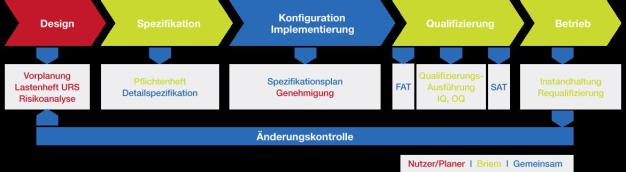
Fig. 1: Cycle of a qualification – Source: www.grm-monitoring.de ©www.grm-monitoring.de
A very essential component in setting up a monitoring system and a prerequisite for successful approval by the regulatory authority is the qualification process. Qualification is the documented proof that a room, system, or device meets the requirements. The following provides an overview of the qualification process.
Why Qualification?
A safe and consistent assurance of the protection goals in laboratory areas requires a comprehensive concept and certainty that the installed systems and facilities perform their tasks as intended. In the pharmaceutical environment, qualification of systems and rooms is therefore mandatory. It is an essential part of Good Manufacturing Practice (GMP). The guidelines needed for this are found in the EU-GMP Guide (Annex 15 - Qualification and Validation). The legal implementation of this part of the GMP guideline is laid down in the AMWHV (Medicinal Products and Active Substance Manufacturing Regulation). It states, among other things, that systems used for the manufacture of medicinal products and critical to product quality must be verified for suitability (qualification). Additionally relevant are Annex 1 and Annex 11 of the GMP Guide, as well as standards DIN EN ISO 14644 and VDI 2083.
In the qualification process, besides legal requirements, user requirements should also be incorporated. Therefore, we recommend that the operator / future system user accompanies the process from the beginning, as they will have to work with the system in their daily routine afterward.
The Qualification Process
A complete qualification consists of several individual qualification steps:
- DQ - Design Qualification
- IQ - Installation Qualification
- OQ - Operational Qualification
- PQ - Performance Qualification
[See Figure 1]
I. Qualification of a Monitoring System
Risk Analysis [1]
Before the actual qualification process, the GMP risk analysis is conducted. It is performed during the design planning discussion before the completion of Design Qualification (DQ).
The GMP risk analysis is prescribed according to Annex 15 of the EC-GMP Guide "Supplementary Guidelines for Qualification and Validation". It aims to define and evaluate all critical parameters relevant to the operation of the equipment and manufacturing process, and must identify potential causes and effects of errors. Its main goal is to identify risks that can be minimized or eliminated through changes in system design, leading to design modifications.
Risks that cannot be minimized through system optimization are to be reduced through qualifications such as Factory Acceptance Tests (FAT) and, if necessary, through recurring inspections to an acceptable level.
The risk analysis can be performed using the FMEA (Failure Mode and Effect Analysis) method. The advantage of this method is that it can be applied before a failure occurs; risk factors are identified during the analysis. A possible risk factor could be, for example, a failure of sensor data recording due to bus communication failure in the GRM monitoring system.[2]
During the risk analysis, possible preventive measures are developed in the areas of design and qualification to minimize risks and eliminate potential sources of error in advance.
In the design area, our example suggests the following solution: Continuous monitoring of communication and automatic alarm via PC in case of communication failure.
As measures in the area of qualification/requalification, risk factors for the following qualification steps IQ/OQ are noted. Furthermore, requalification or regular checks, such as in connection with annual maintenance, are recommended. Maintenance is usually carried out annually by the supplier according to a fixed maintenance plan.
The tasks identified through the risk analysis are incorporated into the specifications document, which describes the operator's requirements for the manufacturer of the monitoring system.
Design Qualification (DQ)
In DQ, this specifications document is compared with the supplier's performance (requirements specification), which at the end encompasses all main functions that enable the monitoring system to reliably record and store GMP-critical and relevant data. The requirements in the specifications document are classified into "Can" or "Must" categories, or "GxP" categories [3]. The "Must" categories are already regulated by the annexes mentioned at the beginning in the GMP guide.
Major requirements in specifications documents include, for example:
- Recording, storage, and archiving of process data and batch reports
- Display of measurement data in diagram images
- Password-protected access rights structure
- Non-editable raw data
- Audit trail function (monitoring user activity)
- Electronic signature
- Profile switching (changing climate conditions in individual rooms)
- Measurement recording and alarm activation as standard
The implementation of all "Must" and "GxP" category requirements must be described in the requirements specification. The points of the "Can" category, however, do not have to be fulfilled. The comparison between the specifications document and the requirements specification is done in the form of a traceability matrix. The DQ thus defines what the system/device must be able to do, how it should look, and in what form (qualification/calibration protocol) this must be demonstrated and verified.
Installation Qualification (IQ)
Before delivery of the system/system, a so-called FAT (Factory Acceptance Test) is performed. During this, the system is assembled in the supplier's operation and checked for correctness of components, wiring, and function. The system is only delivered after a successful FAT.
After the system is installed at the customer’s site, various IQ tests are conducted to verify correct installation. These include checking and documenting whether all devices specified in the DQ are present and installed at the defined locations, whether all devices have valid factory and on-site calibration protocols, whether the electrical installation was correctly performed, and whether the necessary software and hardware components (server/client PCs) are available.
Operational Qualification (OQ)
In OQ, the functionality of the entire system is verified through various OQ tests. This includes checking data transfer from the sensors via the control cabinet to the server and to the BMS (Briem Monitoring Software). Additionally, it is tested whether alarms are triggered visually and acoustically at the defined points. User management, UPS functionality, and the controlled behavior of the system during power outages or other disturbances are also checked. Special attention is paid to the points identified in the risk analysis.
Performance Qualification (PQ) and Qualification Documentation
In PQ, the performance of the system is tested over a defined period. This test is the responsibility of the operator and can also be considered a long-term test.
In general, the next phase of qualification may only be performed once the previous phase has been completed, approved, and released.
All steps and inspections must be documented in GMP-compliant manner in parallel with the activities performed. A complete and correctly documented qualification of all quality-relevant facilities/devices and components is a prerequisite for obtaining the manufacturer's license.
Maintenance / Upkeep
To maintain the qualified status of the system long-term, regular maintenance and upkeep are required. Long-term reliability and accuracy are also in the operator's interest; an annual maintenance and recalibration of sensors and the GRM system is recommended. All relevant points are maintained and checked to proactively prevent risks.
Change Control / Qualification of Extensions
What happens in case of changes or extensions? Extensions must also undergo the qualification process. The Change Control procedure is used for this: newly added devices as well as existing system components affected by the extension must be requalified.
Initially, affected areas are verified through a risk analysis. Only those areas are subsequently requalified. Thus, even after system extension, only a fraction of the effort of the overall qualification is required. In practice, for example, refrigerators and incubators are retrofitted to the system to also benefit from transparent monitoring.
Conclusion:
When setting up cleanroom monitoring, close collaboration between the client, specialist planner, provider, and the responsible regulatory authority is recommended – starting from the planning phase. The risk analysis and subsequent DQ play a key role in the overall system planning. Both should be conducted proactively, with utmost care, and in close coordination among all involved parties. It pays for operators to accompany the qualification process from the beginning, as they will have to work with the system in daily operation later. Ideally, the monitoring provider also supports the qualification throughout the entire lifecycle of the system. The monitoring system is a quality assurance tool that only provides optimal benefits when used correctly and comprehensively.
[1] A sample of the risk analysis can be downloaded free of charge at www.grm-monitoring.de.
[2] GRM: Holistic cleanroom monitoring based on intensive analysis and consulting, incorporating future requirements already during planning – for example, through a design that allows uncomplicated maintenance and calibration. (www.grm-monitoring.de).
[3] GxP: Summary of all guidelines for Good Practice (including in pharmaceuticals).

BRIEM Steuerungstechnik GmbH
Lauterstraße 23
72622 Nürtingen
Germany
Phone: +49 7022 60920
Fax: +49 7022 609260
email: info@briem.de
Internet: http://www.briem.de