




- R+D & Community of Interest
- Translated with AI
"Purity validation of medical devices: How clean is clean?"
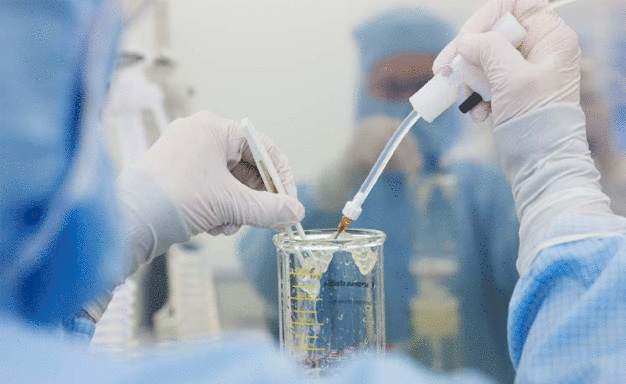
Cleanliness analysis of a dental product. (Source: Fraunhofer IPA)
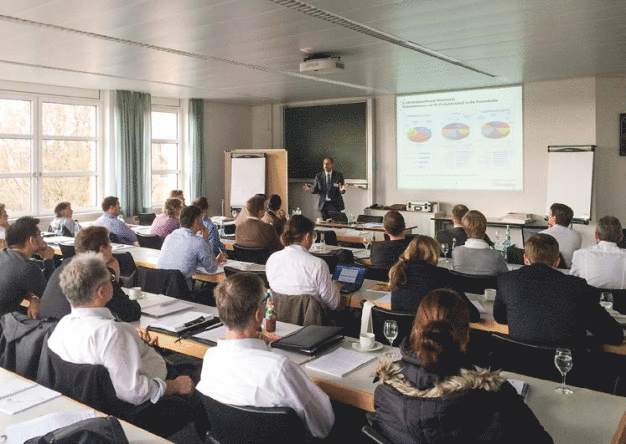
1. Statute meeting of the industrial association "MediClean" on November 12, 2015 at Fraunhofer IPA in Stuttgart. (Source: Fraunhofer IPA)
Purity is of utmost importance in the medical technology industry. For example, if a dental or hip implant is excessively contaminated, it can interfere with the integration with the bone. How clean the products actually need to be has so far often remained unclear. The Fraunhofer IPA, together with the affected manufacturers of medical devices, aims to identify the need for action in the area of purity validation, develop solution approaches, and establish an internationally valid and practical standard. On November 12, 2015, the scientists presented their initial results at the 1st Statute Meeting.
Already a few years ago, the IPA scientists noticed that purity validation in medical technology still leaves questions unanswered. »Many manufacturers wanted to know from us in projects how they need to test their products for particle purity«, recalls Guido Kreck, project manager and purity technologist at Fraunhofer IPA. »We quickly realized that especially in the area of particle purity, but also with chemical film contamination, there are no uniform procedures that would be applicable to the very broad spectrum of medical devices«, he adds.
Survey confirms industry’s need for standardization
Before starting the collaborative work, the IPA scientists wanted to learn more about the industry’s needs. Therefore, in July 2014, they invited manufacturers of medical products to a joint workshop with group work and discussion rounds. The result confirmed the experts’ suspicion: the demand from companies for a uniform approach and acceptance criteria for purity validation is high – not least because medical device manufacturers are liable for their products. »The laws only state generally: The products must not pose a danger to the patient. What exactly this entails remains open. Manufacturers must therefore independently answer the question of the purity of their products«, explains Kreck. Uniform and internationally valid guidelines for the purity validation of medical devices would definitely help the industry. Since Fraunhofer IPA has already gained good experience in the past with industry alliances for solving such purity-related issues – e.g., the experts established VDA Volume 19 for particle cleanliness testing in the automotive industry – they are also relying on this concept this time. The kick-off meeting of »MediClean« took place on March 26, 2015. Currently, 20 manufacturers of medical devices are involved.
Guideline must cover a broad spectrum of medical devices
In regular statute meetings, the alliance aims to determine which contaminations are critical for which medical devices. Additionally, the experts discuss ways to acceptance criteria, procedures, and testing methods. »The purity requirements vary greatly across the broad spectrum of medical devices. For example, a stent that enters the bloodstream must meet very different purity standards than wound dressings«, says Kreck.
To create a working basis for the first statute meeting, the IPA scientists visited the companies at their respective locations over the previous four months. »We documented how current the purity validation practices are for the different products in the participating medical technology companies«, explains Kreck.
Method mix to be standardized
The exact results were presented on November 12, 2015, and discussed with the companies. Based on this, discussions are now underway on how to achieve uniform procedures. The final is planned for June 9, 2016. Until then, the experts plan to meet four more times in Stuttgart. Manufacturers of medical devices can still join the alliance. The next meeting is scheduled for January 19, 2016.

Fraunhofer-Institut für Produktionstechnik und Automatisierung IPA
Nobelstraße 12
70569 Stuttgart
Germany
Phone: +49 711 970 1667
email: joerg-dieter.walz@ipa.fraunhofer.de
Internet: http://www.ipa.fraunhofer.de