


- Particles
- Translated with AI
Particle monitoring for aseptic manufacturing processes
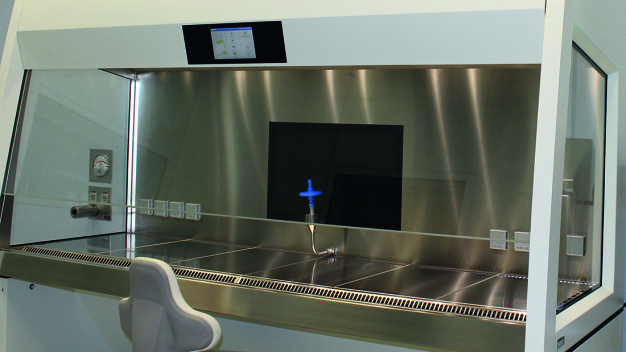
The production of sterile products, such as cytostatics and parenterals, repeatedly presents manufacturing facilities with major challenges.
While larger pharmaceutical companies generally have sufficient resources for quality management, GMP equipment, and personnel, the production of sterile products often poses significant technical, organizational, and financial hurdles for smaller companies, pharmacies, or hospitals/clinics.
This article discusses 3 key points regarding particle monitoring in sterile manufacturing:
1. Legal framework
2. Implementation of a monitoring system
3. Operation of a monitoring system
Legal Framework
Depending on the product and manufacturing process, different laws, standards, or guidelines apply to the production of products in cleanrooms. We will examine the conditions for operating a monitoring system in the production of sterile products such as cytostatics or parenterals in more detail.
"Aseptic" – meaning "germ-free" – already indicates that monitoring of germs or particles plays an important role.
"Class A areas should be monitored throughout critical manufacturing processes, including the initial setup of the equipment, unless it can be demonstrated that contaminants during the process could damage the particle counters or pose a risk," as stated in Annex 1. It clearly indicates that continuous particle monitoring in the workbenches is generally necessary. According to ISO 14644-2, continuous monitoring for particles (in cleanroom zones A and B) must be conducted.
The spatial and technical requirements are summarized especially in the cytostatics guidelines of the respective countries. When manufacturing cytostatics in pharmacies, the pharmacy operation regulation (ApBetrO), the Medicinal Products Act (AMG), and the requirements of the EU-GMP guideline, including Annex 1 "Manufacture of Sterile Products," must also be observed.
Aseptic manufacturing steps must be performed in a biosafety cabinet of ISO Class A according to the EU-GMP guideline Annex 1. GMP rules additionally require a room of ISO Class B for aseptic steps, which also applies to the production of cytostatics in pharmacies (EU-GMP guideline Annex 1).
While the requirements for air cleanliness and guidance on their determination for the pharmaceutical industry are found in the EU-GMP guidelines specified in Annex 1 "Manufacture of Sterile Medicinal Products" (see Chapter H.4.1 and Chapter 3.D Air Cleanliness Classes), DIN ISO 14644 "Cleanrooms and associated controlled environments" and VDI Guideline 2083 "Cleanroom Technology" are relevant for technical considerations. For example, VDI 2083 Part 3.1 "Measurement Technology in Cleanroom Air" provides detailed information on monitoring, especially particle monitoring.
The preparation of ready-to-use cytostatic solutions must take place in a separate room used exclusively for this purpose. This space may also be used for the production of other sterile preparations. The cytostatic laboratory must be a cleanroom, meaning there are specific limits for the permissible number of particles and microorganisms in the air. Before commissioning, it must be approved by the regulatory authority. It must meet certain minimum requirements, such as smooth surfaces on walls, ceilings, floors, and work surfaces, seamless flooring, and an air handling system with effective filters. The manufacturing itself must occur in an ISO Class A environment, e.g., under a laminar airflow safety cabinet. The surrounding room must be at least an ISO Class C cleanroom, preferably Class B. If a so-called isolator, which is a closed system, is used for manufacturing, the surrounding cleanroom needs to meet less stringent requirements (minimum Class D).
Equipment must be qualified and processes validated
According to § 35 Abs. 5 ApBetrO, cleanroom conditions must be verified during production through appropriate controls of the air, critical surfaces, and personnel using particle and germ counts. The measurement results must be documented and regularly checked for deviations. Trend analyses should be performed. If a trend deviation in germ and/or particle counts occurs, appropriate measures must be initiated.
Monitoring of pressure differentials
According to DIN EN ISO 14644-3, the pressure difference of the cleanroom relative to personnel and material transfer areas, other cleanrooms of different classes, and the environment must be tested or monitored. Depending on the room's use, pressure differences of 10–15 Pa between adjacent rooms should be maintained.
Implementation of a monitoring system
The implementation of a monitoring system can vary greatly. Is it an existing system (e.g., flagged during an audit due to missing monitoring), an upgrade or expansion of an existing production (processes are known and further optimized through modifications), or a new build? All scenarios require different solutions. Professional and competent consulting beforehand is essential. Often, external planners are engaged, who in turn recommend their trusted partners for various trades with whom they have good experience.
Regardless of the scenario, fundamental decisions must be made:
- -> Which measurement sizes and how many sensors are required (consider legal bases, risk-based assessment, etc.)?
- -> Safety cabinet: particle concentration?
- -> Safety cabinet: airflow, temperature, humidity?
- -> Room: particle concentration?
- -> Room: pressure?
- -> Room: temperature / humidity?
- -> Cooling devices: temperature?
- -> Status or alarm signals from other devices?
-> How should warnings or alarms be signaled?
- Traffic light?
- Horn?
- Where/how should alarms be acknowledged?
- Measurement display inside the room?
- Measurement display via PC / smartphone / tablet?
- Email forwarding?
- SMS forwarding?
With the manufacturer or planner, an appropriate concept tailored to the room layout and manufacturing process should be developed. At this stage, a rough schedule, integration concept (especially for existing cleanrooms), and qualification scope must be known. Once all details are clarified, a user and rights matrix is created, and all IT-related questions are resolved, there is nothing standing in the way of GMP-compliant installation and commissioning.
Operation of a Monitoring System
In daily operation, it is important that everything runs as smoothly as possible. The monitoring system should not consume unnecessary resources (personnel, working hours, etc.) but must integrate seamlessly into the manufacturing processes. For example, automatic activation of particle measurement when the safety cabinet is in operation is sensible. Most cabinet manufacturers today offer such interface signals that can be easily integrated into the monitoring system.
Automated reports can be a great relief. Daily, weekly, or monthly reports—tailored to specific needs—are ideal for this purpose. Batch reports (automated reports for a specific batch) are the right tool for production managers or the QP to integrate monitoring into daily routines.
The annual maintenance and calibration of the system should ideally be carried out during a "maintenance week" together with other technical equipment (HVAC systems, safety cabinets, etc.).
These examples demonstrate how crucial it is to consider the later operation of the system during planning. When the important aspects are addressed at the right time, there is nothing preventing the production of sterile products.

BRIEM Steuerungstechnik GmbH
Lauterstraße 23
72622 Nürtingen
Germany
Phone: +49 7022 60920
Fax: +49 7022 609260
email: info@briem.de
Internet: http://www.briem.de