
- Production & Procedure
- Translated with AI
Dr. Christoph Strubl
Packaging as a contamination risk?
Yes, of course – and specifically when the packaging is produced under lower hygiene and cleanroom conditions than the product being packaged.
Packaging as a contamination risk?
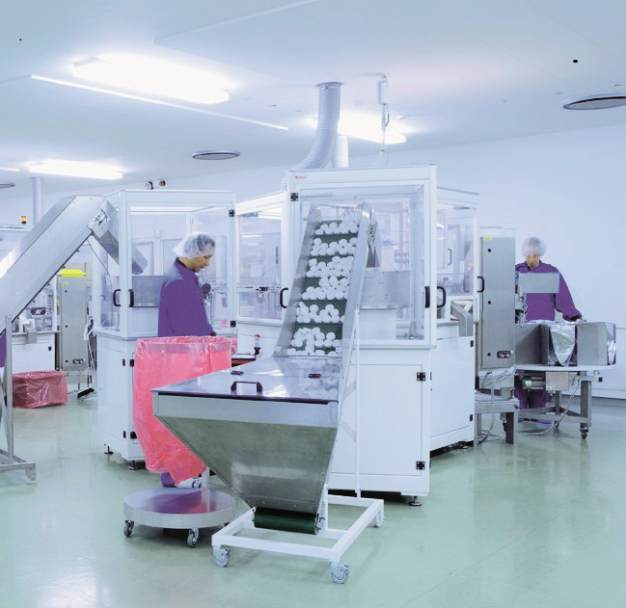
In pharmacy and medical technology, manufacturing in a cleanroom environment has become standard. Only then can the high requirements for cleanliness and hygiene be met. This applies to active ingredients as well as to plastic components, implants, instruments, packaging, pumps, hoses, and more. To prevent damage and contamination during transport, these products must be packaged before leaving the cleanroom. Plastic packaging (films, hoses, bags) are used for this purpose.
Risk Factors of Packaging in the Cleanroom Supply Chain
These film packages come into direct contact with the product, resulting in significant risks:
1. Raw material risks
- Conformity of the used packaging raw materials
- Migration processes between packaging material and product
2. Process risks
- Contamination of cleanroom zones by inferior packaging
- Contamination of the product through contact with the packaging
3. Logistics risks
- Pollution during handling and transport
- Entry and exit into controlled cleanroom zones
Film packaging is used throughout the entire cleanroom supply chain. All parties involved, from raw material suppliers and component or assembly manufacturers to the market release of the end product, must address these packaging risks.
Specification of Cleanroom Packaging
The fundamental principle in packaging specification is as follows: The packaging used in the cleanroom must meet the same quality requirements as the product manufactured in the cleanroom.
1. The quality level of the final product defines the quality requirements for the film packaging used in the supply chain
2. The cleanroom quality level of the packaging process stage determines the requirements for the production environment at the packaging manufacturer
3. Only a film packaging produced based on GMP principles in a controlled cleanroom environment can help mitigate these risks
4. An absolutely pure, particle-free, and controlled production environment is the prerequisite for the cleanroom suitability of the packaging products
5. Only then can it be demonstrated to the customer that the product quality is maintained through the product-contacting packaging.
STRUBL Cleanroom Packaging as a Solution
STRUBL KG Kunststoffverpackungen is the specialist for cleanroom packaging. As a competent partner, tailored solutions are developed with customers: in addition to flat and (semi-)sleeve films, primarily bags and sacks, side-fold bags, block-bottom bags, multi-chamber, double bags, and sterilization bags. The products are manufactured in a GMP-compliant cleanroom environment using state-of-the-art technology. A professional GMP quality assurance system supports and monitors all processes. This means: hygiene management, pest control, risk analysis, traceability, documentation, validation.
STRUBL supplies these cleanroom packaging solutions to renowned manufacturers in the pharmaceutical and medical technology industries. The products are used as both primary and secondary packaging materials. Many satisfied customers confirm the consistently high quality and production standards, as well as flexibility.

Strubl GmbH & Co. KG Kunststoffverpackungen
Richtweg 52
90530 Wendelstein
Germany
Phone: +49 9129 90350
email: christoph.strubl@strubl.de
Internet: http://www.strubl.de