


- R+D & Community of Interest
- Translated with AI
Christopher Weber, Jonas Block
No reimbursement of license fees already paid in the event of invalidity declaration or judicial determination of non-use of the licensed intellectual property rights
(EU Court of Justice, Judgment of 07.07.2016, C-567/14; continuation of EU Court of Justice, Judgment of 12.05.1989, C-320/87 – Ottung)
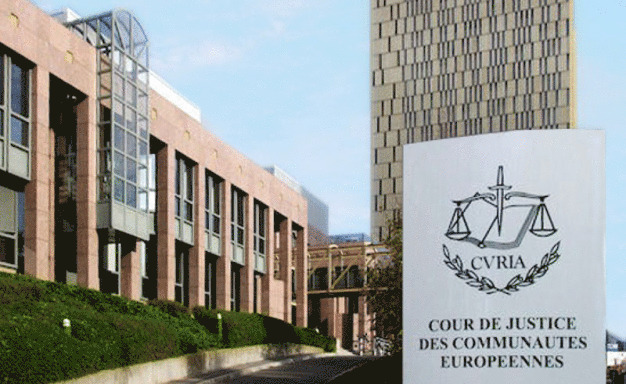
ECJ

Christopher Weber

Jonas_Block
On July 7, 2016, the Court of Justice of the European Union confirmed a cornerstone of German licensing contract law in the preliminary ruling C-567/14 (Cour d'Appel de Paris). For over 100 years, German courts have held that license fees are not to be reimbursed if the licensed patent right is revoked or a court determines that the teaching of the licensed patent right is not being used (RG judgment of 21.11.1914, RGZ 86, 45 – Spring mattress; BGH GRUR 1957, 595 – Transformation table; GRUR 2002, 787 – Wiper strip; GRUR 2005, 935 – Comparison recommendation II).
According to the jurisprudence of the Reichsgericht and the BGH, a patent license agreement is not void with retroactive effect if the licensed patent right later ceases to exist, in particular if it is revoked, but remains effective until the time of revocation. This is based on the idea that a license agreement is a "risky transaction." As long as the patent is respected on the market and third parties are not allowed to use the technical teaching without compensation, the licensee acquires a factual opportunity for use until the revocation and thus a favorable business position that he would not have had without the license agreement. In the opinion of the courts, this factual advantage of the licensee justifies maintaining the payment obligation. Therefore, the licensee remains obliged for the past as long as the parties have not agreed otherwise (instructive LG Düsseldorf, judgment of 12.08.2008, 4b O 17/08 – Coin deposit lock). In contrast, patent laws or jurisprudence of some EU member states (especially those from the eastern EU) provide for a reimbursement obligation of the patent holder in the event of revocation of the licensed patent. The legal basis for the reimbursement claim is usually the law of unjust enrichment. In some member states, explicit legal claims have also been established for the case of revocation of the licensed patent; however, it is also sometimes required that the patent holder knew that his patent would likely be revoked or acted in bad faith ("bad faith").
The ECJ in Genentech refers to its decision in Ottung (judgment of 12.05.1989, C-320/87), where it found an exclusive license agreement. In Ottung, the court established that the obligation to pay a fee, even after the expiration of the licensed patent, may reflect the value attributed, from a commercial perspective, to the opportunities for utilization associated with the license agreement. This is particularly true if this obligation is contained in a license agreement concluded before the patent was granted (Ottung, para. 11). Under such circumstances, if the licensee can terminate the contract with reasonable notice, an obligation to pay license fees throughout the entire duration of the contract does not fall within the scope of Art. 101(1) TFEU (Ottung, para. 13). When a license agreement is concluded, the licensee pays not only for the use of the licensed rights but also for the security that his commercial exploitation efforts will not be hindered by infringement lawsuits from the licensor (Genentech, para. 40; "freedom to operate"). As long as the licensee can always dissolve the license agreement, based on Ottung, a violation of Art. 101 TFEU is not present.
The ECJ thus takes an economic view of the interests underlying a license agreement and does not focus solely on the wording of the agreement. Rightly, the chamber rejects a violation of Art. 101 TFEU on the grounds that Genentech was ultimately free to terminate the license agreement.
If the licensee were granted a reimbursement claim in the event of non-use or revocation of the licensed patent right, licensees would have a significant interest in destroying the corresponding patent after the patent protection expires. The factual market advantage that the licensee gained during the term of the licensed patent would then be disregarded. A claim based on unjust enrichment would not be effective, as the burden of proof for the hardly quantifiable factual market advantage ("obtained benefit") would lie with the patent holder. Conversely, the patent holder has no legal means against legal attacks on the validity of his patent by his simple licensee, as this right cannot be contractually waived according to Art. 5(1)(b) TT-GVO.
Overall, the contractual risk allocation is thus thrown into imbalance: the licensee enjoys a privileged position on the market during the license period, while the licensor only gains certainty after the last licensed patent expires whether he can retain the payments received. This could discourage patent holders from promptly reinvesting in research and development. After all, licensees would probably only file nullity actions at the end of the patent term to maximize their market position. This runs counter to the idea of nullity or opposition proceedings: the legal attack on the patent’s validity aims to break the monopoly conferred by the patent. A legal attack based on the expiration of the patent would no longer serve the public interest in releasing the technology, but solely the licensee’s interest in reimbursement of fees.
The ECJ’s leading decision thus appropriately considers the interests of the contractual parties and the public, and is likely to reassure especially the innovative industry.
Kather-Augenstein
40474 Düsseldorf
Germany