


- Goggles
- Translated with AI
New validation study shows added value of autoclavable cleanroom protective glasses

© CWS Cleanrooms

Bolle Coverall COVACLAVE © Bolle
Bolle ELITE SMALL © Bolle

Bolle SUPBLCLAV2 © Bolle

© CWS Cleanrooms

© CWS Cleanrooms
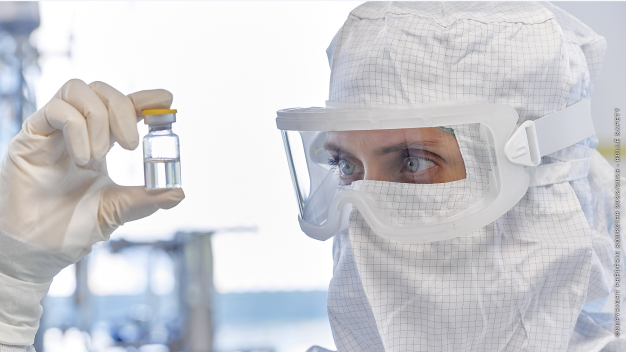
With regard to the changes in GMP Annex 1, which will come into effect in August 2023, and the importance of wearing an autoclave-compatible cleanroom safety goggles in sterile environments, it is now necessary to revisit this topic more intensively. CWS Cleanrooms, as a reliable full-service partner around the cleanroom, has also dealt extensively with this issue and, together with the manufacturer Bollé Safety, conducted an initial validation study over a year. Seven cleanroom goggles were systematically tested for their material durability and maximum washing and sterilization cycles. We present the results.
Protective goggles are necessary in the cleanroom environment. On the one hand, to minimize contamination of products and processes from sources such as human skin flakes, microorganisms, particles, and droplets from the facial area. On the other hand, to protect employees in cleanroom laboratories from chemicals, fumes, or splinters. Quality assurance in cleanrooms is always of particular importance. Not only in sterile areas must processes and manufacturing be carried out carefully and according to validated methods. Therefore, engaging with this topic is worthwhile for various cleanroom classes and environments. The lower the particle load, the cleaner the products manufactured in the cleanroom.
With the publication of Annex 1, the requirements for cleanroom clothing in GMP cleanrooms have now further changed. From August 2023, sterile face masks and sterile, autoclave-compatible eye coverings are mandated in defined GMP areas by the "Manufacture of Sterile Medicinal Products" section of the EU GMP guideline.
When deciding on a specific model, besides the durability of the product, the use of the goggles over many hours a day should also be considered. Criteria such as wearing comfort, individual adjustment options, ventilation of the goggles, and visibility are essential for employees. Furthermore, traceability and comprehensive documentation of the cleaning cycles must always be ensured.
For responsible companies, another important aspect is sustainability. On the one hand, to reduce their own footprint, and on the other hand, because the protection of the environment, climate, and resources is increasingly important for clients and customers. This raises the question of whether disposable or reusable products should be used for cleanroom safety goggles.
Considering all these aspects, CWS Cleanrooms, together with Bollé Safety, conducted a one-year validation study in which different models of cleanroom goggles were systematically tested.
The Study
Six autoclave-compatible cleanroom safety goggles from Bollé Safety's ELITE, COVERALL, and SUPERBLAST series, as well as the COVACLEAN disposable protective goggles, were tested. All models differ in design, ventilation openings (direct & indirect), materials, coatings, and other aspects.
The study was conducted in two steps: first, visual inspection and material testing by CWS Cleanrooms' product and quality management in collaboration with Bollé Safety. Then, laboratory tests according to EN 166 and ISO by an accredited laboratory in France.
The goggles worn under real conditions by our customers in the cleanroom were washed, autoclaved, packed, and transported back to the customer at two CWS Cleanrooms locations.
The Aspects Tested
In the first part, the frame, the viewing window, the closure, and the headband were visually inspected. It was checked whether the product components retained their material properties such as shape, feel, and color. The headband was also examined for its elasticity.
In the laboratory, the safety goggles were then tested according to EN166 and ISO standards. The viewing windows of the reusable models were tested for light transmittance, scratch resistance, anti-fog (condensation), impact resistance, UV resistance, and spherical optical performance (visual quality). These aspects are important as they affect the comfort and safety of cleanroom safety goggles. While the viewing window is completely clear at 100% light transmittance (VLT%), a decrease in VLT% leads to yellowing. The VLT% should therefore not fall below 74%. For scratch resistance, a luminance factor of < 8% is considered acceptable. Condensation should last more than 8 seconds.
The Study Results
The evaluation confirms that the autoclave-compatible cleanroom safety goggles from Bollé Safety exhibit high material durability and longevity. The light transmittance, scratch resistance, anti-fog (condensation), impact resistance, UV resistance, and spherical optical performance maintain their strong performance. The maximum cleaning cycles, including autoclaving, demonstrate that all tested models withstand CWS Cleanrooms' washing procedures. Even after up to 30 cleaning and sterilization cycles, they remained resistant.
The yellowing of the frame observed during the study was acceptable in all cases until the end of the cleanroom safety goggles' lifecycle. Regarding scratch resistance, the products also impress: all tested reusable models passed the scratch resistance test K (resistance to surface damage by fine particles) up to 30 cycles. The light transmittance of the lens remained at the same or very similar quality after 30 cycles as before testing. The strong anti-fog and anti-scratch performance can be attributed to the innovative and durable PLATINUM® coating, applied on both sides of the lens.
The disposable COVACLEAN safety goggles showed expected less robust results, as this model is specifically designed for single-use in sensitive areas such as pharmacies or operating rooms and thus has less durable material properties and lens coating. The gray headband remained resistant to yellowing up to 30 cycles, but the PVC frame deformed after just 5 cycles, and its condition was no longer sufficient after 20 cycles. Laboratory reports show that the light transmittance of the lens remains acceptable after 30 cycles, but scratch resistance K and condensation (anti-fog) are not maintained in the disposable model.
Conclusion
The first one-year validation study by CWS Cleanrooms and Bollé Safety clearly shows that companies and laboratories can rely on cost-effective and environmentally friendly reusable solutions for cleanroom safety goggles. Which specific models are suitable depends, of course, on individual requirements and processes in the cleanrooms. Reusable models have demonstrated strong and convincing performance in terms of durability and safety. They offer a long lifecycle, which single-use models cannot fulfill, as these are designed for one-time use and sterilization. To prepare for the changes in requirements with the implementation of GMP Annex 1 in August 2023, CWS Cleanrooms will conduct further validation studies. This will enable companies and institutions to proactively and comprehensively address the topic and its benefits, and to find the right product on the market.
The Study at a Glance
Period: May 2021 to 2022
Publisher: CWS Cleanrooms
Study Partner: Bollé Safety
Goggles Tested: 6 reusable models, 1 disposable goggles
Series: ELITE, COVERALL, SUPERBLAST, 1 disposable protective goggles: COVACLEAN
Interested? Please contact: Catrin Dünne, Product Management Specialist, Catrin.Duenne@cws.com

CWS Cleanrooms Deutschland GmbH & Co.KG
Dreieich Plaza 1 A
63303 Dreieich
Germany
Phone: +49 6103 3091290
Fax: +49 6103 309169
email: cleanrooms.de@cws.com
Internet: http://www.cws.com/reinraum