


- Translated with AI
Multidrug-resistant pathogens in hospitals – fundamental issue or panic-mongering?
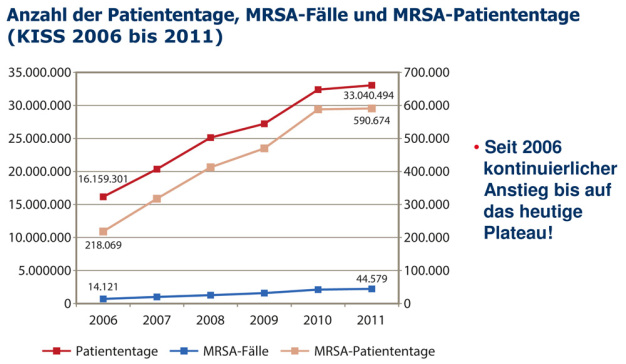
Figure 1 shows the increasing number of recorded patient days (values on the left vertical axis) with the number of participating hospitals, as well as a growing number of MRSA cases and inpatient days with MRSA colonization or infection (values on the right vertical axis).
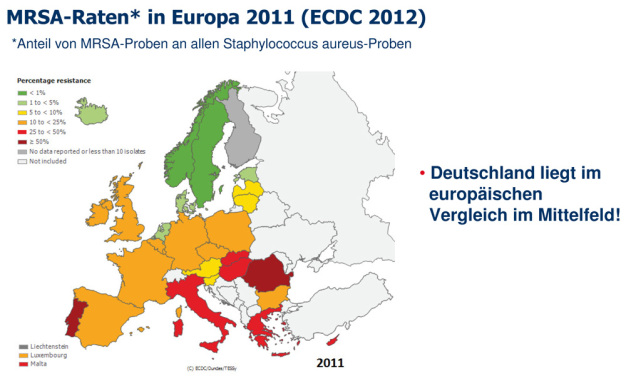
Figure 2 shows for the year 2011: Germany is in the middle of the European comparison, between the frontrunners with more than 50 percent in Southern European countries and the Scandinavian countries and the Netherlands with rates around 1 percent.
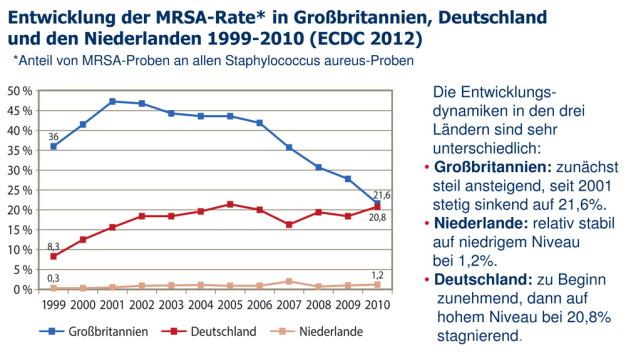
Figure 3 also shows, in addition to the differences in levels between Great Britain, Germany, and the Netherlands, the significantly different development dynamics from 1999 to 2010. The nearly unchanged low MRSA rate in the Netherlands contrasts with a steeply rising MRSA rate in Great Britain from 1999 to 2001, which has been steadily decreasing since then, as well as a rate in Germany that initially increased sharply and then stagnated at a high level.
Health insurance company hkk presents the hkk Health Report on infection rates with multidrug-resistant organisms in regional hospitals / Doubling of infection rates since 2007 / Urgent need for action: the Netherlands and Scandinavia as models.
Problematic hygiene conditions in hospitals and infections caused by multidrug-resistant organisms have repeatedly been the subject of media coverage in recent years. Whether this is just isolated cases or a widespread problem also in northwest Lower Saxony and Bremen was investigated by the health insurance company hkk as part of its current hkk Health Report from the Bremen Institute for Occupational Safety and Health Promotion (BIAG). The result was presented by BIAG Director Dr. Bernard Braun on May 21, 2013, in Bremen, together with Dr. Jörg Herrmann, head of the Institute for Hospital Hygiene in Oldenburg.
Estimated more than 10,000 deaths annually due to hospital infections
According to an extrapolation of the 2012 published ALERTS study at the Sepsis Research and Treatment Center of the University of Jena, 4.3 percent of all hospital patients in Germany develop an infection during their stay. This corresponds to between 400,000 and 600,000 cases annually, leading to death in 10,000 to 15,000 patients. It is estimated that 15 percent of these are caused by multidrug-resistant pathogens (MDR). Other studies largely confirm these results. MDR owe their name to their ability to be immune to numerous antibiotics. MDR are found not only in hospitals but throughout the environment and usually do not pose a threat to healthy people – quite the opposite for those with weakened immune systems. Among all MDR, the MRSA pathogen (Methicillin-Resistant Staphylococcus Aureus) is the most common.
Study design
The basis for the investigation was routine data from hospital billing of hkk insured persons from 2007 to 2011. All hkk insured persons who were treated in hospital during this period and diagnosed with an MDR infection were included.
Doubling of infection rates
During the study period, the proportion of hkk insured persons treated in hospitals who suffered an infection there doubled from 3.1 to 6.3 percent. Looking only at MDR infections, these were detected in 271 hospital cases in 2007, increasing to 619 cases in 2011. As a result, the proportion of MDR infections among all hospital cases more than doubled from 0.465 to 0.941 percent over five years. The share of MRSA infections increased from 0.299 to 0.526 percent. About 65.6 percent of these were MRSA infections without symptoms. Mostly affected were older people: 49 percent of all MDR-infected hospital cases involved patients aged 70 to 89 years.
Decreasing proportion of complex follow-up treatments
MDR-infected hospital patients incur significant follow-up costs due to longer stays, personnel and material costs for qualified hygiene staff, isolation and renovation measures, as well as protective clothing. Surprisingly, the proportion of such complex treatments among all MDR cases decreased from 58 to around 42 percent during the study period, and among MRSA infections from 73 to 58 percent. "We can only speculate about the reasons," says Dr. Bernard Braun. "Either the severity of cases has decreased, so that extensive measures are no longer necessary from the hospitals' perspective. Or many hospitals lack the personnel, structural, and infrastructural capacity to provide such services."
Abroad as a model: 20 to 30 percent of all MDR infections preventable
That it can be done differently is demonstrated by looking abroad: While the proportion of MRSA among all detected Staphylococcus Aureus samples in Germany exceeds 20 percent, it is well below 5 percent in Scandinavia, Estonia, and the Netherlands. Even in the chronically underfunded British healthcare system, the rate was reduced from 44 to just under 22 percent within five years. Experts estimate that with appropriate hygiene measures, 20 to 30 percent of all hospital-acquired infections with multidrug-resistant pathogens in Germany could be prevented. However, this requires a multi-layered, interdisciplinary approach.
Holistic improvements demanded
Although the absolute number of detected MDR cases is relatively low, a change in hygiene culture can have far-reaching positive effects on the entire healthcare system and lead to new quality and safety standards. Positive examples come from the USA and the Netherlands. The Dutch anti-MRSA strategy includes a set of measures such as comprehensive screening in high-risk areas, quarantine of patients until negative results are obtained, systematic presence of infectious disease experts, and a rigorous policy to avoid unnecessary antibiotic prescriptions in outpatient care.
"There is an urgent need for action to achieve a significant reduction in MDR and MRSA rates in Germany. Initial steps are already visible. However, what we need is a structured concept that involves experts from nursing, medicine, biology, hospitals, and the meat-producing agriculture sector," explains Dr. Bernard Braun. A first step is the hygiene promotion program with a funding volume of up to 350 million euros for the years 2013 to 2016, planned as part of the relief package for hospitals. The funding program provides targeted grants for the additional hiring of trained medical and nursing hygiene personnel as well as for their training and further education by hospitals, and is currently planned to be financed by health insurance companies.
hkk - Erste Gesundheit
28195 Bremen
Germany