

- Translated with AI
Paul Jochem
Hospital vs. Cleanroom
Is today's hospital still future-oriented, or will technology revolutionize the operating room of tomorrow!?


Paul Jochem
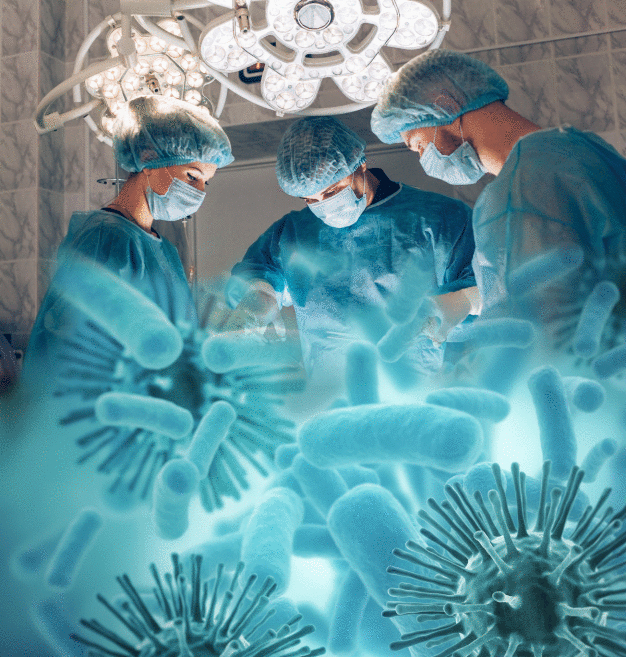
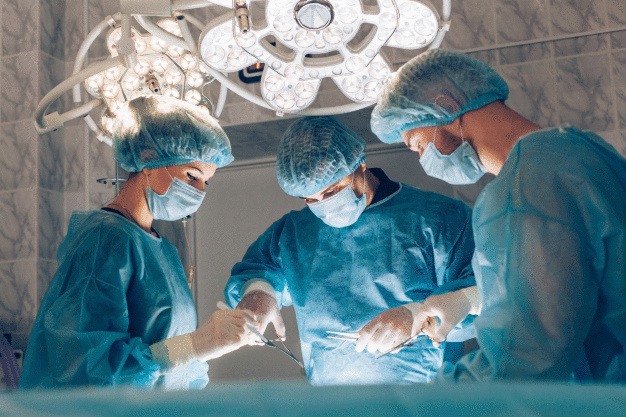
A report from August 11, 2016, in Stern with the topic: "Dangerous Germs" has rekindled memories in me. I have already dealt with this topic in two reports. I keep asking myself the same question: Does today's hospital still have a future? Or will we soon perform surgeries in cleanrooms?
The author of the above-mentioned report, G. M., is a trained doctor who certainly knows what he is talking about. He reported on a tragic and possibly preventable incident in a municipal hospital in Germany.
Here are his research findings on a not entirely new, but in my opinion, preventable tragic incident (the names of the affected persons have been changed for data protection reasons):
Sarah Wertmüller’s happiness as a mother was short-lived. She was in her 26th week of pregnancy when she was admitted to a large municipal hospital due to a ruptured amniotic sac. Her baby was delivered by cesarean section — a boy. Three days after birth, multiresistant bacteria were found in the surgical wound of the young woman — germs against which only a few antibiotics are effective. Three weeks later, they overwhelmed her weakened body. Sarah Wertmüller died of multiple organ failure.
Who was to blame? Who was responsible for her infection with the life-threatening germs? This question still bothers her husband, Hermann Wertmüller. He believes that there was negligence in the hospital.
Even 15 years ago, such information was as rare as a Mars landing! What has changed in our hospitals? In times when today's technology is already outdated next week. Changes in surgical procedures cannot be the reason; on the contrary, they are constantly being innovatively improved.
Repeatedly, hospitals experience severe infections and even deaths caused by resistant germs. The risk of infection is especially high for premature babies, elderly patients, and seriously ill individuals. How can I protect myself as a patient, visitor, or staff member?
Resistant germs have developed defense strategies against antibiotics. For example, they produce enzymes that make antibiotics ineffective. Multiple antibiotics are even ineffective against multiresistant germs. These are especially dangerous for people with weakened immune systems. One of the most common hospital germs is the so-called "MRSA." The bacteria render many antibiotics (e.g., penicillins) ineffective.
What can be the consequences of germ infections?
- Blood poisoning
- Pneumonia
- Urinary tract infections
- Wound infection
According to the European Centre for Disease Prevention and Control (ECDC), at least 37,000 patients die each year from germs and their subsequent illnesses.
"Hygiene is a central component of medical and nursing activities. To ensure that patients also contribute to preventing the transmission of multiresistant pathogens, it is important to inform and sensitize them."
Since the revision of the Pharmacy Operating Regulations (June 12, 2012), pharmacists are required to implement a number of innovations when manufacturing parenterals. Pharmacies must establish cleanroom manufacturing areas (cleanrooms) for the first time. Requirements for air purity are also defined. Additionally, a quality management system (QMS) is mandatory for all preparations.
You may now wonder, what does a pharmacy have to do with a hospital? I should mention that in this case, the term "innovation" was taken literally. The hygiene standards were improved by several levels. The manufacturing of parenterals — from verifying the plausibility of the prescription to dispensing the preparation — is now addressed in a single paragraph. The QMS must specify, among other things, how to avoid cross-contamination and mix-ups, and how the manufacturing area is cleaned. Likewise, "determinations regarding manufacturing instructions and manufacturing protocols" are required.
The new regulation also sets minimum requirements for air quality in cleanrooms. To meet cleanroom classes, pharmacists need elaborate air systems: the supply air in the rooms must be free of drafts and particles, and a special pressure distribution must prevent the ingress of particle-laden air from outside — even the airlocks must be integrated into the systems. The cleanroom itself must be easy to clean and "of appropriate size," according to the regulation.
Alternative improvements:
Based on their experience, other factors also influence the quality and safety of cytostatics.
Process control: Continuous, at least periodic, monitoring of the process, especially during the training phase of new staff, should be mandatory and constantly checked.
Specialized personnel: Especially well-trained pharmaceutical staff who know more about the intricacies of the process than untrained auxiliary staff ensure quality.
Section 35 of the Manufacturing of Medicines for Parenteral Use specifically refers to important hygiene-related instructions, which must be specified in the QMS according to § 2a.
For example:
- Organizational measures to prevent contamination, cross-contamination, and mix-ups…
- Validation of processes, methods, and systems affecting product quality and revalidation…
- Hygienic behavior of personnel at the clean workstation and the type of protective clothing for pharmaceutical manufacturing, including the manner and frequency of changing clothes.
- Personnel must be sufficiently qualified for their tasks and regularly trained; training measures must be documented…
Returning to the tragic report of Mr. B. A., it becomes clear that hygiene is not only an essential part of our daily life in hospitals. An even more important point is proper application. Hand disinfection primarily aims to kill or inactivate pathogens possibly present on the hands, thus preventing the transmission of infectious diseases. In particularly dangerous areas, such as surgery or sterile drug manufacturing, sterile protective gloves are used.
Since neither sterile nor non-sterile gloves are intended for patients, visitors, maintenance, or cleaning staff, at least the hand disinfectant dispenser should be used correctly (operated with the elbow) every time someone enters a hospital room. It is absolutely crucial not to touch the dispenser's lever with the hands. Before a visitor reaches the hospital room, they have touched various door handles, handrails, elevator buttons, possibly flush handles, or other surfaces with their hands. Therefore, their hands are contaminated with all conceivable infectious germs. The germs transferred during patient greeting (possibly due to a weakened immune system after surgery) occur if the existing disinfectant dispensers are not used or not used correctly.
Adding to this, the hygiene standards are increasingly sacrificed to time management by cleaning staff (who often barely speak German). It is no longer about human health but only about cost optimization. This is evident not only among cleaning staff but also among nursing staff. When time pressure dominates daily routines, regulations and guidelines are hardly followed anymore.
According to PIC guidelines (Pharmaceutical Inspection Cooperation Scheme), all personnel working in the aseptic area (including maintenance services) should have training in the relevant fields concerning the successful manufacture of sterile products, including hygiene issues and at least basic microbiology. Appropriate refresher courses should follow the initial training.
"High standards of personal hygiene and cleanliness are indispensable."
For the hospital sector, there is a commission tasked by the Federal Health Office to develop framework guidelines for hygiene monitoring in hospitals. If everyone adhered to the importance of the term "asepsis" as described in textbooks, many of our problems would not arise. Asepsis refers to all measures to prevent microbial contamination.
Modern cleanroom technology has gained significant advantages in recent years regarding the "spread" of contamination in clean environments. This is achieved through:
1. a largely turbulence-free distribution of filtered air in the room,
2. avoidance of velocity gradients that cause vortex formation and avoidance of strong deflections of the airflow,
3. an air exchange where the subsequent air displaces the previous air, removing germs from the room rather than initially swirling them around as in conventional systems.
The characteristic feature is the extensive suppression of cross-transport processes to avoid mixing zones. Because a clean area or cleanroom is a space or series of spaces with a fixed, environment-related control regarding particulate and microbial contamination. This means: modern cleanroom technologies aim to improve hygiene, prevent infections, and ensure that germs present in operating rooms are sustainably and almost completely excluded.
This will no longer help our young mother in the future, but it could bring the discussion of performing surgeries in cleanrooms back into focus.
Sources: Report in Stern from August 11, 2016, ApoBetr.O, Germ Identification - Operating Hygiene Georg Thieme Verlag Stuttgart - New York, Handbook of Cleanroom Practice, Cleanroom Technology and Human Resources, Hauptman-Hohmann
ReinraumTechnik-Jochem
66538 Neunkirchen
Germany