- Translated with AI
Highly precise silicone components for medical devices: How beneficial is it for Western OEMs to manufacture in the Middle Kingdom?
Hightech "made in China" - Contract manufacturer Flexan has been operating a branch since 2004 and reports from practical experience
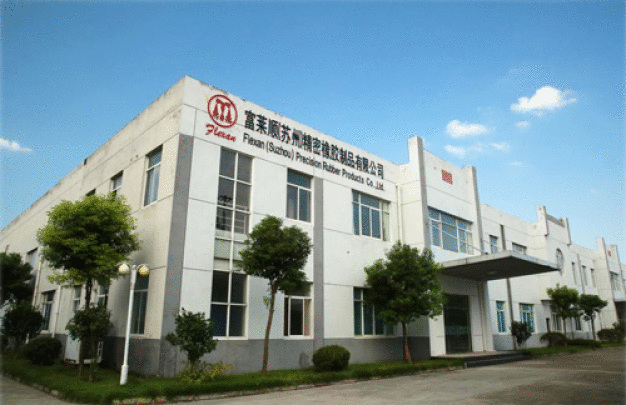
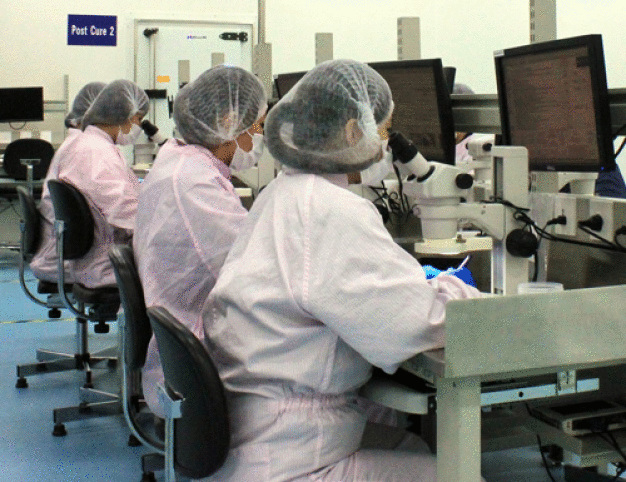
The contract manufacturer Flexan has been producing in China since 2004. In the factory in Suzhou, high-volume elastomer molded parts are manufactured, as well as various silicone molded parts in a cleanroom. (Source: Flexan)
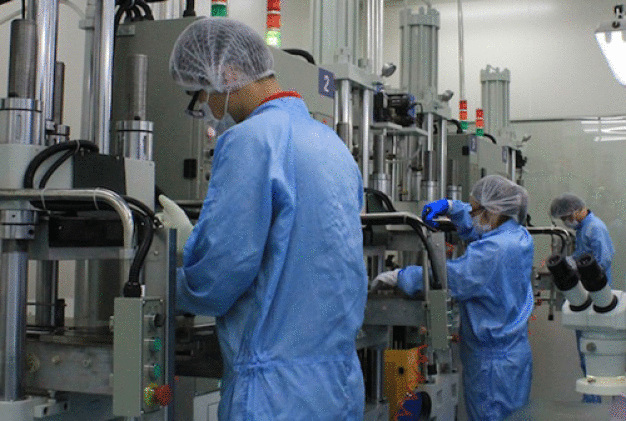
The use of Chinese manufacturing facilities is becoming increasingly interesting for many Western OEMs in the medical technology sector. It is worthwhile for specialized manufacturers with a relatively high product mix even in a medium batch size range, for which full automation in the USA or Europe is not considered economical. Prototype manufacturers are also not suitable as an alternative, as they usually do not have enough capacity to achieve the necessary output at competitive prices. (Image: Manufacturing at Flexan Suzhou.) (Source: Flexan)
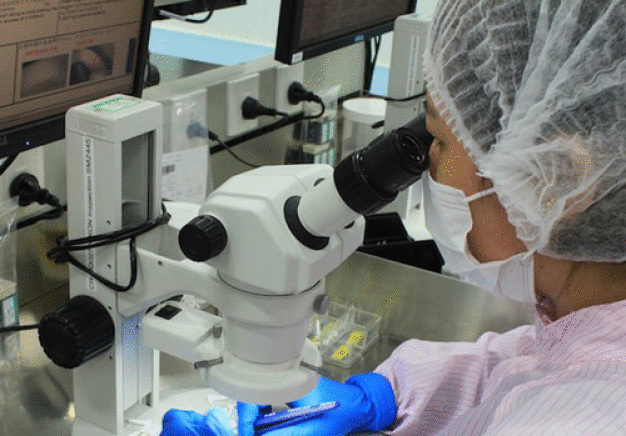
Reason for establishing the Chinese location was the fact that many subcomponents, which Flexan manufactures on behalf of, are assembled or put together into instruments and devices in China. (Source: Flexan)
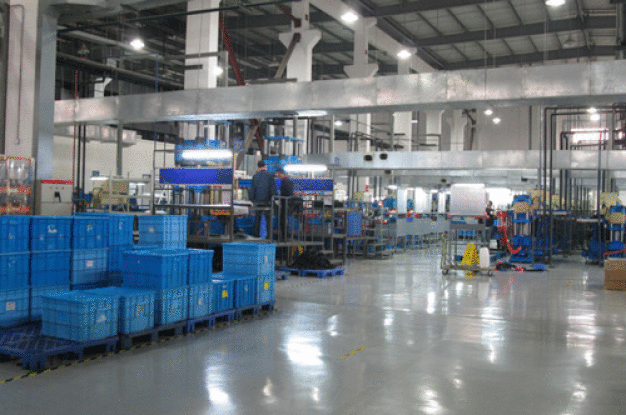
The production in Suzhou has been steadily increasing since the early 2000s; in the first year, it was 500,000 parts and has now surpassed the 100 million mark. (Source: Flexan)
Flexan employs approximately 300 employees in Suzhou. (Source: Flexan)

Werner Karau, European Commercial Leader at Flexan (Source: Flexan)
The use of Chinese manufacturing facilities is becoming increasingly attractive for many Western OEMs in the medical technology sector. It is worthwhile for specialized manufacturers with a relatively high product mix, even in medium batch sizes, for which full automation in the USA or Europe is not considered economical. Prototype manufacturers are also not suitable alternatives, as they usually lack sufficient capacity to achieve the necessary output at competitive prices. Here, establishing a branch or commissioning contract manufacturers based in China is an option – a procedure that is, however, sometimes highly controversial. On one hand, additional advantages such as the still low wage levels are cited; on the other hand, a number of risks are pointed out. Commonly cited arguments include the dangers of lacking product and market protection or the increased likelihood of supply chain disruptions compared to Europe and the USA. Which of these are actually relevant in the field of medical device production? The American contract manufacturer Flexan has had a subsidiary in Suzhou, China, since 2004 and reports from practical experience.
Main factor: low wage levels?
Undoubtedly, the lower labor costs in China remain a criterion for many companies. Along with the large supply of personnel willing to work long hours in manufacturing facilities, they were initially the main reason for many Western manufacturers to outsource production to China. However, the picture is changing: Due to the rapid rise of the middle class, fewer people are willing to work for low wages. Since 2004, minimum wages have been increasing annually, with the effect that, according to China Labour Bulletin, they have at least reached the average wage level of Asia in coastal cities. Companies from various industries have therefore already moved to countries with even lower labor costs, such as Vietnam.
In the field of medical technology manufacturing, however, the development of wage levels currently does not provide a reason to forego establishing a branch in China or relocating. For Flexan, for example, another factor was already significantly more decisive in 2004: "The impetus for establishing the site in Suzhou was at that time the fact that many subcomponents we manufacture on behalf of clients are assembled or combined into instruments and devices in China," explains Werner Karau, European Commercial Leader at Flexan. "From the clients' perspective, it was therefore desirable that the contract manufacturing of the relevant parts takes place directly in Asia." This way, components do not have to be shipped from the USA or Europe to China, but only from one Chinese location to another. The shorter transport routes result in significant cost savings.
Facilitated establishment of WFOE as an advantage?
Another argument frequently cited for manufacturing in China is that the country now also allows companies that are foreign-owned. To stimulate higher investments by foreign companies, the People's Republic has indeed introduced a special form of limited liability company – the so-called Wholly Foreign Owned Enterprise (WFOE). According to "Path to China" – a company that supports clients in establishing WFOEs – this business structure offers, among other advantages:
- - WFOEs are independent and free to implement the global strategies of the parent company without needing to involve a Chinese partner.
- They are capable of conducting formal business, rather than just acting as a representative office, and can issue invoices to customers in RMB (Chinese Yuan) as well as receive income in RMB.
- Intellectual know-how and technology are protected.
- For manufacturing WFOEs, there are no special requirements for import/export licenses for their own products.
- They have full control over human resources and
- They are more efficient in operations, management, and future development.
Flexan has also seized the opportunity and chosen the business form of a WFOE for its own subsidiary.
Does the location China pose risks?
Despite such positive developments, manufacturing in China or comparable emerging markets is associated with various risks compared to Europe or the USA: Disruptions in the supply chain are argued to be significantly more likely due to an insecure infrastructure. "Of course, this cannot be generalized based on a single company in a particular industry, but Flexan Suzhou has not encountered such problems so far," explains Karau. "The location of the subsidiary may indeed play a role here – and we have chosen it carefully." The million-city Suzhou, located 100 km west of Shanghai, where many international companies such as Samsung, Philips, or Robert Bosch manufacture, has excellent logistical connections. "The parts we produce are small and lightweight; they can be shipped overnight without issue," says Karau. "We have contracts with all global transportation providers and also work with our clients' logistics providers if desired. Suzhou is no different in this regard from one of our Western locations."
But not only the risk of supply chain interruptions is often cited. There are also repeated negative reports about the quality of products from Chinese manufacturers and suppliers, as well as corruption within the government. For example, in the field of medical technology, there are warnings that Chinese suppliers do not pay close attention and may even use toxic materials in their products. However, manufacturers of medical devices rely on a reliable supply of flawless materials that demonstrably meet their high-quality standards. For Chinese medical device manufacturers, finding trustworthy suppliers can therefore be very challenging, warns the report. "In the field of medical manufacturing for the Western market – as Flexan operates with its subsidiary in Suzhou – I consider this argument to be quite far from reality," explains Karau. "Like all other Flexan locations, our Chinese subsidiary exclusively uses raw materials specified by our customers. We source them only from original manufacturers or their qualified, verified, and approved distributors or partners."
The EN ISO 13485, which governs the manufacturing and marketing of medical devices, would not allow a different approach, Karau continues: "The notified body, such as DEKRA or TÜV, regularly audits to verify compliance with this requirement – sourcing original raw materials. Deviations would be immediately flagged and, if not corrected, would result in losing certification. Additionally, our customers regularly conduct audits to verify that the products we manufacture fully meet their specifications."
Flexan sources 90 percent of its materials directly from original manufacturers or their partners in Asia. If the required products are not available in Asia, Flexan purchases internationally.
Additional costs and copyright violations can be avoided?
Opponents of manufacturing in China also argue that outsourcing to local companies or establishing their own production facilities can incur many additional costs. These include, for example:
- - Establishing financial, legal, and physical operational structures,
- Providing reliable management abroad and associated travel costs, and
- Identifying trustworthy suppliers and aligning them with company standards,
- Managing quality issues and avoiding material substitution,
- Losing control over the manufacturing process and risking brand reputation if product problems occur.
"Regarding the setup of operational structures, these are costs that would also be incurred in another country to a comparable extent," explains Karau. "The location in China has hardly affected us here." However, Flexan has seen a positive development regarding travel costs: "Of course, travel costs would be high if management personnel from our Western locations had to travel frequently to China. But that is not the case, as we employ reliable Chinese staff in our subsidiary and use modern communication technologies. Additionally, it is more cost-effective to serve customers in Asia now, as we travel from China instead of from the USA or Europe, as we used to." Additional costs due to supplier issues or raw material quality problems, as well as process control and brand reputation concerns, are unlikely in the medical device sector because of the necessary compliance of all process participants and products with EN ISO 13485.
Finally, medical device OEMs and other high-tech manufacturers often express concerns about protecting their patents and intellectual property when manufacturing in China – especially when outsourcing to a Chinese manufacturer. According to the report "Outsourcing to China," these fears are not unfounded: "The protection of intellectual property is weak or non-existent. Even though China has joined the WTO and agrees to adhere to all legal rules of the World Trade Organization, many laws are violated in practice. Particularly, copyright law is not enforced, and piracy of brand products and copyrighted goods is widespread."
Karau also considers this risk to be hardly relevant for Flexan's production in China: "On the one hand, we are not a Chinese manufacturer but an American company. Our Chinese subsidiary is therefore subject to the same corporate-wide requirements as all our other locations. On the other hand, we only supply parts that are later assembled into products, not complete products. I don’t want to be overly simplistic, but roughly speaking: someone who knows what a wheel nut for a German brand vehicle looks like is still far from being able to copy that car. The same applies to our portfolio."
China: The right step for Flexan
Regarding the advantages and disadvantages of manufacturing in China, there can, of course, be significant differences from industry to industry and company to company. For Flexan Suzhou, some of the frequently discussed benefits of manufacturing in China are not relevant, but many of the perceived disadvantages have also not materialized. The individual situation of a company – whether an OEM or a contract manufacturer – should therefore be carefully analyzed before making a decision for or against China. Flexan, in any case, has not regretted the step of establishing a Chinese subsidiary so far. Production in Suzhou has steadily increased since the early 2000s: the company started with a single press and has now expanded its machinery park to around 70 presses, 10 LSR machines, automatic packaging machines, various rolling mills, and deburring machines. "Output has also steadily grown; in the first year, it was 500,000 parts and has now surpassed the 100 million mark," says Karau. Since 2005, the plant has been ISO 9001 certified, has had a cleanroom since 2010, and has been qualified according to the medical standard ISO 13485 since then.
Checklist: Ten qualifications for a supplier in China
- Type of organizational structure: Chinese owner, joint venture, or WFOE
Each form of ownership has its advantages and disadvantages. Working with a Chinese company or a joint venture with a Chinese partner can facilitate market entry. If understanding the supplier's culture and ensuring independence from Chinese interference are more important, a Western company operating a WFOE is the better alternative. If you already work with a US or European supplier operating in China, effort and costs for re-qualification can be saved. - English-speaking management and qualified workforce
Although many Western companies have contacts maintaining communication with Chinese staff and facilities, it is advisable to have personnel on-site who speak the parent company's language and ensure continuous communication. OEMs should also assess the qualification level of existing staff and whether additional training is needed for handling complex products. Suppliers require highly qualified engineers and technical experts, as well as employees with skills in high-tech manufacturing techniques. - Infrastructure for production and shipping in the region
China's rapid growth has outpaced its ability to provide the infrastructure needed for nationwide production. Instead, China has developed industrial centers in metropolitan areas that facilitate business transactions and access to ports, high-speed rail lines, and air traffic. - Commitment to global quality standards and controls
Not all companies are fully committed to quality. To ensure compliance with this critical criterion, suppliers should not only have ISO certification for medical devices but also commit to not exchanging materials without customer approval and to inspection and validation. The supplier should maintain excellent records that are easily accessible for audits, including traceability of raw materials, calibration protocols for equipment, change controls, and process approvals. - A good reputation and a reliable supplier network
Choosing an established supplier in China allows an OEM to enter the market quickly. During audits, verify the supplier's network and whether materials come from Chinese sources or are imported. - Experience with Chinese regulations and exports
Navigating China's business, political, and cultural landscape is complex and requires experience. Many manufacturers and their suppliers still struggle with currency issues and customs clearance. Look for a supplier familiar with regulatory or other hurdles. - Location, inventory management, and logistics
Proximity to an industrial center and major transportation hubs makes business more efficient. The supplier should be willing and able to handle your preferred inventory management system and shipping requirements. - Shared values
Most OEMs fear ending up with a supplier that exploits its workforce. Even well-known brands have suffered reputational damage when suppliers exploited their staff or did not ensure workplace safety. It is important that each supplier can demonstrate fair business practices, ethics, responsibility, and integrity. - Protection of intellectual property
Medical device manufacturers must protect their patents and intellectual property – especially in a country like China, where copyright infringements and lax enforcement are widespread. Some companies choose to manufacture key components in the USA or Europe, while outsourcing other parts. Seek a China-based supplier with a system that protects your intellectual property from theft and fraud. - Dual manufacturing in the West
Given the risks associated with single-site production, OEMs may prefer a supplier active both in China and in the USA or Europe. Alternatively, multiple suppliers at different locations can be used. Since OEMs tend to streamline their supplier base, they generally prefer fewer suppliers. To ensure component availability, a dual-site supplier should maintain the same tools and equipment at both locations.
Flexan, LLC
IL 60069 Lincolnshire
United States