

- Translated with AI
Dipl.-Ing. Josef Wiesenthal, Geschäftsführer Witherm GmbH
From the fine to the closure of the practice: What to pay particular attention to in the validation of cleaning and sterilization processes
Legal certainty regarding the hygiene plan - maximum legal security is achieved through validation by an accredited testing laboratory
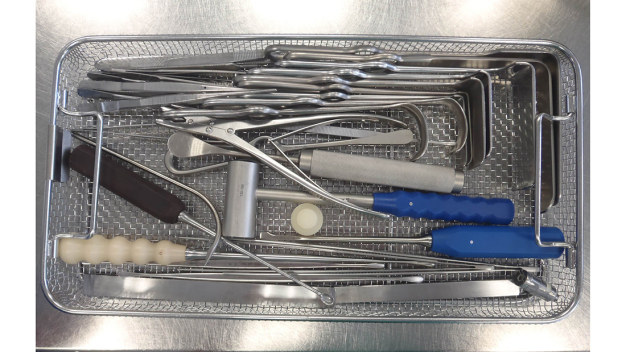
Improperly cleaned medical devices pose a latent microbial threat, as barely visible tissue residues and contaminants can, through pathogen transmission, especially during invasive procedures, cause infections. Therefore, the products must be cleaned mechanically and sterilized. (Source: witherm GmbH)
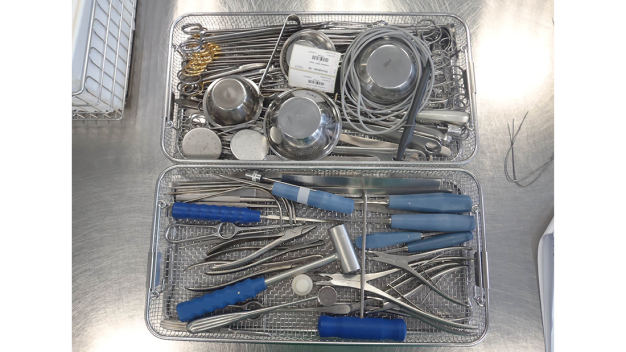
Improperly cleaned medical devices pose a latent microbial threat, as barely visible tissue residues and contaminants can transmit pathogens and cause infections, especially during invasive procedures. Therefore, the products must be cleaned mechanically and sterilized. (Source: witherm GmbH)
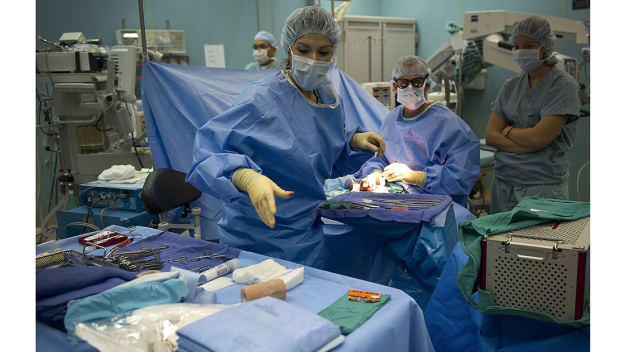
In hospitals as well as in doctor's offices, the smallest gaps in the hygiene chain can pose an increased risk of infection for patients. (Source: pixabay.com)
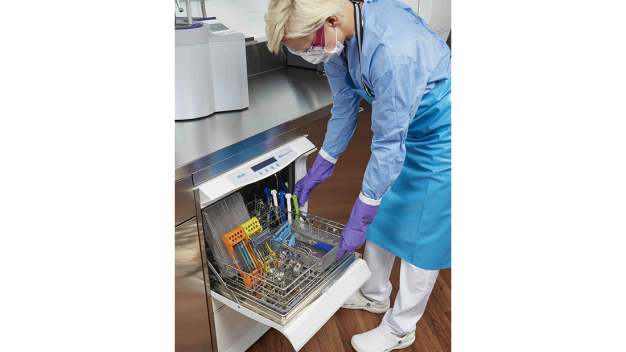
The validation of the RDG itself ideally includes Installation Qualification (IQ), Operational Qualification (OQ), and Performance Qualification (PQ). (Source: Dental Bauer)
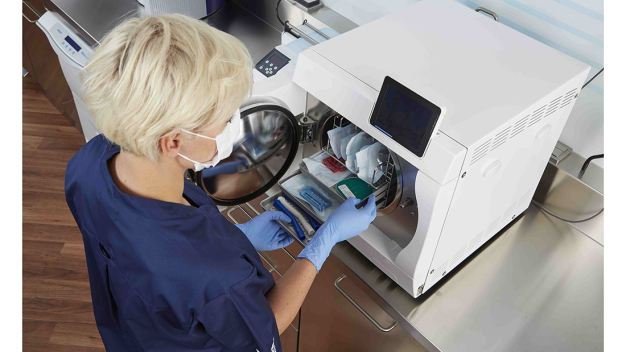
In addition to the equipment used, such as sterilizers, the validation should also consider the work areas, work instructions, and general procedures. Only then can the practice be legally secure in terms of liability. (Source: Dental Bauer)
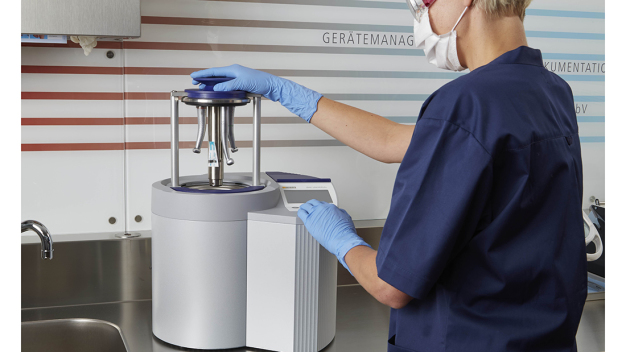
In addition to the equipment used, such as sterilizers, the validation should also consider the work areas, work instructions, and general procedures. Only then can the practice be legally secure in terms of liability. (Source: Dental Bauer)

Dipl.-Ing. Josef Wiesenthal, Managing Director of the accredited testing laboratory witherm GmbH. (Source: witherm GmbH)

Diana Rahmann
The Hygiene Plan and Validations – both are topics that many practice operators still find confusing and that lead to difficulties in implementation. Additionally, regular legislative adjustments sometimes bring about significant changes in requirements. It should be known that: both a missing or non-individualized hygiene plan and inadequate validations can result in hefty fines or even temporary closure of the practice. Even the smallest errors, such as incorrect labeling of clean and unclean areas in the practice, can be grounds for trouble with supervisory authorities. So, what should be especially paid attention to in order to conduct legally compliant validation and be able to demonstrate it later? Ideally, the entire processing cycle, the condition of the used rooms, as well as the individual work instructions and other process-related boundary conditions such as the classification of instruments according to RKI guidelines should be reviewed. Therefore, commissioning an accredited testing laboratory that provides this scope is recommended. This ensures no gaps in the hygiene chain and excludes resulting legal consequences.
The importance of comprehensive processing of medical utensils and a detailed hygiene plan is demonstrated by a recent example from Cologne: In a practice, bacteria of the type pseudomonas aeruginosa – a known hospital germ – entered the bodies of 28 patients during treatment with antibiotics via needle injection, leading among other things to serious meningitis. The pathogen is suspected to occur more frequently where deficiencies in sterilization and hygiene prevail. This shows that even in small practices and outpatient facilities, the risk of nosocomial infections is greater. Especially when invasive procedures are performed and instruments must be cleaned, disinfected, and sterilized, no errors should occur in the processing process. Although the relevant facilities have appropriate sterilization areas for processing their instruments, cleaning and disinfection devices (RDG), as well as sterilizers, and ideally have these checked regularly; often, many potential hazards are not even recognized as such by practice staff.
Accredited validation ensures liability security
Such risk sources include an insufficient sterile barrier system in sterilizer packaging or incorrect supply media for the RDG. Likewise, incomplete work instructions, inadequate risk classification of instruments, or unclear labeling of clean and unclean areas can lead to costly re-validation. The lack of proof of sufficient training for all staff can also have legal consequences and penalties for the practice. Often, operators and doctors are not even aware that these deficiencies represent potential gaps in the entire processing chain. Complicating matters is that the legal situation and its interpretation vary considerably between federal states, creating uncertainty, especially for young practice founders, about how exactly validation should be carried out. Therefore, commissioning an accredited testing laboratory with technically competent staff, which possesses the necessary expertise to comprehensively review the hygiene infrastructure based on all applicable standards and guidelines independently of regional differences, is recommended.
When choosing a testing laboratory, attention should be paid to ensuring that their staff are familiar with all current German and European standards, laws, and guidelines. Accreditation also guarantees that the laboratory personnel and the commissioned inspectors have not only proven long-standing professional experience with sterilization and cleaning processes but also an internationally recognized training. This is particularly important because official inspection practices can vary regionally. Consequently, penalties imposed can differ significantly between federal states – fines of €1,000 or more per device are not uncommon. By commissioning accredited inspectors, operators do not need to be familiar with these differences and can rely entirely on the testing laboratory.
Comprehensive support and consultation guaranteed
A good laboratory can be recognized by how thoroughly the preparation for the inspection is conducted: ideally, key points and relevant practice data are collected from the operator using a checklist before the actual validation. This includes manufacturer information about the devices, the used loading pattern, the programs run, and the batch documentation. It is important to also explicitly inquire about work instructions and the classification of instruments according to RKI guidelines. Additionally, a testing laboratory should already indicate which further documents are required for validation, depending on the type of practice or region.
This detailed preparation ensures that daily practice routines are only minimally disrupted and that sufficient instrument batches are available for testing cleaning and for practice operations. Based on the collected data and information, the validator on-site can determine representative loading patterns and identify the most difficult-to-clean instruments. Accredited inspectors know which special test bodies and sensors need to be used and where they should ideally be positioned during the cleaning cycles. Since the worst-case scenario and real contaminated utensils are used as a basis, subsequent deficiencies are excluded. At the end, the practice receives a final report highlighting remaining risk points so they can be quickly eliminated. Because an accredited validation considers all aspects of the hygiene chain and reflects them in the report, recognition by the relevant authorities is assured.
Conclusion
Not every operator is aware of the issues surrounding the correct validation of instrument cleaning. Therefore, it is worthwhile to have the inspection carried out by an accredited testing laboratory with competent staff. Thanks to extensive practical experience and comprehensive knowledge of even difficult-to-process instruments and their particularities, the laboratory staff can advise the operator on all questions related to processing. This also applies to any necessary routine checks and the sensible use of test bodies. Only through this can the processing be sustainably guaranteed.
Validation of cleaning and disinfection devices:
The validation of the RDG itself ideally includes installation qualification (IQ), operational qualification (OQ), and performance qualification (PQ).
The IQ ensures that the work area and all necessary devices, utilities, accessories, and the environment are suitable and properly installed for machine-based cleaning and disinfection.
The OQ must ensure that the RDG and media supply conform to the manufacturer’s specifications and the requirements of DIN EN ISO 15883. Devices, utilities, and accessories are tested for proper functionality, and maintenance protocols and calibrations are checked.
In the PQ, the established cleaning and disinfection programs are carried out for typical operational loads (reference loads), and the results are documented to ensure that reproducible results can always be achieved with this configuration.
Relevant standards and legal bases include guidelines for validation from DGKH/DGSV, the Medical Devices Act (MPG), and recommendations from the Commission for Hospital Hygiene and Infection Prevention (KRINKO) from the Robert Koch Institute. The Medical Devices Operator Ordinance (MPBetreibV) must also be observed.
Witherm GmbH
59755 Arnsberg
Germany