- Buildings & Rooms
- Translated with AI
Michael Kuhn, Udo Moschberger
Filter leak test: Analysis of moving sampling probes

Michael Kuhn (Head of Steinbeis Transfer Center (STZ EURO))

Udo Moschberger (Engineering Office Udo Moschberger (IUM))
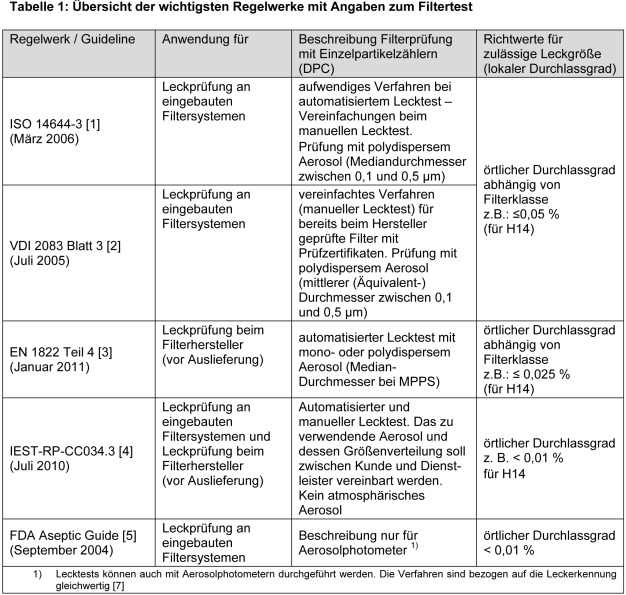
Table 1
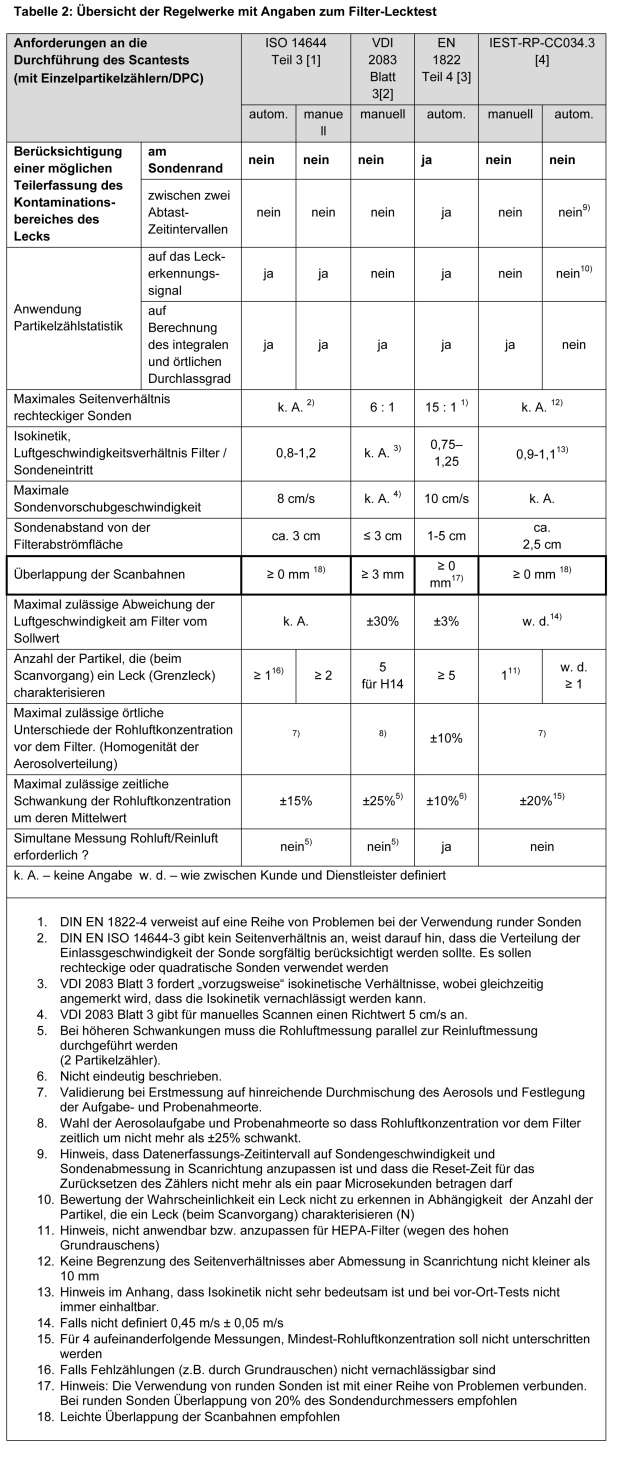
Table 2
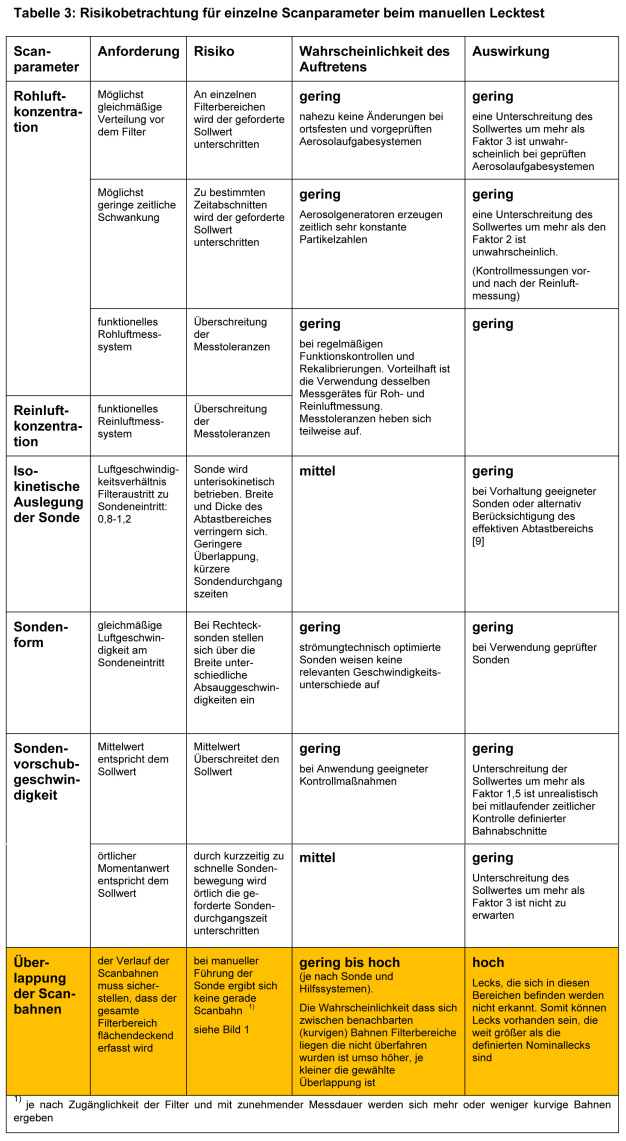
Table 3
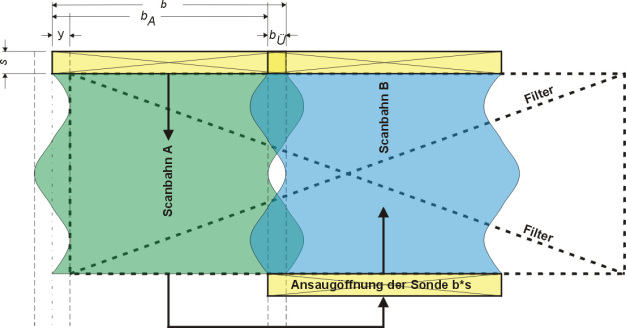
Image 1: Critical scanning, comprehensive coverage not provided. Track overlap BÜ too small
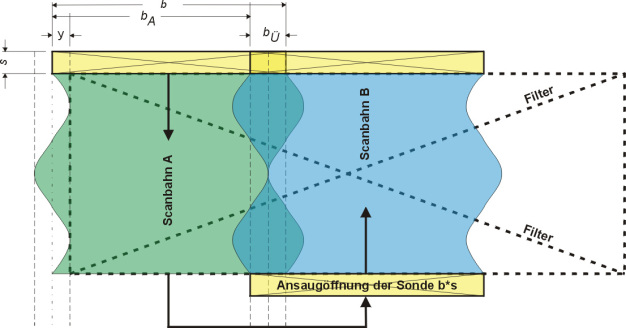
Image 2: Surface-wide scanning
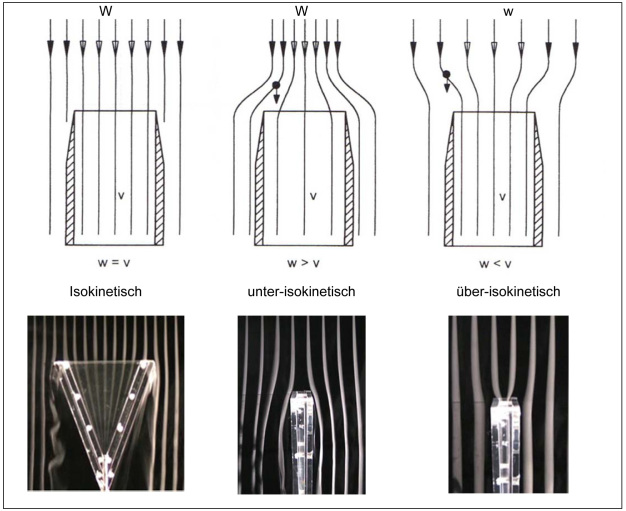
Image 3: Observation of the flow around stationary rectangular probes
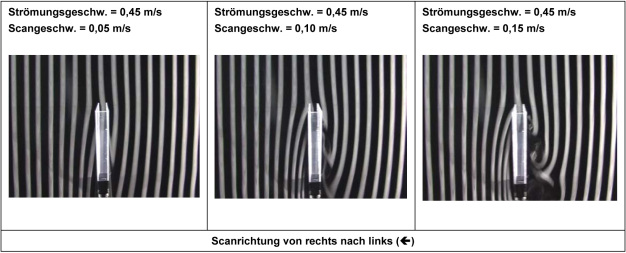
Figure 4: Observation of the flow around moving rectangular probes
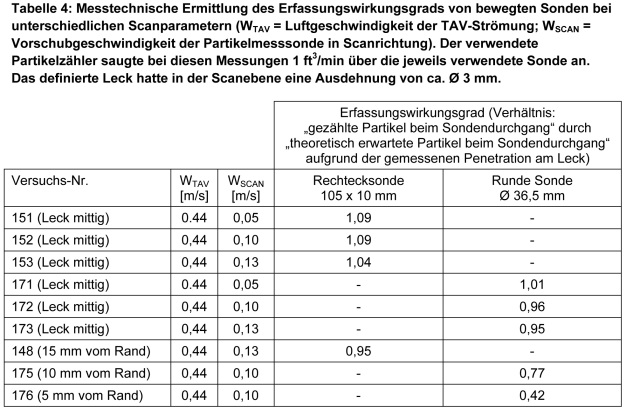
Table 4
In the cleanroom laboratory at Offenburg University of Applied Sciences, investigations were conducted into the airflow conditions around moving sampling probes and their detection behavior. The results show that it would be sensible to standardize the key parameters of manual leak testing in conjunction with particle counters regulation-wise.
A variety of regulatory frameworks in the European and American regions describe the requirements for performing and documenting leak tests of final high-efficiency particulate air (HEPA and ULPA) filters in cleanroom applications. These differentiate between leak tests conducted by the filter manufacturer prior to delivery and tests performed in the installed state at the user's site. For users, especially those monitored by authorities (e.g., pharmaceutical industry), the recurring proof of leak tightness is a crucial criterion for process safety and product release. The user typically regulates the execution and documentation through SOPs (Standard Operating Procedures) and refers to the current applicable regulations. However, since these regulations, although describing the same physical processes, differ in many ways, it is particularly difficult for users in internationally operating companies to determine which regulatory framework to rely on. As a consequence, even large corporations often have a multitude of different work instructions governing leak tests, which inadvertently may lead to improper execution and evaluation of the tests.
Based on the investigations described below and the authors' more than 20 years of practical experience in performing and optimizing leak testing procedures (automated and manual), this technical article aims to provide the foundation for standardizing scan parameters. Additionally, through a risk assessment, it is demonstrated to the reader that the greatest source of error in manual leak testing of installed HEPA filters is insufficient overlap of the scan paths—a point that is not adequately addressed in existing regulations.
Comparison of Regulatory Frameworks
Table 1 provides an overview of the current national and international regulations applicable to filter leak testing. It distinguishes between tests performed by the filter manufacturer and those conducted on the installed filter. Another criterion is whether the test is automatic or manual. In manual leak testing, the particle measurement probe is operated by the technician manually, and particle events are recorded by a particle counter. The operator is alerted to locally increased particle concentrations via an audible signal and/or by observing individual particle count events. These indicate a location with increased permeability or a leak in the filter. In automated leak testing, the movement of the particle measurement probe and the online evaluation of particle count events are computer-controlled [6][8].
Table 2 compares the regulations listed in Table 1 regarding specific requirements for individual parameters (referred to as scan parameters below) that influence the quality of the leak test. The scan parameters are described in the first column of Table 2.
Risk Assessment for Leak Detection in Manual Leak Testing
The goal of the scan process within the leak test is to demonstrate that no leaks larger than a defined nominal leak are present across the entire filter surface (seal integrity testing is performed separately). To ensure this, the scan parameters must be chosen according to the applicable guideline.
DIN EN ISO 14644-3 allows certain uncertainties in detecting a nominal leak during manual scanning, compared to automated scanning, by permitting the particle statistics to be ignored. In this context, Np and Ca can be equated, with Ca ≥ 2 recommended. For a Ca value of 2, this means a permissible reduction in the raw air concentration by a factor of 3.6 or an allowable increase in scan speed by the same factor. This implies that a nominal leak (e.g., with a 0.05% permeability) can only be detected with a 50% probability instead of the 95% probability assumed in automated testing.
Table 3 shows how deviations in individual scan parameters affect the risk of failing to detect existing leaks. The impact assessment uses the simplification described above based on DIN EN ISO 14644-3. Negative effects less than those permitted by this simplification (factor 3.6) are considered minor in the subsequent risk assessment (Table 3).
The risk assessment (Table 3) indicates that the greatest uncertainty or risk in manual leak testing stems from potential non-overlap of scan paths. This scenario is illustrated in Figure 1. Conversely, Figure 2 shows a case where the overlap between scan paths is just sufficient. During straight manual movement of the particle sampling probe, lateral fluctuations occur. These fluctuations are simplified as regular oscillations in Figures 1 and 2. The maximum amplitude y of the lateral fluctuation depends on the following factors:
– Testing personnel
– Duration of the scan process
– Probe advancement speed
– Design and weight of the probe assembly
– Distance of testing personnel from the filter (length of the probe assembly)
– Use of auxiliary systems for alignment and control of scan paths
– Local conditions (installations beneath the filter)
In practice, well-accessible filters typically exhibit lateral fluctuations y of 5 to 15 mm. Poorly accessible filters with installations immediately below may require scans with larger overlaps. To ensure comprehensive coverage of the filter surface (see Figure 2), the overlap width bÜ of the scan paths must be greater than twice the lateral fluctuation y of manual probe guidance (bÜ > 2y). At the filter edge, an overlap of > y is sufficient. Additionally, at higher traverse speeds over 0.45 m/s, the reduction in the actual sampling width of the under-isokinetic suction probe (see Figure 3) must be considered.
If bÜ < 2y (see Figure 1), there is a risk that parts of the filter will not be scanned. Leaks located in these areas with point-like particle dispersion may be well above the nominal leak size without being detected.
Flow Behavior of Stationary and Moving Rectangular Probes
Rectangular probes are often suspected of providing distorted particle detection due to vortexing of the airflow, especially at high advancement speeds, resulting in too few particles being counted from a potential leak. To clarify this suspicion, the Steinbeis Transfer Center set up a test rig. A linear unit was constructed under an H14 filter measuring 1200 x 600 mm with side shields. This unit can move a mounted carriage at precisely adjustable speeds. Various sampling probes were attached to the carriage. A defined leak was created on the filter, and the probes were moved underneath the filter and leak at different but uniform speeds. Particle events were counted and analyzed. Additionally, flow visualization was performed for each probe and each scan speed, and the airflow around the moving and suctioned probes (1 ft³/min) was recorded on video (see excerpt in Figure 4). Further studies investigated the influence of the probe's tilt angle during scanning.
Detection Efficiency of Rectangular Probes
Compared to round probes, rectangular probes apparently have a slightly higher detection efficiency (see Table 4). This is likely related to the distribution of suction velocity across the width of the probe. A slightly higher detection efficiency in the center of the probe suggests that the suction velocity is higher in the middle than the average. At the probe edges, the detection efficiency drops slightly below 1.0 (see test No. 148 in Table 4). The bandwidth of the suction velocity, derived from the measurements and across the width of the tested rectangular probe, is within ±10 percent of the mean value. Visual inspection of the airflow behavior (see Figure 3) on transparent probe models revealed no irregularities or vortices within the probes, indicating a uniform airflow behavior of the rectangular probes.
The round probe has a detection efficiency ranging from 1.01 to 0.95 when passing the leak centrally (tests 171–173 in Table 4). When leaks occur near the probe edge, the detection efficiency decreases. At a 5 mm distance from the probe edge, fewer than 50% of the particles emitted from the leak during a probe pass are detected by the round probe. This behavior is mainly due to the probe's geometry. At the edge of a round probe, the residence time under a vertically expanding leak is shorter than in the center. Therefore, if the round probe passes a leak at the edge, fewer particle events are counted compared to a leak of the same size detected in the center.
Further investigations found that the detection efficiency of the rectangular probe (10, 5:1) remains above 0.90 during forward and backward movements at scan angles up to 50 degrees relative to vertical, at scan speeds between 0.05 and 0.13 m/s. During forward movement, the scan speed could be increased several times if the tilt angle were adjusted according to the resultant velocity vector from scan speed and airflow velocity.
Conclusion
– The detection efficiency of rectangular probes within the studied range of traverse speeds (or scan speeds) from 0.05 to 0.13 m/s is comparable to that of round probes. In this speed range, the tilt angle of the probe relative to vertical can be up to 50 degrees even during backward movement.
– Round probes can detect 100% of nominal leaks that pass through the center of the probe. For leaks occurring at the probe's edge, the detection efficiency can drop below 50%.
– Rectangular probes allow for a large overlap of scan paths, providing maximum safety during manual scanning. Additionally, a shorter scan time is possible because the surface area per scan path, relative to the round probe with the same overlap and scan speed, is significantly larger, reducing the scanning duration per filter. This positively impacts both the testing personnel's concentration (quality criterion) and the operator's costs.
– When using round probes for manual leak testing, the scan parameters (scan speed or minimum raw air concentration) must be calculated based on the dimensions of an imagined square inscribed within the round probe. When selecting the number of scan paths, a minimum overlap of 15 mm should be considered, as with rectangular probes.
– DIN EN ISO 14644-3 (manual leak test) and VDI 2083-3 should be adapted according to the above findings to enable higher reliability in leak detection on HEPA filters in airflow systems.
References
[1] DIN EN 1822: High-efficiency particulate air (HEPA and ULPA) filters – Part 4: Leak testing of filter elements (scan method). January 2011.
[2] DIN EN ISO 14644: Cleanrooms and associated controlled environments. Part 3: Test methods. March 2006.
[3] VDI 2083 Part 3: Cleanroom technology. Measurement technology in cleanroom air. July 2005.
[4] IEST-RP-CC034.3: HEPA and ULPA Filter Leak Tests. July 2010.
[5] U.S. Department of Health and Human Services. Food and Drug Administration (FDA): Guidance for Industry. Sterile Drug Products Produced by Aseptic Processing - Current Good Manufacturing Practice. September 2004.
[6] Kuhn, M.: Newly developed filter scan system for optimized use in leak testing of installed HEPA filters. Conference proceedings ICCCS 2004.
[7] Gail, L. and Ripplinger, F.: Correlation of alternative aerosols and test methods for HEPA filter leak testing. Proceedings — Institute of Environmental Sciences and Technology. April 2001.
[8] D. Utech: Programming of measurement and control software for automatic leak detection under cleanroom filter covers using the scan method. Diploma thesis, Offenburg University of Applied Sciences 1999.
[9] S. Hesslinger and U. Moschberger: Leak detection on cleanroom filter covers. Time-optimized sampling using the scan method. HLH1/1994.

STZ EURO Steinbeis-Transferzentrum
Energie-, Umwelt- und Reinraumtechnik Offenburg
Badstraße 24a
77652 Offenburg
Germany
Phone: +49 781 20354711
email: mkuhn@stz-euro.de
Internet: http://www.stz-euro.de