

- Translated with AI
Everyone has them, everyone wears them
Shoe manufacturing made easy
The history of shoes goes back a long way: already 40,000 years ago, humans had the need to protect their feet from harsh external conditions. However, it took several centuries and various manufacturing techniques for the modern, stylish shoe of today to develop. In pre-industrial times, shoes were handcrafted solely by shoemakers, but today, shoe production is mostly industrial. Nevertheless, manual labor still plays a very significant role and remains very important. The manufacturing process is divided into three main areas: development and design, upper manufacturing, and the actual shoe construction.
First, the shoe is created as a drawing, templates are made for the individual upper parts, and lasts are produced. The last is the inner form on which the upper is made and connected to the sole. Next, the various parts for the shoe upper are cut out and glued or sewn together. The lower edge of the upper is kept wider so that it can later be attached under the insole. Now, the shoe receives the insole, called the insole board. It is the bottom part on which the foot rests in the finished shoe. Surrounding the insole board is the rest of the shoe: the upper is attached at the top, and the outsole at the bottom.
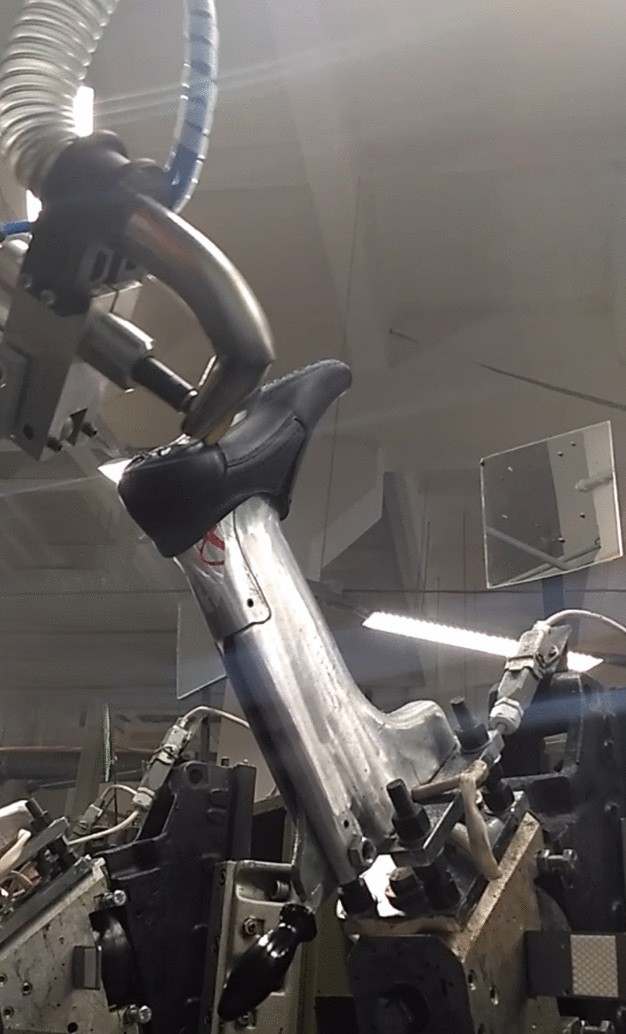
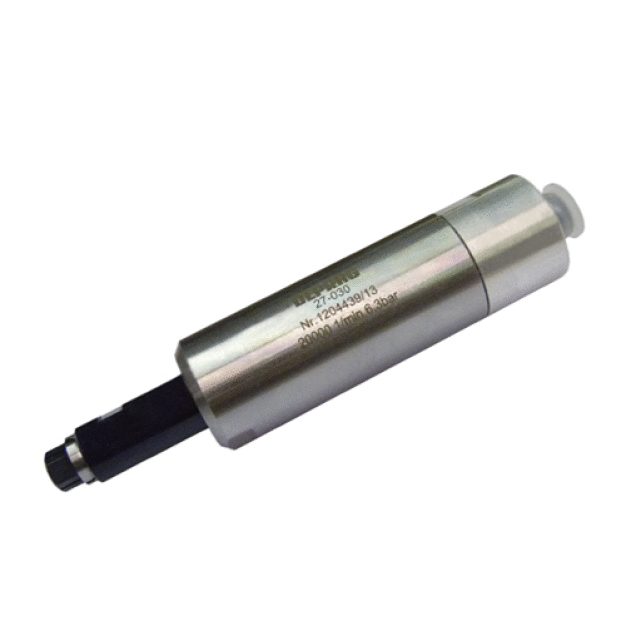
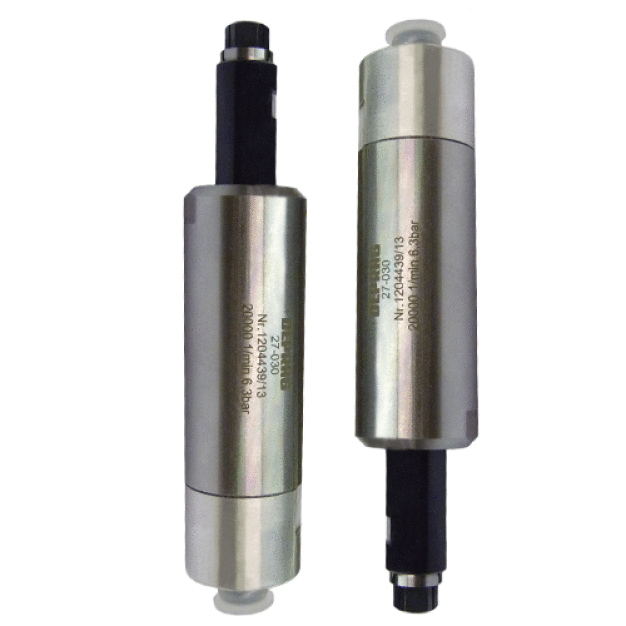
The assembly of the shoe takes place on the shaping last. The upper is pulled over the last, and the insole board is attached underneath. To connect the upper and the sole, various methods are used: in industrial manufacturing, gluing or sewing is common. To ensure a firm bond between the two soles, some shoe manufacturers roughen the edge of the insole board slightly to create perfect adhesion. However, the rough surface must be identical throughout its entire length and have the same depth everywhere – which is impossible to achieve manually over time. The Vektor Group offers a solution with its system. In close collaboration with the pneumatic motor specialist DEPRAG SCHULZ GMBH & CO., a robotic system equipped with a durable DEPRAG milling motor was developed for quick and precise results.
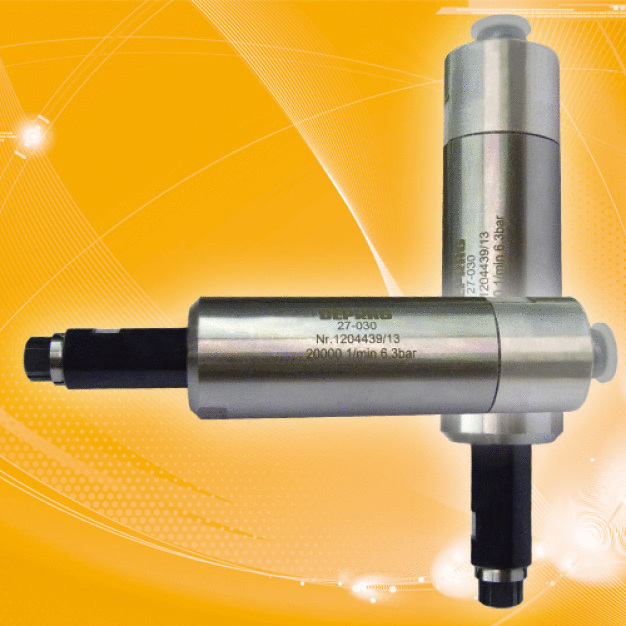
The DEPRAG pneumatic motors for special applications are ideal for perfect and consistently uniform surface roughening of the insole board. For integration with a robot, the DEPRAG milling motor 27-030 combined with an abrasive disc is the first choice. The durable milling motors with high precision are space-saving and operate powerfully over a wide speed range. They are available in power classes of 200 W, 400 W, 600 W, 900 W, and 1.2 kW, with speeds up to a maximum of 20,000 revolutions per minute. The combination of a flexible robotic arm and the constant rotational speed of the pneumatic motor ensures an optimal result and also increases productivity.
The pneumatic vane motor operates on a simple principle: the working fluid, compressed air, sets the rotor, which rotates inside an eccentric cylinder, in motion. Vanes are fitted into its slots and are pushed outward against the cylinder wall by centrifugal force. This creates working chambers for the expanding compressed air. As a result, the pressure energy of the compressed air is converted into kinetic energy through expansion – producing rotational movement.
An innovative Russian casual shoe manufacturer has employed the combination of robots and DEPRAG milling motors and is delighted with the results: "We repeatedly faced connection problems between the insole and outsole to ensure optimal grip everywhere. The milling motor with high precision and the robot operation now allow for perfect surface roughening, further optimizing shoe production."
Whether individual drive solutions or standard motors, DEPRAG has the perfect solution for almost every application: For non-critical manufacturing environments where a robust gray cast iron housing is sufficient, the BASIC LINE pneumatic motor can be used. Customers have access to a wide range of this series, from which customized applications can be developed and manufactured based on a modular system. The series is available in power classes of 200 W, 400 W, 600 W, 900 W, and 1.2 kW, with a wide speed range. All BASIC LINE pneumatic motors are equipped with a keyway shaft.
For higher requirements, such as use in cleanrooms in the food and pharmaceutical industries, the manufacturer offers the product line of ADVANCED LINE stainless steel motors, characterized by their sealed, oil-free, and corrosion-resistant pneumatic vane motors. This high-quality air motor is extremely space-efficient and is the ideal solution for installation in handheld machines or systems. Its power range extends from 20 W to 1.2 kW, from low speeds to high-speed applications. The ADVANCED LINE vane motor is ATEX certified, reversible, and even available with an integrated holding brake.
For more powerful applications, the manufacturer offers the versatile POWER LINE product line, with a wide power spectrum from 1.6 to 18 kW. POWER LINE pneumatic motors achieve high starting torques compared to electric motors, with an unmatched low power-to-weight ratio.
With the INDIVIDUAL LINE series, DEPRAG completes its range of pneumatic motors. The pneumatic drives of the INDIVIDUAL LINE are characterized by cost-effective and customized manufacturing. The standard program offers numerous variants, from which tailored drive solutions can be developed and produced based on a modular system at an attractive price-performance ratio. DEPRAG's specialists create perfect solutions for each application, whether it involves custom gear configurations, various spindle variants, or customer-specific mounting options. The range also includes air motors made from innovative materials, such as ceramics.
The Vektor Group, based in Moscow, has become a leading integrator in the Russian market. Originally responsible for selling welding machines, it is now also known as a qualified partner for developing industrial systems and high-tech automation solutions.
DEPRAG SCHULZ GMBH & CO. has been engaged with compressed air as a working medium for many decades. DEPRAG pneumatic motors are established worldwide. Innovation and continuous improvement of existing product lines make the medium-sized machine builder one of the leading manufacturers. The family-owned company employs 700 people and is represented in over 50 countries.
DEPRAG SCHULZ GMBH u. CO.
92224 Amberg
Germany