




- Translated with AI
Duel at eye level: Tribo filament impresses in the test with injection-molded quality
Test series demonstrate the wear resistance of tribo-filaments compared to standard filaments and injection molding
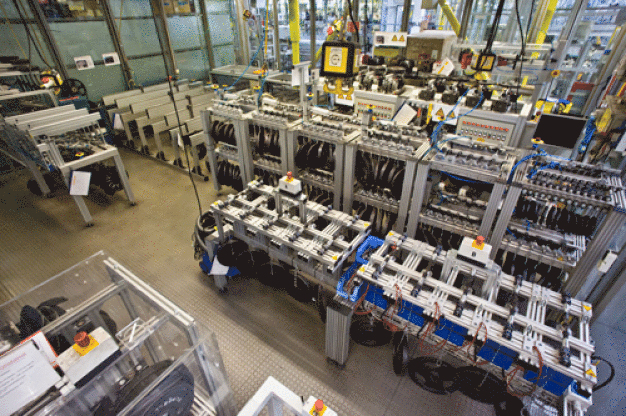
igus tested the wear resistance of the 3D printing filament iglidur J260 in the test laboratory, comparing it to ABS and injection-molded parts. (Source: igus GmbH)
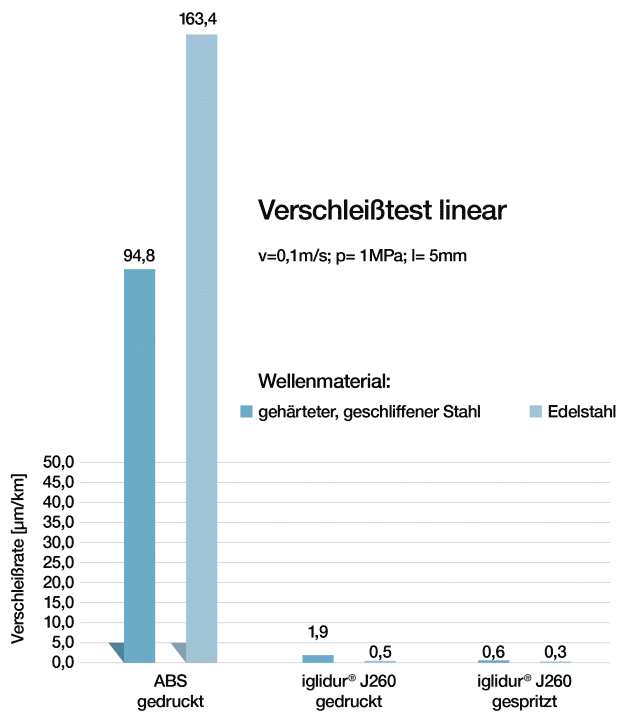
Results of the test marathons: This demonstrates the low wear rate of the Tribo-Filament iglidur J260 in linear and rotational movement. (Source: igus GmbH)
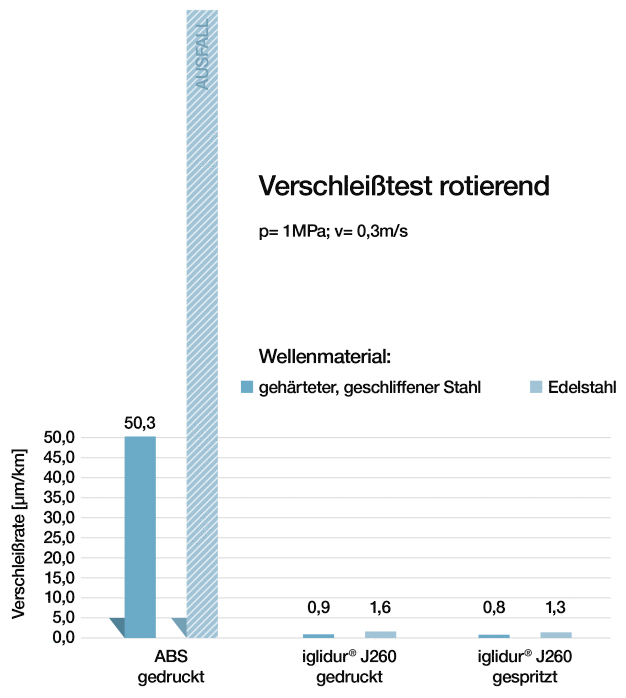
Results of the test marathons: This demonstrates the low wear rate of the Tribo-Filament iglidur J260 in linear and rotational movement. (Source: igus GmbH)
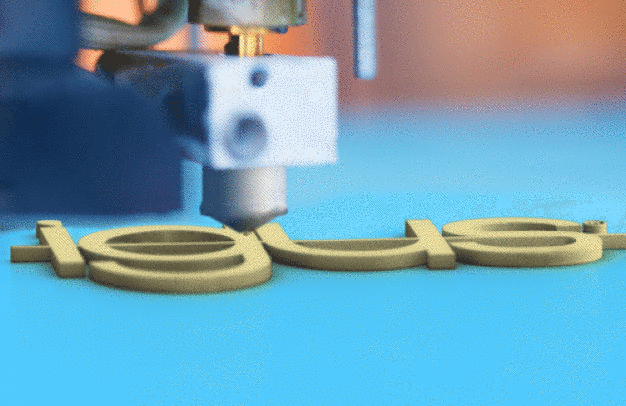
With a selection of four Tribo-filaments and the 3D printing service, igus offers customers the opportunity to print maintenance- and lubrication-free custom parts and small series. (Source: igus GmbH)
How do Tribo-Filaments compare to standard 3D printing materials? And do printed parts made from high-performance plastics actually have lower wear resistance than injection-molded components? The motion plastics specialist igus recently investigated these questions in their in-house test laboratory. The results were surprising.
With high-performance plastics and additive manufacturing, two modern technologies come together that, in combination, promise maximum freedom in design and at the same time high wear resistance. In the igus test laboratory, igus Tribo-Filaments made from the iglidur J260 material were tested against conventional 3D printing filaments (ABS) and injection-molded parts made from the same igus material. Over several months, linear and rotating test runs were conducted and evaluated on shafts made of hardened, ground steel as well as stainless steel in the company's own test laboratory. Since additive manufacturing with low-maintenance, high-performance plastics is still a relatively young field, the material experts at igus GmbH faced an open-ended experiment.
Tribo-Filament Outperforms ABS Material
The result was surprising. It showed that the wear resistance of the sliding bearings printed from the Tribo-Filament was comparable to that of traditional injection-molded components, both in the rotating and linear tests, and even on both shafts. This means that the printed components are hardly inferior to the injection-molded ones in terms of wear resistance. At the same time, the tests once again clearly demonstrated that the friction values of the Tribo-Filament are particularly low compared to conventional 3D printing materials. For example, in the test setup comparing ABS against Tribo-Filament on the stainless steel shaft in the rotating test, the ABS part experienced total failure, while the friction losses with Tribo-Filament remained low. These real-world tests once again proved how motion plastics leverage their strengths in movement, even in 3D printing. This makes it possible for printed parts, such as sliding bearings or gear wheels, to be directly installed and used industrially.
Additive Manufacturing as the Next Step
For igus, additive manufacturing is another step toward giving designers maximum freedom in their designs with low-maintenance, high-performance plastics. The motion plastics specialist igus already introduced the world's first Tribo-Filament for 3D printers last year and has expanded the range to a total of four materials. Additionally, igus has been offering a 3D printing service since the Hannover Messe. Customers can send their 3D data to igus and receive their parts quickly and easily. The delivery times for printed parts mainly depend on the complexity of the components, but the goal is also to deliver within 24 hours.
igus SE & Co. KG
51147 Köln
Germany



