

- Disinfection | procedures, devices, agents, media (Wipers, Swaps,...)
- Translated with AI
Margarete Witt-Mäckel
Development and Evaluation of Disinfection Procedures within Contamination Control
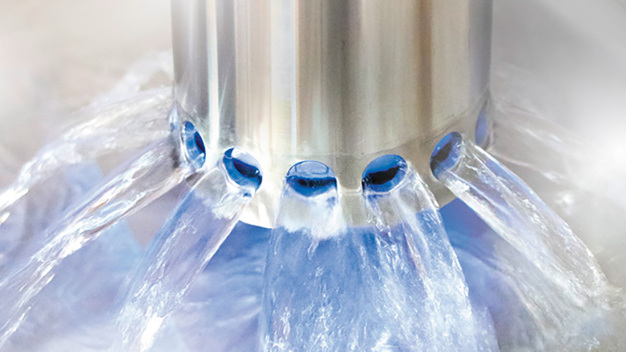
Fig. 3: MopScoop dosing tube with internal piston during the dosing process. © Pfennig Reinigungstechnik GmbH
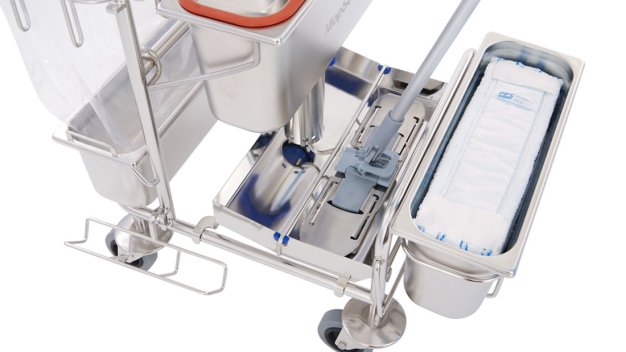
Fig. 1 and 2: MopScoop system provides a defined amount of cleaning solution just-in-time. © Pfennig Reinigungstechnik GmbH
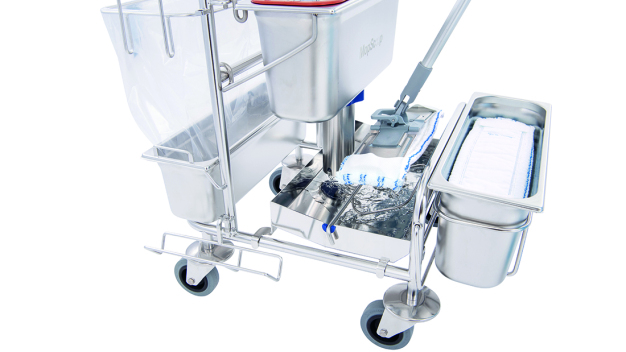
Fig. 1 and 2: MopScoop system provides a defined amount of cleaning solution just-in-time. © Pfennig Reinigungstechnik GmbH
The disinfection, a process for targeted reduction of pathogenic and product-damaging microorganisms to protect product, process, and personnel, is alongside cleaning a fundamental measure of the contamination control strategy (in English: Contamination Control Strategy, short: CCS). Errors in the selection and application of disinfectants as well as in the execution of processes can lead to serious consequences.
The strategy for controlling microbiological contamination involves a suitable disinfection program adapted to operational and regulatory requirements. Suitable means that the measures defined in this program demonstrably work and that the pre-established requirements are validly met. This implies that the microbiological efficacy of the disinfectants is proven and that the interaction between wiping textiles, application systems, and disinfectants is verified [Fig. 1 and 2]. Part of the disinfection concept is also that personnel responsible for implementing disinfection are trained in its application, and that the processes are clearly and comprehensibly described in work instructions. The approach to establishing a disinfection program, including the evaluation of its implementation and handling deviations, is exemplified in the following overview [Tab. 1].
In the first phase of disinfection validation, the disinfectant is selected based on the requirements profile or the already used disinfectant is evaluated. The requirements profile results from microbiological requirements for the product and the production environment, as well as from regulatory specifications for the respective production operation. The suitability of disinfectants also includes an assessment of their effectiveness against the specific microbial flora (so-called operational germs) on typical production surfaces. Other influencing factors such as dirt load, compatibility with wiping textiles, and ensuring the effectiveness of user solutions throughout the entire application period are also considered.
In the second phase, the process itself is evaluated. This is done through process-accompanying microbiological monitoring, which is integrated into microbiological hygiene monitoring after validation is completed. Hygiene monitoring and the associated trend analysis demonstrate the effectiveness of implementation over a longer period and account for environmental and application-related fluctuations. Through process-accompanying monitoring and hygiene monitoring, so-called "soft" factors can be considered. These include influences that are difficult to capture even with practical testing methods in the laboratory. These include, among others, surface wear, possible cross-contaminations, or the influence of personnel, the interplay of application methods regarding surface wetting and liquid absorption or release by the wiping textile, as well as the assessment of drying within the exposure times determined by laboratory methods.
Disinfection ensures hygienic safety for product, process, and personnel. By establishing a well-thought-out and practical concept combined with regular verification of actual effectiveness, part of the contamination control strategy is fulfilled.
The interaction between disinfectant, wiping textile, and application system using the example of the MopScoop system
The application system provides a defined amount of use solution to the wiping cloth for absorption, which it then releases back onto the surface during wiping with a defined moistening. The resulting uniform liquid film is sufficient to inactivate potentially present microorganisms. It has been demonstrated that there is no or only minimal adaptation of active substances to the wiping textile and that the wiping cloth has a valid liquid absorption and release capacity. The MopScoop system is also designed as a closed system: The hygienic design of the entire unit and the storage of the use solution in the closed container of the MopScoop prevent direct and indirect contamination of the solution and maintain the stability of the solution over a defined period of use.
[Source: Pfennig Cleaning Technology GmbH, Durach]
1 Revised Annex 1 of the EU-GMP Guide, published on 22.08.2022; https://health.ec.europa.eu/system/files/2022-08/20220825_gmp-an1_en_0.pdf
Tab. 1:
An example of how to plan the development of a disinfection program.
The individual steps can vary in order.
What control measures are involved?
Disinfection procedure
Example:
Routine disinfection (daily disinfection) for decontamination of surfaces in the manufacturing area of non-sterile medicines
What should be disinfected?
- Definition of areas and surfaces to be disinfected
- Classification of surfaces into critical, general, and other areas
Example:
- Product-contact/critical: work tables, equipment, tools;
- Less critical: floors, walls, ceilings
In which cleanliness class should disinfection be performed?
Definition of cleanliness requirements by the production area
Example:
GMP cleanliness class D (room) and C (workstations)
What is to be achieved?
- Definition of the desired cleanliness level for the classified surfaces
- Specification of goals, limits, and other requirements
Example:
Cleanliness level: visually and microbiologically clean
Limits:
- Work tables, equipment: 25 KBE/sqm
- Floors, walls, ceilings: 50 KBE/sqm
Other requirements: bactericidal, alternating spore-active agent
For which area does cleanroom disinfection apply? Where are interfaces?
Scope of application
Example:
Production area
Interfaces with production, coordination between production management and external cleaning company
Who is responsible for what and who is authorized?
Responsibility
Example:
- Equipment and work tables are cleaned by in-house personnel, responsible: Ms. Muster
- Floors, walls, ceilings are cleaned by an external company, responsible: Mr. Cleanman
How is disinfection carried out?
Description of disinfection procedures to achieve the desired cleanliness level
Example:
- Work tables: wiping with cloth
- Equipment: spraying and wiping
- Floors, ceilings, walls: wiping with wiping cloth
- Pre-treatment of wiping textiles
- Wiping techniques and change methods
Where are materials stored? Is water needed, and if so, in what quality? Where can residues be emptied and equipment reprocessed?
Implementation planning
Example:
- Provision of materials in the material pass-through and storage in the cleaning cabinet in the pass-through
- Water withdrawal and sink with drain in the CNC/D pass-through, water quality: purified water
With what? What agents and devices are required?
Description of disinfectants, equipment, and wiping textiles
Example:
- Work tables: Product A and B alternately, microfiber cloth
- Equipment: Product C, spray bottle, microfiber cloth
- Floors, walls, ceilings: Product A and B alternately, system cart, application system, wiping cloth, and mop holder
Is the set goal achieved with these consumables and operating materials?
Qualification of disinfectants, equipment, and wiping textiles
Example:
- Confirmation of microbiological efficacy and, if applicable, cleaning effectiveness of disinfectants according to qualification plan via manufacturer reports, laboratory tests, rationale
- Evaluation of residues and possible additional cleaning planning
- Confirmation of the purity suitability of wiping textiles and equipment by the manufacturer
When and how often must disinfection be performed to achieve the goal?
Determination of intervals for each classified surface and, if possible, the timing
Example:
- Work tables: daily, after work
- Equipment: several times daily, as needed and after work
- Floors: daily, after work
- Walls, ceilings: quarterly, on weekends
Who does what, when, how, with what?
Documentation creation
Example:
Creation of work instructions and disinfection plans
Is the set goal achieved with this personnel?
Qualification of cleaning personnel
Example:
- Training of cleaning staff and employees
- Training confirmation by the external cleaning company
Is the goal achieved with the specified procedures?
Disinfection validation
Example:
- Validation of procedures according to validation plan
- Inspection of visual cleanliness through visual control, possibly chemical purity through analytical methods, and microbiological purity through surface swabs
Are the goals achieved in the ongoing process? How are the goals monitored? Who supervises?
- Development of a monitoring program
- Definition of testing methods and testing equipment
Example:
- Process-accompanying monitoring
- Microbiological hygiene monitoring
- Trend analysis
What is done if the goals are not achieved? How are deviations handled?
- Measures in case of deviations
- Revision of the existing concept
Example:
- Establishment of measures after three consecutive exceedances of limits
- Identification of germs
- Weakness analysis
- Consultation with production management and review of all influencing factors, e.g., changes in production process
- Review of disinfection procedures
- Review of goals and limits
- Staff training
Are all documents complete?
Compilation and organization of all documents
Example:
Compilation of necessary documents:
Work instructions, cleaning and disinfection plans, checklists, test protocols, records of deviations, training certificates, documents related to agents and equipment
Implementation

Pfennig Reinigungstechnik GmbH
Heubachstr. 1
87471 Durach
Germany
Phone: +49 831 561220
Fax: +49 831 61084
email: info@pfennig-reinigungstechnik.com
Internet: http://www.pfennig-reinigungstechnik.com