




- Buildings & Rooms
- Translated with AI

Rino Woyczyk
Dealing with ongoing construction and renovation projects in the post-Corona era
Construction Site Interior Finishing
Drees & Sommer Restart Construction Projects

Rino Woyczyk
The current measures to contain the coronavirus are leading to delays or even halts in construction and renovation projects. In the life sciences industry, day- or week-long shutdown phases are part of maintenance routines – experience with such processes is available.
However, the regular measures are more comparable to an "extended weekend" than to the current phase. At the moment, for example, it is not certain whether the project participants before the crisis will still be the same after the crisis. Or whether the ordered materials will actually be produced and delivered. Additionally, further developments are emerging, whose scope and impact can only be assessed in the coming weeks and months in the cleanroom industry, such as increased cooperation between companies in the pharmaceutical sector and the necessary restructuring or expansion of production areas to meet new demands.
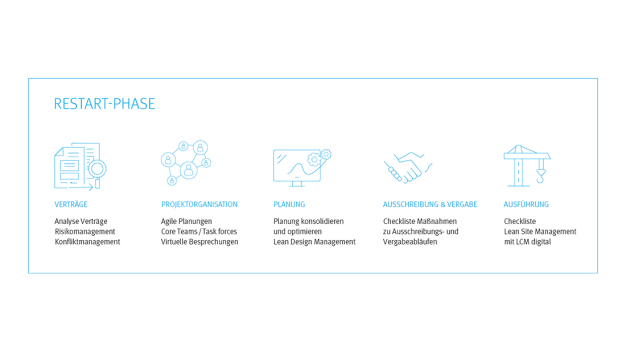
To professionally and efficiently restart a construction or renovation project in the shortest possible time, project owners should conduct a comprehensive and cross-disciplinary 360-degree analysis and examine a variety of topics.
These measures apply across all project phases
High priority is given to risk analyses concerning the achievement of project goals. For project owners in the cleanroom industry, especially important is the review of the schedule, including the necessary Factory Acceptance Tests (FAT) of individual systems and the planned production start (SOP). Ideally, the areas of Construction, Commissioning, and Compliance are already closely integrated in planning. Methods of early warning systems must now be implemented to detect deviations early and respond accordingly.
If the agreed schedule is no longer valid, processes may need to be redefined and restructured to ensure the safe and prompt market entry of the product. It may also be necessary to implement so-called "schedule sprints/bypasses" to catch up on milestones. This can be achieved, for example, through a two-shift operation or work on Saturdays: depending on the project phase and situation, different solutions are suitable.
For cost forecasts, project owners should check whether and which claims have arisen due to, for example, non-delivery of materials or access restrictions on the company campus – considering not only claims already incurred but also expected claims. Since such claim processes entail additional effort and can significantly impact the overall project budget, personnel resources for handling them should be clarified. Additionally, the liquidity of suppliers for process equipment should be checked, and payment terms shortened to ensure the manufacturing of supply components.
Adjust project and contract structure
Regarding project organization, the first question is whether all companies, planners, and consultants are still available. The next step is to verify whether all personnel can still participate in the project. Only then can project owners recognize necessary organizational changes in time and adjust accordingly.
Contracts must also be analyzed to determine if and what adjustments are necessary. Procurement and project management will work closely together to prepare the required changes efficiently. If bonus schemes exist, it is also important to formalize them appropriately in the contract.
Enable restart of the construction site
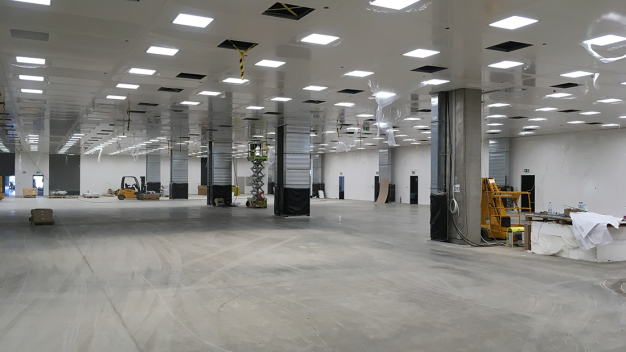
After activities on the construction site have been slowed down or even halted, it is essential to check whether material deliveries can still function properly. Only once sources of delays and failures are identified can solutions for their elimination be found.
In many cases, it is advisable to adapt the construction site due to new requirements. For example, needs for material storage may have changed: Proper storage or interim storage of materials or already delivered process equipment must still be ensured. Other new safety aspects, such as expanded site security or personal health checks at access points to the area, or additional personal protective measures for construction personnel, should be considered.
The particularity of far-advanced construction sites that are close to completion and where almost all construction- and process-related work has been completed is targeted support during the "remaining time." Are all relevant documents for IQ, OQ, PQ available for the project owner? What impact has the construction halt had on the planned commissioning schedule? Which tests need to be repeated? Here, the team involved and each individual's know-how play a major role and are therefore of high importance.
Modern methods provide solutions
Especially when it comes to reorganizing and rescheduling a project, the use of methods such as Lean Construction Management offers a proven path to success. This approach helps both in planning (Lean Design Management) and on-site (Lean Site Management). By implementing lean principles, the goal is to reduce waste on the construction site, increase efficiency across the entire value chain, and improve quality. This can significantly lower costs and accelerate work processes.
In the current situation, all decisions have immense impacts on deadlines and, of course, costs. Particularly in the cleanroom industry, a mature and coordinated planning of construction and process equipment has a tremendous influence on the results of equipment and machine qualification as well as process validation. Therefore, before management makes decisions, the above topics should be addressed quickly and efficiently with the highest expertise. This allows the impacts to be clearly demonstrated, providing management with a well-founded basis for decision-making.

Drees & Sommer SE
Geisenhausenerstraße 17
81379 München
Germany
email: lifesciences@dreso.com
Internet: https://www.dreso.com/life-sciences