



- Translated with AI
Deadline in March 2019: No access to the European market without compliance with EN ISO 13485:2016
New requirements for quality management in medical devices
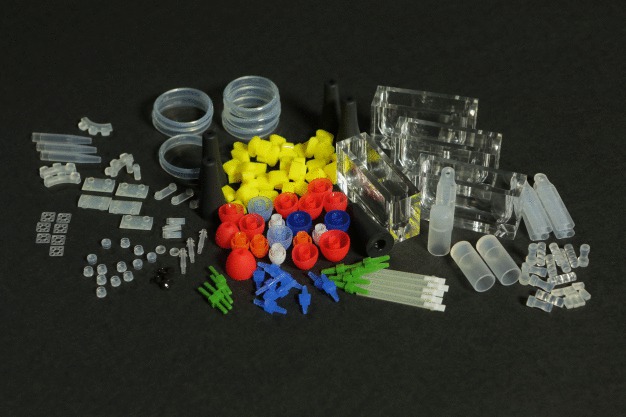
FMI supplies OEMs with complex silicone parts. Source: Flexan
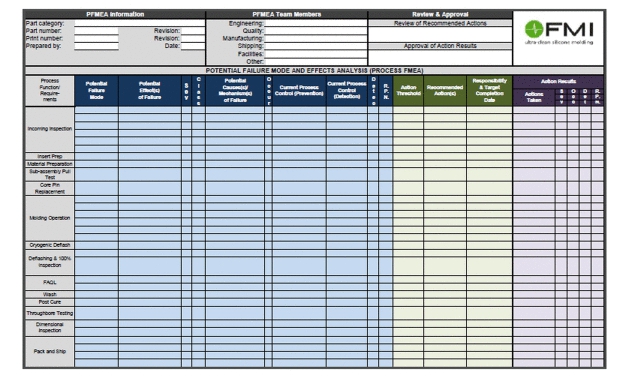
The advantage of process FMEA is that potential sources of errors can be identified before the actual production, allowing measures to be taken as early as possible in the process chain. This helps prevent the delivery of a defective product. Source: Flexan

The company has already conducted a gap analysis and identified the areas where changes need to be made to achieve compliance with ISO 13485:2016. Source: Flexan
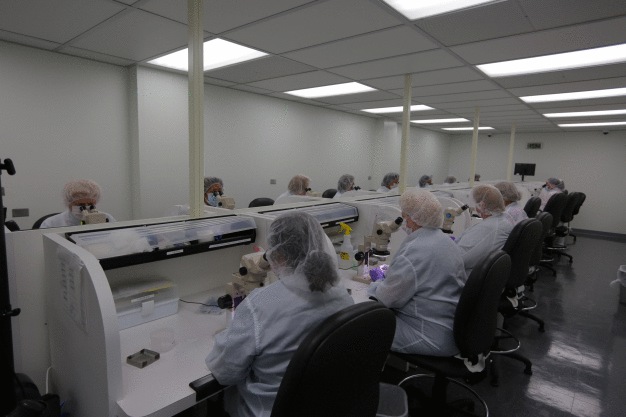
To meet the increasing quality demands, FMI has, for example, optimized its risk management for product realization as well as its CAPA program. Source: Flexan
How OEMs can recognize in time whether their suppliers will achieve certification within the set deadline
Medical device manufacturers are responsible for ensuring that even components not produced in-house comply with all relevant ISO guidelines. To this end, they must verify and ensure that their suppliers' quality management systems meet all necessary requirements. This is especially urgent because two critical standards have recently been revised: By September 2018, suppliers must have their processes conform to the new EN ISO 9001, and by March 2019, they must have the revised EN ISO 13485 certified. If a component manufacturer does not receive certification in time, the OEM must at least temporarily switch suppliers. If this option is not available, it may not be able to market its product in the worst case. FMI, the Chicago-based specialist for complex silicone parts, has therefore taken immediate action: The company conducted a gap analysis as early as January 2017 and plans to review compliance with EN ISO 13485 in April 2018. To meet increasing quality demands, the company has, for example, optimized its risk management for product realization and its CAPA program.
"For OEMs, it is not always easy to ensure that supplied parts comply with ISO standards," explains Leo Gelera, Quality Manager at FMI. "Ideally, the suppliers' quality management systems are efficient enough to identify risks and prevent defects and failures." The effectiveness of internal processes can be assessed by the medical device manufacturer through factors such as certification according to ISO standards, risk management for product realization, the use of a Corrective and Preventive Actions (CAPA) program, and the importance of quality within the company's culture.
Certification according to revised standards is essential
Since both the EN ISO 9001 standard, which sets minimum requirements for quality management systems, and the EN ISO 13485 directive have recently been revised, it is currently a priority for OEMs that their suppliers meet the deadlines for certification according to these revised standards. "The main goal of the new standards is to improve risk management among suppliers in the medical sector," says Gelera. "This is achieved, among other things, by placing a stronger focus on control requirements throughout the entire supplier process chain."
To successfully complete the certification process within the deadline, the supplier can hire an external consultant or rely on internal personnel resources. If the latter approach is chosen, the designated body responsible for certification should be contacted. They will advise on the optimal approach and provide checklists that can also be used for later evaluation. Additionally, the project-specific quality manager should attend training on the requirements of the new standards and obtain certification as lead auditor. Once this is done, a gap analysis should be conducted. This compares the requirements of the new guidelines with the current processes at the supplier and derives steps for adjustments.
Urgent deadline
"Companies should not delay," emphasizes Gelera. "The oversight bodies specify exactly the time needed for a successful certification between the publication of the standard and the deadline." FMI, for example, already conducted a gap analysis in January 2017 and identified areas where changes are necessary. "The key elements of ISO 13485:2016, in my opinion, are, besides more precise supplier control, especially the training and CAPA programs," says the quality manager. "We are making great progress in these areas; for example, we have redefined our training program and supplemented it with a particularly thorough review. This ensures that our training programs are effective for our employees." FMI has already agreed with the certifying body on an evaluation date in April 2018. Even if not all companies in the supplier industry work as quickly, at least the gap analysis and a detailed upgrade plan should have been completed by September 2017.
"For an OEM, it can have serious consequences if it sources components from a company whose quality management system is not certified according to ISO 13485:2016," says Gelera. "This certification is a fundamental requirement to bring a medical device to market in the European Union. Accordingly, it is part of the standard requirements for many OEMs for their suppliers." If the deadline is missed, the medical device manufacturer must refrain from using these components in production until the deficiency is rectified. Since OEMs usually have only one supplier for a specific component, there is a risk that existing orders cannot be fulfilled. If the manufacturer suspects that its supplier has not yet progressed sufficiently in the certification process, it should at least request the supplier's action and timeline plan for adjustments to gain a clearer overview and take timely measures."
Interview: Leo Gelera on quality management in the medical technology supply industry
The ISO certification is only one factor indicating how well the supplier's quality management system is functioning. For example, how is the implementation of risk management processes in product realization progressing?
"The relevant ISO standards require suppliers to implement risk management processes in the area of product realization. However, how exactly these processes should look is intentionally kept vague. This gives companies more flexibility in design and allows them to take the most effective measures. Of course, this involves a continuous learning process, which can be somewhat accelerated— for example, by comparing approaches with similar suppliers. Typical questions include: What risk management tools are used? Are risk management practices applied throughout the entire production process? How efficient are these?"
The answers to these questions also provide OEMs with clues for assessing their suppliers' processes. FMI, for example, has integrated various procedures across the entire product realization, including different Failure Mode and Effects Analyses (FMEAs), component-specific control plans and work instructions, error detection at every process step, measurement controls, as well as inspections during first article qualification (FAQL) and final lot release (Final Lot Release Inspections). The implementation of process FMEAs is particularly recommended. Their advantage is that potential sources of errors can be identified before actual manufacturing begins, enabling early countermeasures in the process chain. This helps prevent the delivery of defective products."
What importance do you assign to CAPA programs?
"Having an efficient CAPA system is ultimately essential for every company and organization. CAPAs are usually triggered when an error occurs either internally or externally. Their purpose is to understand the cause, scope, and impact of the incident. With their help, ideally, errors can be corrected, and measures can be established to prevent recurrence of the defect or failure in the future. Afterwards, the effectiveness of the corrective action should also be verified. If such an analysis, including the derived measures, is omitted, there is a risk that the error will recur continuously."
What role do you believe quality should play within the corporate culture?
"The ultimate goal of a supplier must be to make collaboration as straightforward and low-maintenance as possible for the OEM. Ideally, it should not even appear on the radar of the medical technology manufacturer because its quality performance is impeccable. This is precisely where the 'quality culture' at the supplier is crucial. Every employee must understand the central role they play in overall quality and the far-reaching consequences that can arise if just one component is faulty. Many components are manufactured in the industry that later contribute to saving or preserving human lives. Employees should be well-informed about the significance of these components and how much depends on their proper functioning. This also enhances appreciation for their own work."
Flexan, LLC
IL 60069 Lincolnshire
United States