- Translated with AI
Compliance made easy: Flexible standard monitoring solution for cleanrooms and laboratories significantly reduces project costs
Monitoring and documentation of room conditions in the life sciences sector

Since even minor deviations in the environmental conditions in cleanrooms, laboratories, and research facilities can have far-reaching consequences, comprehensive monitoring of measurement data is indispensable. (Source: SAUTER)
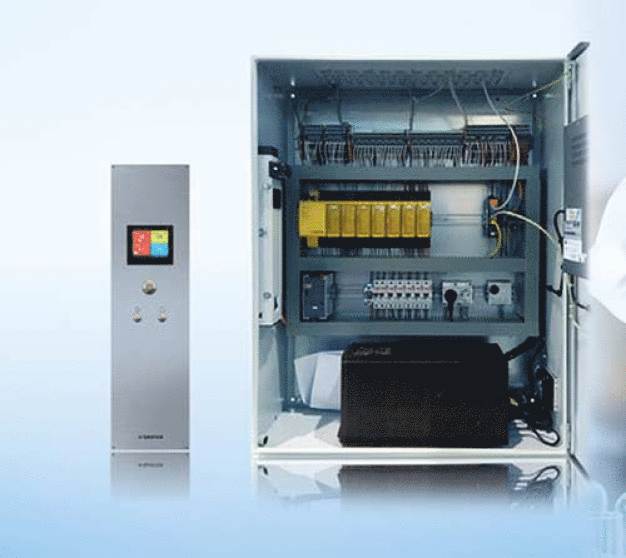
The Clean Room Monitoring Solution (CRMS) from SAUTER is a pre-configured, integrated total solution that takes into account all legal and operational requirements. The standardized structure and project process also make the system very robust against errors and reduce costs. (Source: SAUTER)
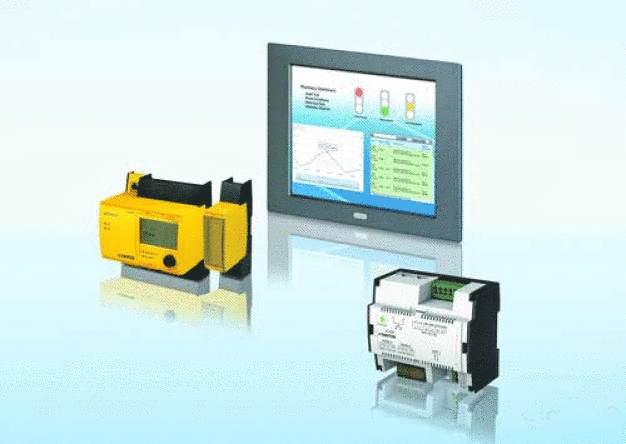
The hardware of the solution is based on the proven product family SAUTER EY-modulo 5 and includes, among other things, an EY-AS-525 automation station or an EY-RC-504 room automation station, twelve DI and 18 DO field modules, an 8-port switch, a 17" touch panel PC, and an external HDD. (Source: SAUTER)
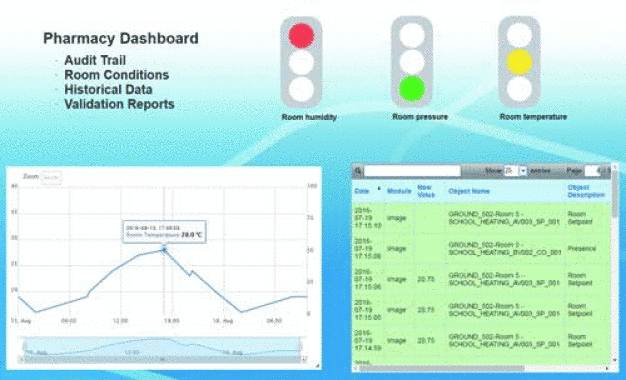
For the visualization, control, and monitoring of the entire system as well as for the storage of historical data, the user-friendly management software SAUTER Vision Center is used. (Source: SAUTER)

"Through standardization regarding the technical setup and project workflow – that is, in organization and documentation – errors can largely be avoided, and the documentation process can be made more efficient and predictable," explains Rolf Schulze from SAUTER Life Sciences. "This leads to reduced project turnaround times and thus lower costs." (Source: SAUTER)
Strict requirements are ubiquitous in the field of Life Sciences – including room conditions: The guidelines of Good Manufacturing Practice (GMP) and Good Laboratory Practice (GLP), as well as other national and international regulations, such as those of the American Food and Drug Administration (FDA), demand comprehensive monitoring and archiving of critical room parameters such as room pressure, temperature, humidity, airflow, door operation, and particle concentration. This is to prevent product contamination or falsified analysis results. To make this process more efficient and predictable, SAUTER has developed the Clean Room Monitoring Solution (CRMS), a pre-configured, integrated total solution that considers all legal and operational requirements. It not only allows operators and users to detect deviations early and respond accordingly. The standardized setup and project process also make the system very robust against errors and reduce costs.
Since even minor deviations in room conditions in cleanrooms, laboratories, and research facilities can have far-reaching consequences, comprehensive monitoring of measurement data is indispensable. In clinics, medication manufacturing and storage, natural cosmetics and dietary supplement production, and cleanroom manufacturing, parameters such as air change rate, airflow direction and speed, room differential pressure, relative humidity, as well as particle, microbial, and airborne germ concentrations must be documented, among others. "An incorrect room pressure, for example, can lead to product contamination," explains Rolf Schulze from SAUTER Life Sciences. "With continuous monitoring, deviations can be detected and corrected immediately."
Flexible, fail-proof standard components
However, such systems are often custom-designed for each new project, which makes many processes and technical details highly prone to errors. In contrast, the SAUTER CRMS relies on hardware and software tested in the factory with standard-compliant pre-settings, combined with comprehensive, traceable qualification documentation including Standard Operating Procedures, operational, and user manuals. The hardware of the solution is based on the proven product family SAUTER EY-modulo 5 and includes, among other things, an EY-AS-525 automation station or an EY-RC-504 room automation station, twelve DI- and 18 DO-field modules, an 8-port switch, a 17" touch panel PC, and an external HDD, for which automatic daily or possibly hourly data backups can be performed.
In the basic configuration, the entire SAUTER CRMS is housed in a 100 x 70 cm wall cabinet with its own ventilation and temperature monitoring. Operation is via the integrated touch panel PC or web access. The factory-installed BACnet automation station records up to 50 room parameters, serves as a buffer for the collected data, and generates local alarm notifications. "The measured values and alarms for each room are displayed on a CRP510 Cleanroom Panel," explains Schulze. "For visualization, control, and monitoring of the entire system, as well as for storing historical data, the user-friendly management software SAUTER Vision Center is used." To keep configuration effort minimal, it is delivered with a predefined "FDA-ready Setup" including audit trail, user, and password management. Optional are a NAS server system with RAID 5 for data archiving, a moduCom Modbus, and additional I/O modules.
A system for two areas
The associated DQ, IQ, OQ, and PQ qualification documentation from SAUTER is stored in the management system of the SAUTER Group and has been audited by various customers such as Roche, Novartis, and Sanofi. "All proof of compliance with legal regulations and all traceable certificates are provided during project execution," says Schulze. Furthermore, the Vision Center software complies with the requirements of 21 CFR Part 11, GMP, GAMP 5, GLP, and Annex 11.
"Thanks to standardization in terms of technical setup and project process – that is, organization and documentation – errors can largely be avoided, and the documentation process can be made more efficient and predictable," explains the expert. This leads to reduced project lead times and thus lower costs. Since the SAUTER CRMS is also based on the same standard products used in building automation, users only need to learn one system. "When both areas are consolidated on identical systems, operational costs are automatically reduced," Schulze states. "At the same time, there is only one system provider and thus exactly one contact person for the user, who benefits from the advantages of an integrated total solution."
SAUTER Deutschland
79108 Freiburg
Germany