


- Service
- Translated with AI

Norbert Otto
Cleanroom Technology: The New ISO 14644-3
Cleanrooms and associated cleanroom areas: Test methods (ISO/FDIS 14644-3:2019)
Dear Readers,
Between 2011 and 2019, 17 meetings of the ISO 14644 WG3 (Test Methods) Working Group took place.
The actively participating nations are the countries where the meetings were also held.
All in all, over 800 submissions or comments were processed. The main reason why so many meetings had to be scheduled was related to the measurements in section B.4: Recovery Time Testing, but also the measurements in section B.7: Leak Testing of the installed filter system.
Regarding section: B.4: "Recovery Time Testing," it should be noted that this explains the method, but not the limit value or acceptance criterion. These are, in turn, specified by the customer or, for example, by GMP guidelines.
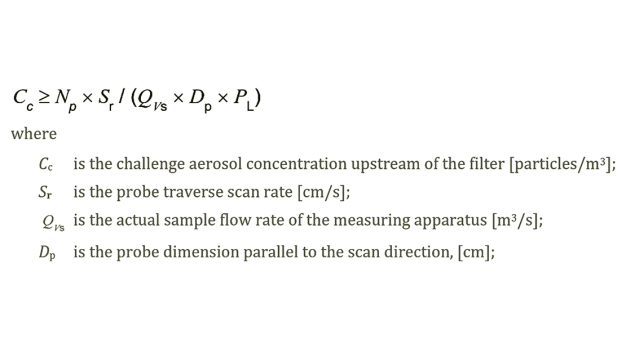
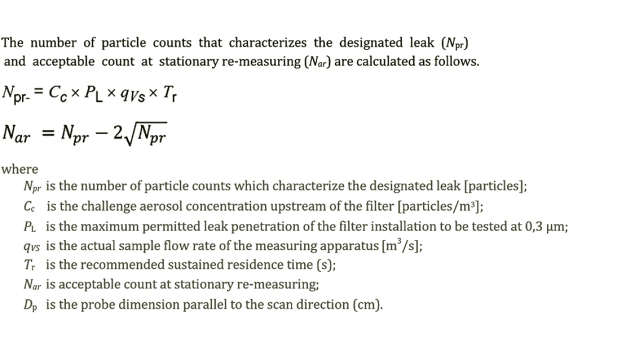
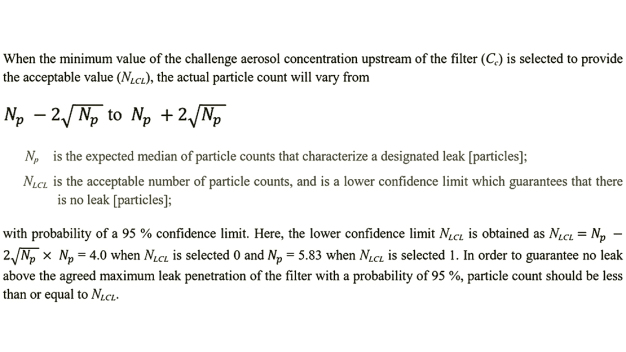
Regarding section: B.7: "Leak Testing of the installed filter system," there was ultimately a completely new mathematics for scan times and the test aerosol challenge, now independent of the installed filter quality.
The most challenging aspect of this topic was the two different measurement methods: one using a photometer on one side and the other using particle counting technology on the other side.
The applicability of the two methods is now as follows:
1.) Photometer measurement technology (DOP) for HEPA filters H13 – H14 with a limit of 0.01%
2.) Particle counter measurement technology (DEHS) for HEPA filters H13 – U17 with a limit of 0.1% and also 0.01%
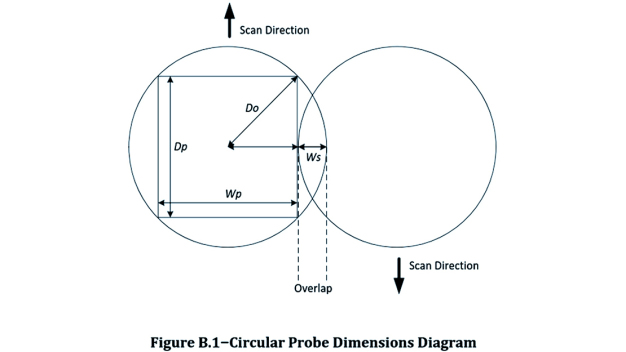
The new ISO 14644-3:2019 goes a step further and allows a much lower raw air concentration during the test aerosol challenge — always depending on the scan speed. This can now be set to < 8cm/s and is thus equivalent to the national standard VDI 2083-3.
If the sampling probe has a diameter of 3.6 cm and the filter medium (H13) with size 600 x 600 mm is to be scanned at a speed of 8.0 cm/s, the target aerosol concentration can be, for example, 500,000 particles/cft. This corresponds to 17,657,350 particles/m³. The resulting scan time is then 6 minutes (rounded up). The measurement technician should be very experienced with this raw air concentration to detect potential "pinholes." It is still recommended to use raw air concentrations similar to VDI 2083-3 with 10^6 particles/cft.
If, for safety reasons, one wants to operate at a speed of 5.0 cm/s with the same conditions as in the previous version of the standard, a time of 8 minutes (rounded up) is required.
Furthermore, it should be emphasized again that a leak result cannot be expressed by the particle count on the clean air side, but only as a percentage — because the installed filter's efficiency also has a percentage value (e.g., <0.1%).
Summary:
The finally valid FDIS (final draft international standard) was still circulating until March 2019 for editorial changes. I assume that the new ISO 14644-3:2019xx in the English or French version will be available for purchase from April 2020. The standard will then be slightly more than 50 pages. The German version by DIN is also likely to be published later in 2020.
Norbert Otto

C-tec
Cleanroom-Technology GmbH
Tübinger Straße 47
72127 Kusterdingen
Germany
Phone: +49 7071 6887180
Fax: +49 7071 688718700
email: norbert.otto@c-tec.de
Internet: http://www.c-tec.de