

- Service
- Translated with AI
Norbert Otto
Cleanroom technology for GMP production rooms
Changes to ISO 14644-1, -2 & -3
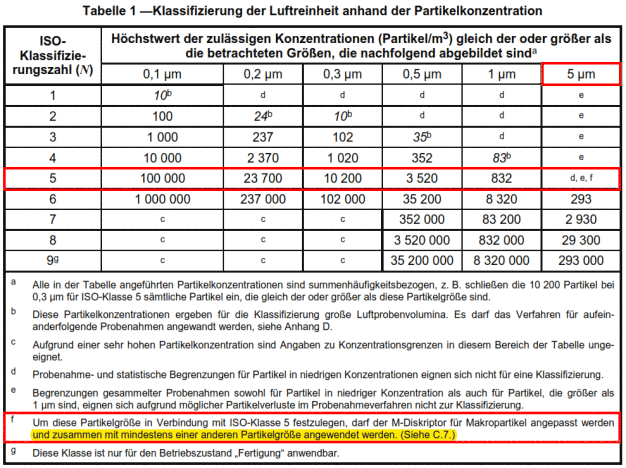
Table 1: Classification of air cleanliness based on particle concentration / Source: DIN EN ISO 14644-1
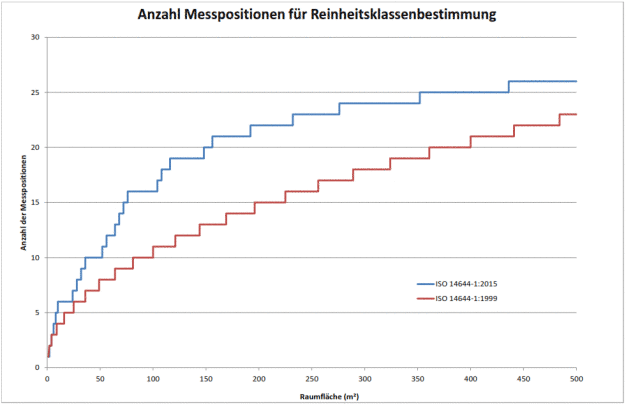
Table 2 (Increase in measurement points <2015 / >2016) Source: C-tec GmbH
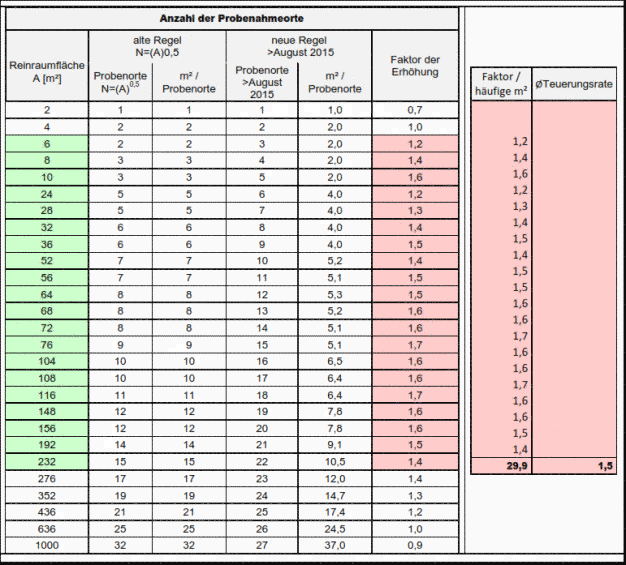
Table 3 (Growth rate of the most common cleanroom areas) Source: C-tec GmbH

Norbert Otto
The DIN EN ISO standards 14644-1 and 14644-2 for classifying air cleanliness based on particle concentration (-1) or monitoring the performance of cleanrooms and particle measurement (-2) are now also available in the German version (available through Beuth Verlag).
What is new? How should particles of 5 µm be handled? How many sampling points are added?
Norbert Otto, who contributed to the revision as a member of the Technical Committee ISO/TC 209 "Cleanrooms and associated controlled environments" for ISO 14644-3, answers these questions for you. Read his concise responses in today's overview.
ISO 14644-1:2015 (Classification of air cleanliness)
ISO 14644-1:2015 was developed by the Technical Committee ISO/TC 209 "Cleanrooms and associated controlled environments" in collaboration with the Technical Committee CEN/TC 243 "Cleanroom technology," whose secretariat (Convenor) is held by BSI (British Standard Institution). This part of ISO 14644 specifies air cleanliness classes based on the number of particles, given as a concentration in the air volume, as well as the selection of sampling locations.
The appendices have been reorganized to improve the logical structure of ISO 14644, and parts of the content from ISO 14644-3:2005 regarding testing and test equipment have been incorporated into certain appendices.
The rolling of sampling locations demanded in draft ISO/DIN 14644-1:2013 was not included in the final version.
ISO/DIN 14644-1:2015 addresses the issues concerning particles ≥ 5 µm for ISO Class 5 in relation to sterile products of the EU, PIC/S (Pharmaceutical Inspection Convention and Pharmaceutical Inspection Co-operation Scheme), and WHO GMP guidelines by adopting the macro-particle concept. The classification table no longer specifies a count value for particles ≥ 5 µm in ISO Class 5. However, an M-descriptor (see Appendix C) can be used to quantify macro-particle groups (particles ≥ 5 µm)!
This also means that particles of 5.0 µm are by no means eliminated. They should still be recorded for GMP cleanrooms (also in accordance with Annex 1 of the EU-GMP guideline). Furthermore, the new ISO 14644-1 requires measuring with a second channel, which in GMP terms would be the measurement channel with 0.5 µm particle size.
§ C.4.1 Measurement of macro-particles
When sampling particles ≥ 1 µm, the length of the transition piece should not exceed the length and diameter recommended by the manufacturer, and this length is "usually" not longer than 1 m.
Due to equipment constraints, this is rarely feasible. This requirement is completely impractical and has made measurements since 1969 (US Fed Std 209) and 1999 (ISO 14644-1) seem absurd to date! The turbulent velocities in the sampling hoses are still sufficient to prevent particle loss. It should also be noted in the new Annex 1 that this is a "recommendation".
ISO/DIN 14644-2:2015 (Specifications for monitoring and periodic testing to demonstrate ongoing compliance)
§ 5 Regular classification of air cleanliness based on particle concentration
The regular classification testing must now be conducted annually according to ISO 14644-1 and -3. This frequency can be increased based on risk assessment, the scope of the monitoring system, and data that consistently stay within acceptance limits or the levels defined in the monitoring plan.
ISO/DIN 14644-3 / F-DIS:2016 (Test methods)
ISO 14644-3 specifies additional tests related to other aspects of cleanroom performance, such as leak testing, pressure differentials, airflow, etc.
The draft (final draft) is currently circulating and is expected to be approved later this year. Changes regarding the calculation of the test aerosol amount (raw air concentration) and the performance criteria of particle counters (corresponding to ISO 21501-4), among others, have been incorporated, as well as a segregation test.
Among others, the following have been delegated to ISO 14644-1:
– Measurement of airborne particle concentration
– Classification tests
– Measurement of ultrafine particle concentration
– Macro-particle test
Notes on the changes in ISO 14644-1 2016
Classification of air cleanliness based on particle concentration
Table 1: Extract from the current DIN EN ISO 14644-1:2016 (German version) for classifying air cleanliness based on particle concentration
Source: DIN EN ISO 14644-1
Number of sampling locations
Regarding the new determination of the number of sampling locations, the number has increased significantly compared to the earlier version. The table below lists rooms with correspondingly typical areas (see Table 2), as is common in GMP environments, as an example of the increase in sampling points.
Table 2: Number of sampling points according to ISO 14644-1,
status before 2015 (old) vs. status since 2015 (new) (see Table 1)
Table 3 (Growth rate of the most common cleanroom areas)
Summary
For GMP cleanrooms, particles ≥ 5 µm can still be measured using the M-descriptor according to ISO 14644-1:2015. There have been some misunderstandings here.
The number of sampling points has increased significantly depending on the size of the cleanroom (up to 1.7 times).
It remains to be seen how ISO standards will be implemented in the GMP regulations—especially in Annex 1 of the EU-GMP guideline.

C-tec
Cleanroom-Technology GmbH
Tübinger Straße 47
72127 Kusterdingen
Germany
Phone: +49 7071 6887180
Fax: +49 7071 688718700
email: norbert.otto@c-tec.de
Internet: http://www.c-tec.de