

- Packaging
- Translated with AI
Cleanroom, Packaging, Contamination
Primary plastic packaging in contamination-critical environments
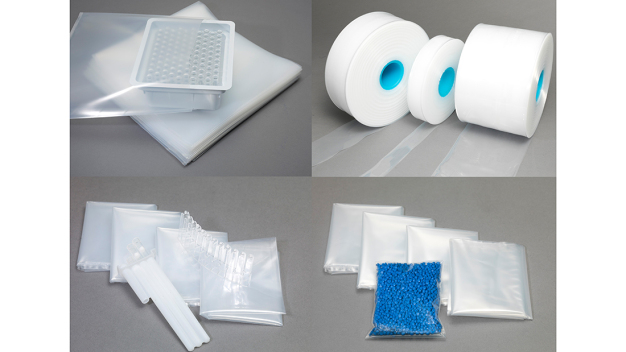
Examples of cleanroom packaging: films and bags
The industries where contamination avoidance is top priority in risk management will increasingly need to address sustainability issues in the future. Against the backdrop of upcoming regulations at the EU level, the packaging, plastics, sustainability, recycling, and circular economy cluster must be prioritized by pharmaceutical and medical technology companies. The goal is to harmonize the qualitative requirements for packaging with environmental protection measures within the framework of a “Green Deal.”
Plastic packaging quality equals raw material quality
High standards for product quality, cleanliness, and hygiene must be met during the production, handling, and transportation of pharmaceutical and medical technology products. Therefore, the GMP guideline in Chapter 5.45. states, “The selection, qualification, approval, and maintenance of suppliers of primary and printed packaging materials should be given as much attention as that of suppliers of starting materials.” Packaging is classified similarly to raw materials in terms of quality. This is understandable considering the chemical processes involved in product-contacting packaging. The function of migration analyses for food packaging, based on EU Regulation 10/2011 concerning materials and articles made of plastics intended to come into contact with food, as well as extractables and leachables studies in pharmaceuticals—such as those described in FDA, EMEA, USP, and EP guidelines—is precisely to identify potential critical effects of packaging materials on the product ex ante, thereby ensuring consumer and patient safety.
The supply chains for medical and pharmaceutical products are complex. On one hand, due to industrial division of labor, many different companies are often involved in a supply chain. On the other hand, the geographic dimensions of transportation must not be overlooked. All raw materials, individual parts, assemblies, and components from which the final medical-pharmaceutical product results must be packaged along their journey through the supply chain. This always involves primary packaging materials, which must meet high quality standards. To prevent damage and contamination during handling and transportation, products must be appropriately packaged. In many cases, flexible plastics are used, such as pouches, tubes, or films. Sustainability issues here include recyclability, material reduction, mono- vs. multi-materials, labeling requirements, biobased plastics, or biodegradable plastics. These keywords, heavily discussed in the context of consumer packaging, must also be considered for pharmaceutical packaging, as regulatory initiatives are also underway for these critical primary packaging materials.
Product quality vs. process quality
Medical and pharmaceutical products must be manufactured in a controlled environment. This applies to active pharmaceutical ingredients (APIs) as well as implants, plastic components, instruments, pumps, tubes, and more. Many of these products are used in diagnostic applications, test kits, or laboratories. The rules for classifying medical production are described in EU Directive 93/42/EEC Annex IX. Depending on the application, cleanrooms and sterile environments are distinguished. The latter are classified into classes A, B, C, D based on the GMP guideline, or classes 1 to 9 based on ISO 14644. It is obvious that, under these controlled production conditions, the cleanliness of packaging materials must meet the cleanliness standards of the production environment. If not, there is a risk that the operator could contaminate the cleanroom and its product via the packaging. It would be disastrous if packaging, which is supposed to protect the product, instead posed a contamination risk—e.g., if the packaging is contaminated, exhibits critical bioburden, or if migration processes between packaging and product impair product properties.
Cleanliness of product and packaging must be built-in, not tested in
The goal is ultimately to prevent contamination of sensitive products. Microbiological and particulate contamination must be eliminated to ensure product protection and patient safety. “Create quality, not test it” means establishing comprehensive quality monitoring and, above all, a highly controlled production environment based on GMP requirements. When plastic packaging is produced in a cleanroom-compatible and GMP-compliant manner, the risk of contamination is significantly reduced. These specific requirements are described, for example, in the GMP guidelines of the pharmaceutical industry or in regulations for medical devices.
The medium-sized company Strubl Kunststoffverpackungen, based in Wendelstein near Nuremberg, has committed to these special requirements and has been producing cleanroom packaging for over 10 years that meets the highest quality standards. Be it pouches and films produced in a professional cleanroom environment qualified according to ISO 14644 and fulfilling the GMP requirements of pharmaceutical customers. Validation of products and processes, hygiene management, traceability are standard, along with complete documentation, specifications, test certificates, and customer audit procedures. What makes it special is that all products are custom-made, fully meeting individual customer requirements. When assessing sustainability aspects, STRUBL can provide consulting support and develop solutions together with customers.
Cleanroom packaging to protect against contamination
Plastic packaging manufactured in cleanrooms, such as pouches, side-fold pouches, inliners, or tubing films, are the most commonly used packaging materials in B2B processes. Customers can benefit from the company's innovative strength. For example, pouches with “easy-open” features or antistatic materials conforming to Ph-Eur standards have been developed. This is particularly important in applications involving the packaging of powders. Or another example: for lyophilization processes, Strubl has developed a precisely fitting “Cleantray,” which can eliminate complex cleaning procedures for trays. This leads to improved equipment availability and increased efficiency. Cleanzip cleanroom resealable bags with zip closures are used in laboratories, sample collection, sample archiving, intermediate packaging, and even primary packaging of components and parts, e.g., for diagnostics products.
Plug & Pack systems for automating packaging processes
Packaging in cleanrooms is often still manual and always carries a contamination risk due to handling activities. The flexible Plug & Pack system allows cleanroom pouches to be filled, labeled, printed, and sealed semi- or fully automatically. The system can be integrated into Industry 4.0 environments, thus supporting the digitalization process in the cleanroom.

Strubl GmbH & Co. KG Kunststoffverpackungen
Richtweg 52
90530 Wendelstein
Germany
Phone: +49 9129 90350
email: christoph.strubl@strubl.de
Internet: http://www.strubl.de