


- Cleanroom
- Translated with AI
Cleanroom expansion in record time
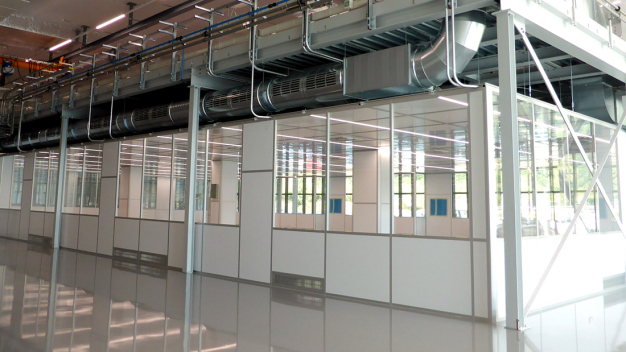
The modular cleanroom system from the outside view. (Image: Hamilton)
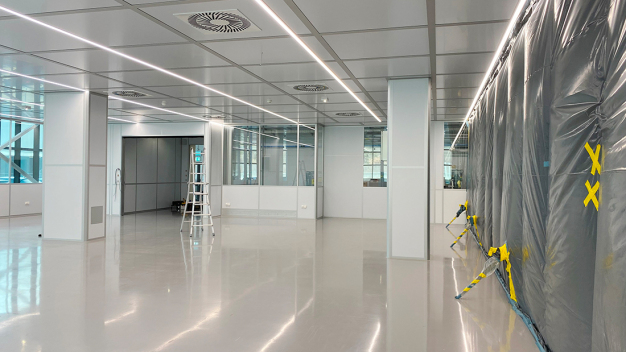
The 320 sqm large expansion of the modular cleanroom system was separated from the ongoing production during construction with a dust protection wall and was connected to a total room within one day. (Image: Hamilton)
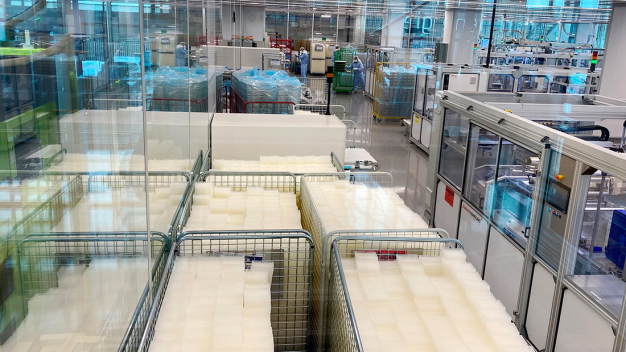
In the CleanMediCell® cleanroom, several billion individual parts are handled annually. (Image: Hamilton)
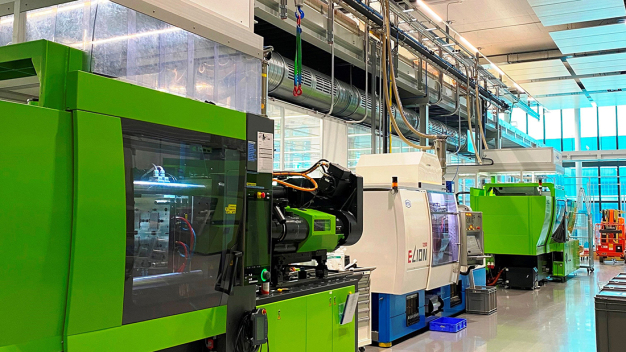
The production has been expanded with three new injection molding machines. The plastic parts are protected from contamination using laminar flow covers. (Image: Hamilton)
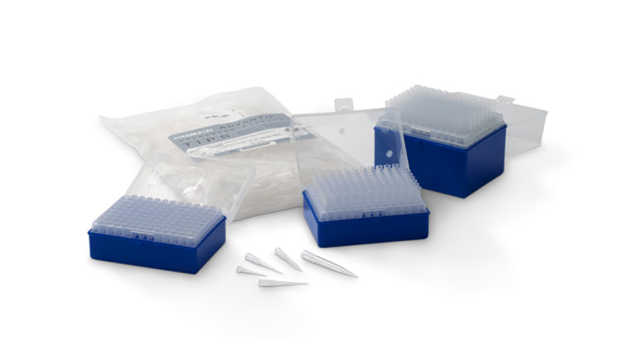
The pipette tips manufactured in the cleanroom for use in laboratory diagnostics. (Image: Hamilton)
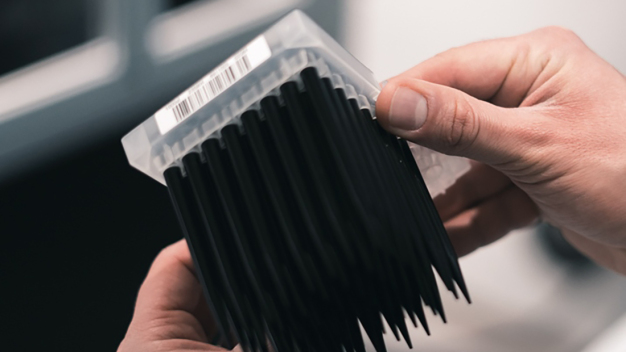
Pipette tips (Image: Hamilton)
The Swiss life sciences company Hamilton is experiencing eventful times. The COVID-19 pandemic has led to an enormous surge in demand for their products. Not only does every fifth ventilator in use worldwide come from the Swiss company's manufacturing facilities, but two-thirds of all automated PCR tests worldwide run with Hamilton technologies. The tremendous demand for liquid handling solutions pushed the company, based in Domat/Ems in the mountainous canton of Graubünden, to its capacity limits. Hamilton was able to respond to the surge in demand. This is exemplified by the production of pipette tips. Hamilton nearly doubled the cleanroom and its production capacities within record time.
When Hamilton Bonaduz AG commissioned a 560 m² cleanroom for the production of pipette tips in 2018, no one could have foreseen that the need for laboratory diagnostics would suddenly skyrocket during the COVID-19 pandemic. The plastic tips are used in biotechnology, forensics, cell research, and diagnostics, where tiny amounts of liquids must be pipetted precisely. For the safety of the diagnoses, the pipettes must be free of any contamination. Hamilton produces and packages these under controlled cleanroom conditions.
To meet the increased demand from laboratories, not only the injection molding capacity but also the entire handling of contamination-free production, compliant with GMP requirements, had to be expanded. This included enlarging the cleanroom, to which two additional machines have now been connected.
Even during the installation of the first cleanroom in Domat/Ems a few years earlier, the Swiss company had ensured the installation of a modular cleanroom system that could be reconfigured and expanded. Georg Schischkin, Quality Leader at Hamilton, would not have thought that such an expansion would be necessary already in 2021. However, thanks to forward-looking planning, Hamilton was able to quickly increase its capacities, as Schischkin explains:
"When we planned the cleanroom in our new building in 2018, we already decided to include an expansion option for potential growth. That’s why we chose a modular system that can be easily reconfigured. No one, however, could have anticipated that this would need to be implemented so quickly."
Rapid expansion thanks to modular extension
The existing cleanroom and the extension were carried out by the cleanroom company Schilling Engineering. Thanks to the modular CleanMediCell system, the 560 m² cleanroom was expanded by an additional 320 m² in just six weeks. Production was maintained throughout the entire renovation.
Wall and ceiling modules of the cleanroom system are connected with a silicone-free GMP sealing clip system, ensuring a high level of airtightness. Due to the patented connection, the side wall of the original cleanroom could be dismantled without damage, and the existing wall and ceiling elements were connected to the new cleanroom. Thanks to a provisional dust protection wall, production continued fully during the renovation. Only four hours of downtime were scheduled to adjust and test the pressure and ventilation of the two combined modules. The entire cleanroom system meets GMP Class D requirements.
Georg Schischkin, who had to coordinate the production increase under time pressure, has known the cleanroom company Schilling Engineering from several projects and was very satisfied to be able to rely on external expertise for planning and executing the cleanroom expansion. The Swiss high-tech company's tight schedule and the speed of the renovation were of great importance:
"Being able to continue production during the expansion was an essential prerequisite, and it really worked very well. Schilling Engineering was very flexible in accommodating our needs and provided excellent advice. The project management and service technicians were always available and highly competent. That took a lot of pressure off us. The timeline for the renovation could not have gone better."
Fully automatic handling
With the expansion of the cleanroom, Hamilton was able to commission three additional injection molding machines to produce pipette tips contamination-free in a controlled GMP process. Each injection molding machine is equipped with a laminar flow enclosure that, with a regulated supply of purified air, protects the open areas of production from contamination. The finished parts are then automatically transferred via cleanroom transport rails and connected robotic handling into trays of 96 pieces each, which are then fed into the cleanroom. Inside the cleanroom, the pipette tips are inspected and packaged. The sealed final product is transported safely to the outside via an automatic lift system and automatic material shuttles, ensuring a secure path to the end customer.
To ensure the quality of the product is not compromised, the cleanroom is equipped with an integrated climate control system and operated with constant temperature and humidity. The cooled and filtered air is recirculated energy-efficiently and gently through the air system. For cooling, the cost-effective deep well water is used.
GMP monitoring and GMP qualification
To meet all the requirements of end customers, the cleanroom was GMP-qualified, and GMP monitoring was integrated. The particle measurement analysis is also conducted according to ISO 8 standards, which are relevant for medical technology.
Georg Schischkin explains these features of the system: "We produce according to GMP but also demonstrate the ISO 8 cleanroom class to our end customers in the medical technology sector. The CleanMediCell cleanroom system is specifically suitable for this. GMP qualification is very elaborate and requires the most precise and extensive documentation. We were glad to receive advice and support from experienced cleanroom engineers."
A special feature of the cleanroom system is the integrated GMP monitoring. The particle concentration within the cleanroom is monitored as well as parameters such as pressure, humidity, and temperature. All values are continuously recorded and documented in a tamper-proof manner at defined intervals. This allows the controlled process to be verified throughout the entire production period, as required by GMP regulations. The continuous monitoring enables trend analysis and allows timely countermeasures if deviations occur. Additionally, the cleanroom is monitored via the CR-Control software. Operators inside the cleanroom receive immediate feedback if warning thresholds are exceeded or fallen below and can follow the instructions on the touch panel to troubleshoot.
Thanks to the rapid expansion, several billion pipette tips from Switzerland find their safe way into laboratory diagnostics each year, contributing to the implementation of COVID-19 measures. Despite admiration for the Swiss company's flexible and courageous approach, we hope that soon the majority of these special plastic parts will be used again for diagnostics far removed from a pandemic.

Schilling Engineering GmbH
Industriestraße 26
79793 Wutöschingen
Germany
Phone: +49 7746 927890
email: info@schillingengineering.de
Internet: http://www.schillingengineering.de