


- Translated with AI
Cleanroom Design: What to consider for doors, glazing, walls, and installations
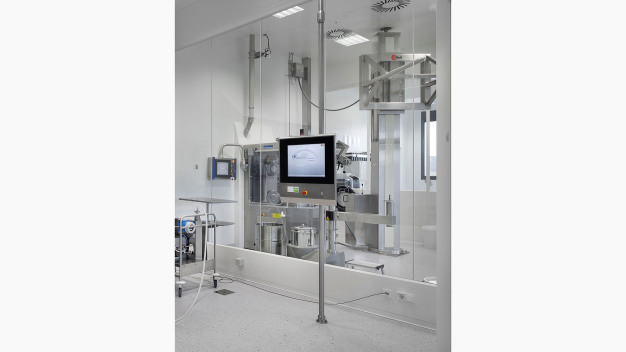
Fig. 1: Cleanroom-compatible integration of various components. Copyright: Glatt
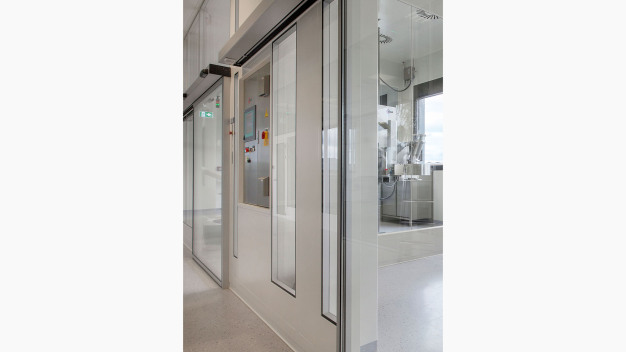
Fig. 2: Cleanroom-compatible door installations. Copyright: Glatt
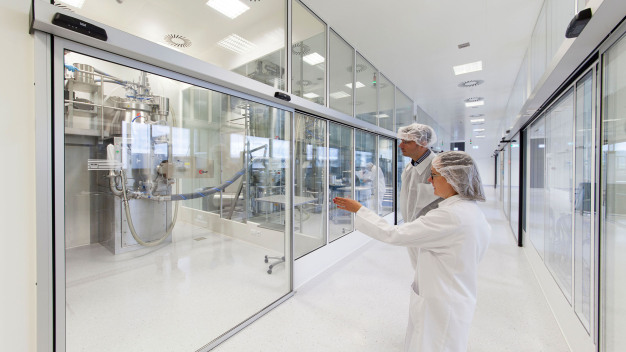
Fig. 3: Cleanroom-compatible design of a pharmaceutical plant including corridor. Copyright: Glatt
The requirements for a cleanroom are clearly defined according to current GMP regulations and other specifications. When implementing, it mainly depends on the customer's specifications, the selection of systems, and the details of execution. Ronny Töpfer, project engineer at Glatt Engineering in Weimar, explains what matters for walls and the associated components.
Careful and comprehensive planning in the preliminary phase of a cleanroom project is essential, whether it involves a renovation or new construction. Before starting any cleanroom assembly, i.e., the pharmaceutical interior construction, all structural measures must be completed as far as possible. This means the shell construction should be finished and the construction site fully cleaned. Only then can particles from the surfaces of the building materials be prevented from being carried into the cleanroom being constructed.
Deciding which cleanroom class to realize, how many employees will pass through the personnel lock, and what the material flow plan between areas looks like are just a few of the questions that must be defined in advance by the client with the project planner to ensure smooth project execution. Cross-trade planning is indispensable for this. At Glatt, all involved trades (HVAC, EMSR, process, black and clean media) are available in-house, allowing all interfaces to be coordinated efficiently.
At least four walls – but which ones?
According to GMP requirements, all surfaces, including ceilings and walls, must meet a series of criteria:
– smooth and pore-free,
– easy to clean,
– impermeable and crack-free in low-microbial areas,
– effectively and repeatedly cleanable and disinfectable,
– light-resistant,
– minimal joint content,
– no horizontal or vertical deposition surfaces.
The correct selection of wall elements is the first step. Among the many different types of cleanroom walls, double-shell cleanroom elements (single-shell for exterior walls) or sandwich elements, so-called monoblock elements, are recommended for interior walls. Alternatively, for lower cleanroom classes (e.g., NC), drywall walls, for example with suitable two-component coatings, can also be used. However, a higher level of dirt ingress during construction or renovation must be anticipated here.
Wall systems made from metal elements are mainly built according to three principles: axis grid, band grid, and monoblock. The choice is usually based on the desired installation level within the enclosed cleanroom. Axis and band grids are most common because they ensure a 100% cleanroom-compatible and durable sealing of surfaces through minimized joint formation between elements. Even with sandwich elements, the joint proportion is minimal. Monoblock constructions with an insulating core and permanently bonded, surface-finished metal cover layers on both sides are recommended. The cover layer mainly consists of galvanized steel sheets with PE coating. Wall elements can be supplied, depending on the supplier, up to six meters high without horizontal joints or crossbars. Cuts on-site should generally be avoided due to better manufacturing tolerances at the factory.
The double-shell wall system is characterized by high installation flexibility and optimal installation options. All installations can still be easily modified on-site or afterwards. An additional advantage is that pipes with small nominal diameters and cables can be installed effortlessly in the intermediate space. Special solutions such as full-glass walls demonstrate the universal system application of many manufacturers. However, the cost factor is significant, and loads can only be limitedly supported.
No access for germs: doors in the cleanroom
Another important aspect in cleanroom planning is the doors or door systems. The three most common variants are hinged doors, sliding doors, and roller shutters. Single- or double-leaf hinged doors are usually made of aluminum system profiles with a powder coating and should be flush-mounted into the partition wall. The doors are equipped with seals, maintenance-free hinges, door frame locks, overhead door closers, and other options, e.g., drop-down floor seals. Although door or shutter sizes are subject to manufacturer standards, they are also available in special sizes. Full-glass doors should not be used where material transport is a priority (risk of injury from glass breakage). Cleanroom sliding doors are now highly advanced in terms of technology, including overall tightness, but should only be used in particularly space-constrained situations, as they are more difficult to clean than, for example, hinged doors. The costs of a sliding door, which should also be automatically lockable, must be appropriate to the intended use.
Cleanroom-compatible roller shutters are state-of-the-art. They are more expensive than hinged doors but are a real alternative in space-limited and high-frequency use: both the external material (housing of the mechanism) and the tightness of cleanroom-rated versions meet all requirements and operate reliably.
Personnel and material locks
In the planning phase, comprehensive insights into work and production processes are essential for the planning team. Only then is it clear where locks and clean or dirty corridors are needed to protect employee health and prevent contamination of the final product. Since cleanroom elements are usually very sensitive, it is advisable to use bumpers and impact protection in large areas. The market for cleanroom equipment is also highly advanced, so these elements stand out but are easy to clean and meet cleanroom standards.
Maintaining visibility with glazed elements
Glass elements are indispensable in a cleanroom: they facilitate communication and the well-being of employees, enable visibility, and allow natural light to enter. Therefore, windows should be considered generously in the layout from the initial planning phase, with their exact location and size still adjustable. Integration into cleanroom walls should be based on the grid to avoid many different wall sizes.
Material pass-throughs can vary in size and design depending on their purpose. They can be actively ventilated or passively ventilated as needed. Integration into cleanroom walls should be based on the grid and always be flush with the cleaner side for better cleanability.
Systematic approach with a view to necessary equipment
The specifications for a cleanroom status stipulate that all cavities must be inaccessible, sealed, diffusion- and particle-tight from the outside through proper sealing. Pharmaceutical machines or systems in cleanroom technology often span multiple cleanroom classes. Connection details for walls or ceilings, as well as for the floor, in the form of as airtight as possible covers or seals, must be defined by the expert team.
The special aspect of cleanroom planning is, among other things, the integration of equipment and systems, as well as their accessories, into the cleanroom elements. Media and electrical lines are now standardly integrated into the wall system. To facilitate this, a minimum wall thickness of 80 mm has become established. Doubling the wall thickness or even creating a separate technical area is also an option. Horizontal and vertical cable and media channels with revision access, as well as conduit pipes, flush-mounted boxes, and other supply lines, can be integrated during planning and manufacturing. Retrofitting various media later is therefore limited.
No one-size-fits-all solution
Special cases always exist and may require modifications depending on the application. This is where the experience of the cleanroom expert comes into play. The cleanroom planner is often involved in developing new special solutions, as no process in the cleanroom is identical to another. During concept phases as part of complete planning, Glatt pays particular attention to the customer's specific requirements to have tailored solutions in mind from the outset. As part of a comprehensive, one-stop solution, the experts ensure that all factors that could transfer dirt are removed from the shell construction before the installation of additional cleanroom systems, ensuring the cleanroom fully meets the customer's expectations.

Glatt Ingenieurtechnik GmbH
Nordstraße 12
99427 Weimar
Germany
Phone: +49 3643 471600
Fax: +49 3643 471271
email: jan.kirchhof@glatt.com
Internet: https://pharma-engineering.glatt.com/de/