
- Translated with AI
Jim Polarine, Marc Rogers
Cleaning strategies
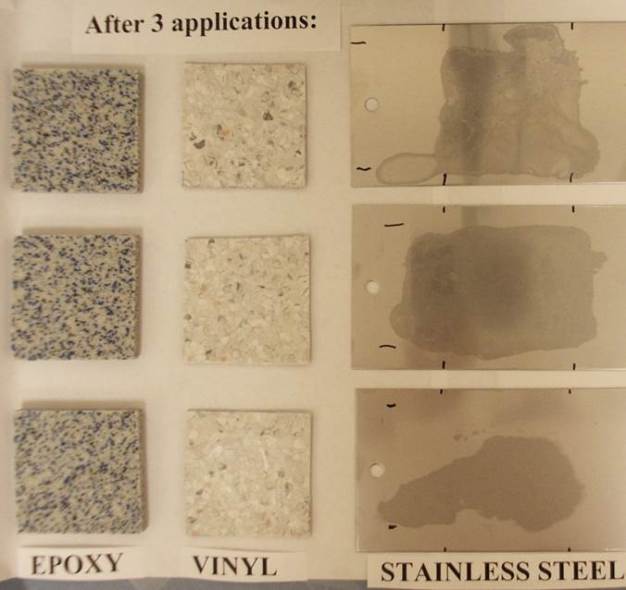
This photo shows three surface types: the top row is low pH phenolic at use-dilution, the middle row is high pH phenolic at use-dilution, and the bottom row is a ready-to-use sporicide, each applied (0.5 mL) three times with evaporation between each application.
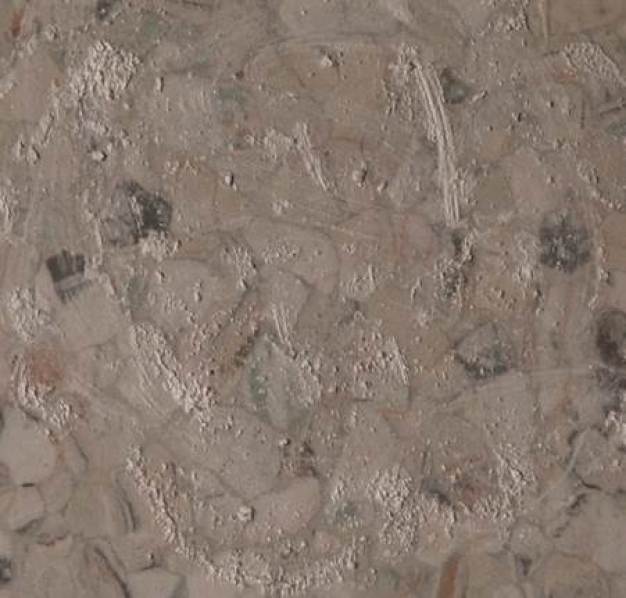
This picture is an enlargement of the vinyl + 3X (sporicide).
Regulatory agencies such as the US Food and Drug Administration (FDA), the Medical and Healthcare Products Regulatory Agency (MHRA), and the European Medicines Agency (EMA) expect a robust cleaning and disinfection program, involving the repeated use of disinfectants (or a "one step" cleaner/disinfectant) with a sporicidal agent. This approach is routinely employed by pharmaceutical manufacturers and is widely regarded as the best method. However, most products in these categories contain a range of ingredients to achieve the desired efficacy and shelf life, which remain on the treated surfaces after drying. If residues are allowed to build up over multiple applications, this can lead to functional or safety issues (for example, sticky, tacky, or slippery floors and doors), poor appearance (streaks on or discoloration of stainless steel and soft vinyl curtains), or risks to the product (1). Some facilities alternate between quaternary ammonium compounds and phenolic disinfectants for their cleanroom surfaces without rinsing in between, resulting in black, sticky residues. The frequent switching between quats and phenols is not considered good practice due to the different ionic charges of the surfactants, which form difficult-to-remove residues. Examples of residues were observed during inspections of pharmaceutical and biopharmaceutical sites, including one location where residual disinfectant flakes fell from a vinyl curtain into a filled, open product ampoule. At another site, brown residues were noted on all surfaces, including the grids of HEPA filters, several years ago. Subsequent analysis identified residues of corrosion, resulting from a combination of quaternary ammonium salts that were regularly exposed to hydrogen peroxide mist treatments.
For these reasons, it is important to incorporate a rinsing strategy with products proven to be effective in removing residues. In many cases, the application of 70% isopropyl alcohol (IPA) or pure water/WFI is the appropriate choice. However, there are situations where specially formulated cleaners are needed to remove residues. 70% IPA is recommended for removing residues from glass (such as windows) and is suitable for most facilities and equipment in cleanrooms. Pure water or WFI is typically used for residue removal on larger surfaces such as ceilings, walls, and floors. For ISO Class 5 (Grade A/B) areas, all cleaning and rinsing agents, including disinfectants and sporeicides, must be sterile and applied with sterile tools such as wipes and mops. There are certainly cases where residues require prescribed cleaners to eliminate deposits. A number of industry users have found that neutral or acidic cleaners at low concentrations are ideal for removing residues.
The rinsing frequency should be dictated by visual and tactile inspection of the cleanroom surfaces. When discoloration begins or a floor becomes noticeably sticky even when dry, rinsing should be performed. The standard operating procedure (SOP) should allow for appropriate flexibility regarding rinsing as needed. Special attention should be paid to areas with frequent use of sporicidal agents, such as wheels/casters of carts, chairs, mobile containers, and transfer or storage containers. Sporicidal agents often contain oxidizing components, which can lead to corrosion and damage to cleanroom materials, including stainless steel, if used too frequently. Additionally, depending on the formulation, residues from these products can cause damage to surfaces if not properly rinsed off through a cleaning routine. Regular rinsing of areas frequently treated with sporicidal agents can significantly extend the lifespan of surfaces. It is important to note that rinsing should only be performed after sufficient contact time or, ideally, after the sporicidal or disinfectant has dried. Instances have been observed where users rinse with water while the original disinfectant application is still wet or before the recommended contact time has elapsed. This practice dilutes the disinfectant and impairs the microbiological efficacy of disinfection.
Residues become visible at amounts of 1 to 4 µg/cm² (2). Some users have validated that their rinsing protocols satisfactorily remove disinfectant residues from surfaces with or without product contact (milling or grinding equipment, stainless steel work surfaces, etc.). This is achieved through the application of specific methods such as: HPLC (High Performance Liquid Chromatography) or non-specific methods such as: TOC (Total Organic Carbon). The choice of which method to apply depends on the characteristics of the residues and the environment. For example, TOC is a very sensitive, non-specific method, but it is not suitable for all cases.
By implementing a rinsing protocol into the standard operating procedure (SOP), operations personnel can prevent long-term buildup of residues from the use of disinfectants and sporicidal agents in aseptic processing areas. Ultimately, this can also lead to improved surface quality, increased safety, and a reduced risk to the product.
References:
1. http://www.cemag.us/article/designing-cleanroom-disinfectant-program-meet-production-requirements-and-regulatory-expecta Sartain, EK. Designing a Cleanroom Disinfectant Program to Meet Production Requirements and Regulatory Expectations
2. http://www.cemag.us/article/how-succeed-search-nothing-effective-swabbing-techniques-cleaning-validation
http://www.ivtnetwork.com/article/jim-polarine-and-marc-rogers-rinsing-strategy
STERIS Deutschland GmbH
50933 Köln
Germany