


- Knowledge & Events
- Translated with AI
Dr. Regina Junker
Clean enough? The new PDE world of cleaning validation
PDE, what to do? That was the key question answered for the participants of the PTS Connect webinar PDE Cleaning Validation on June 1, 2016.
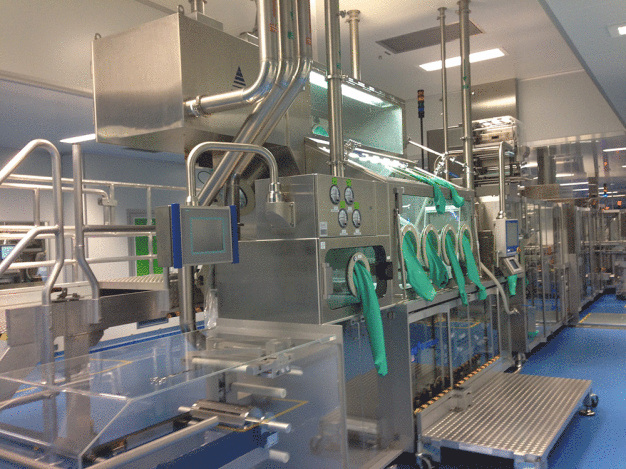
Containment protects the personnel and the environment
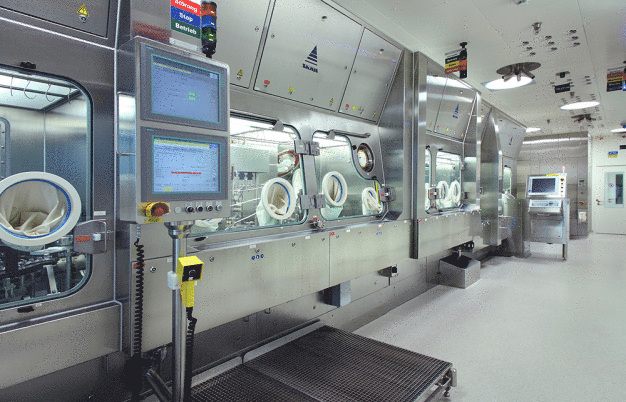
Containment protects the staff and the environment
With the new Chapters 3 and 5 and Appendix 15 of the EU GMP Guide, a new era has begun for determining health-based limits for cleaning of multipurpose facilities. PDE, what to do? That was the key question answered for participants of the PTS Connect Webinar PDE Cleaning Validation on June 1, 2016.
In addition to the fundamentals as a tool for applying the PDE as an acceptance criterion for cleaning validation, practical knowledge was deepened through several case studies. Even for non-toxicologists, the presentation in understandable language provided a good introduction to toxicology.
During the webinar, participants had the opportunity to ask questions via chat to the speaker, which were then answered directly. At the end of the webinar, participants could also speak up verbally, allowing for direct discussion of various questions with the speaker.
cleanroom online: Does the PDE criterion replace the old criteria (1/1000 and 10 ppm)? We have received conflicting information from our authority on this matter. They believe that the minimization principle from the 3 criteria now applies.
Yes, the new guideline explicitly requires a safety-based limit. This condition is not fulfilled by the 1/1000 criterion or the 10 ppm criterion.
The PDE is such a safety-based limit. This guideline also allows other methods, which must still be sufficiently justified (e.g., TTC or benchmarking).
In our case, the PDE criterion is less strict than the old criteria. This applies to about 90% of substances. Therefore, the PDE will generally have a positive impact. An interesting aspect: "Paradigm shift in setting limits for cleaning validation" [Pharm.IND.78, No.4, 564-566 (2016)].
cleanroom online: What about excipients? Do we need to calculate a PDE for each ingredient?
In the long term, all components and proven impurities should be appropriately evaluated and limited through purification to a level that does not endanger patient health.
Excipients are generally considered toxicologically less concerning due to their limited pharmacological activity and are therefore of lesser importance in case of contamination. I would recommend focusing on APIs and solvents required by the guideline in the cleaning process.
cleanroom online: We have shared facilities where cosmetics are also produced. These do not contain active ingredients. How do we obtain a PDE for them?
There are two different scenarios: one is the transfer of an API into a cosmetic, and the other is contamination of a drug by components of the cosmetic.
For the first, the question arises: Are cosmetics subject to the same regulations as pharmaceutical products? I am not an expert here and would advise you to discuss this case with your Responsible Person (RP). Generally, an appropriate limit should be available for active substances. It would be irresponsible to exceed such a limit (related to dermal exposure), as this could endanger your customers' health.
In the reverse case, the situation is somewhat simpler. You can follow the ICH guidelines and observe appropriate qualification and quantification limits.
cleanroom online: How would you proceed with homeopathic active ingredients?
The GMP guideline and EMA do not differentiate between homeopathic, herbal, or chemical active ingredients. The general requirement is to derive a safety-based limit based on data. Of course, for homeopathic products, only a very limited data set is available, but this does not exempt from the requirement.
cleanroom online: As an excipient manufacturer, we have had our products reviewed by toxicologists, and it was found: all products are non-toxic and non-allergenic..."
This essentially corresponds to the necessary assessment. The toxicologist has made a statement based on existing data. Please ask him to document these statements in writing and justify them accordingly.
cleanroom online: What if the damage does not always have the same effect? For example, in children?
Well, the statement that the substance has the same effect upon repeated administration and in different individuals still holds. - If children are considered a separate subgroup, one would expect a comparable effect when administered to different individuals within this group.
Metabolic differences exist that explain why children sometimes react differently to a substance.
cleanroom online: If a NOAEL is available, is that then equal to the POD?
Not at all. Multiple NOAELs can be obtained per study, depending on which investigations are conducted. For example, in one study, the NOAEL for effects on the heart might be at 200 mg/kg, while the NOAEL for effects on the liver could be at 10 mg/kg.
You see, each organ system can be considered in isolation, but a total NOAEL can also be provided. Therefore, my warning: the simple statement "NOAEL = 200 mg/kg" without further information is not an exact statement. Such statements should, if possible, always be verified.
cleanroom online: Often, with a focus on HSE, we already have OEL values for many products. How do you see the relationship between PDE and OEL? Can these values be compared by a factor (e.g., "10"), or are the calculations different?
The basis of both limits is identical. Both values are based on the same scientific data and describe a limit below which exposure to a substance is considered harmless.
The difference lies in the exposure scenario. The OEL focuses on inhalation exposure in the workplace (8-hour work shift corresponds to about 10 m³ of inhaled air, hence the factor 10). This value can be converted, but you should always verify the data basis and include kinetic parameters if the PDE is to be used for another exposure route (parenteral, dermal, oral).
cleanroom online: How acceptable are values from online databases?
There is nothing wrong with using values from internet research and public portals. Of course, you should always specify your data source and assess the relevance and credibility accordingly.
cleanroom online: If I find 3 different values, which one should I use?
Try to verify the data basis of the values. Are there references? Are different studies/data used as the basis for assessment? What about the currency of the data used? All these factors could help you choose. However, regardless of the approach, always justify your choice in writing.
cleanroom online: What "curriculum vitae" is necessary to perform PDE assessments? Specialist doctor? Work experience?
This is not specifically defined in the PDE guideline or GMP regulations. The requirement states that the relevant expertise must be demonstrated by signature and CV.
cleanroom online: Phytopharmaceuticals: We often cannot precisely determine what is active...
If you have a more or less well-defined mixture of substances, you will have tested it in appropriate studies or have safety data post-marketing. Pharmacovigilance, observational studies, historical data— all can be included in the assessment. The evaluations by the HMPC (Herbal Medicinal Product Committee) provide very good examples of available data.
cleanroom online: Is it permissible to assume a body weight of 50 kg, even if the subsequent product might be administered to a child?
It is calculated based on lifelong exposure.
cleanroom online: Lifelong exposure seems very theoretical. Can anything be done about that?
Both questions are related and can be explained together: there should be only one PDE per exposure route, which should have general validity (and here, 50 kg body weight is defined by guidance).
Based on the formula: Risk = Hazard x Exposure, it can be justified: if the exposure differs (less than daily, shorter duration, different body weight), a different (more realistic) value can be used.
Again, always justify in writing (defined scope of application for the subsequent product) and consider influencing factors (kinetic parameters, metabolic differences).

PTS Training Service
Wir sind die Experten für Schulungen in den Bereichen Pharma, Medizinprodukte und Wirkstoffe.
Am Freigericht 8
59759 Arnsberg
Germany
Phone: +49 2932 51477
Fax: +49 2932 51674
email: info@pts.eu
Internet: http://www.pts.eu