




- Modular rooms, Cabins
- Translated with AI
Can prejudices hinder innovation?
Emotion vs. Ratio
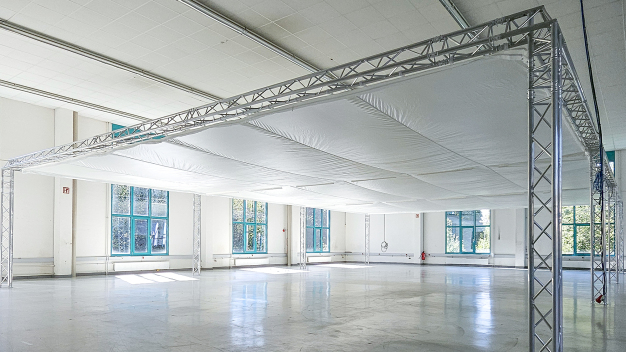
Construction ©Reinraumzelt.de
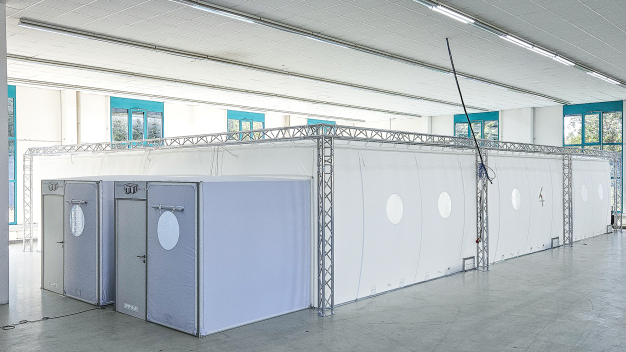
Construction ©CleanroomTent.de
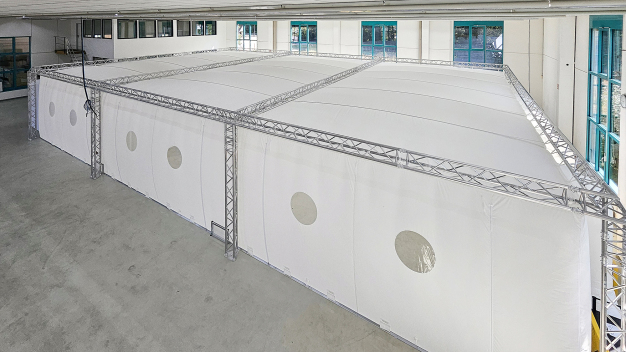
Construction ©Reinraumzelt.de
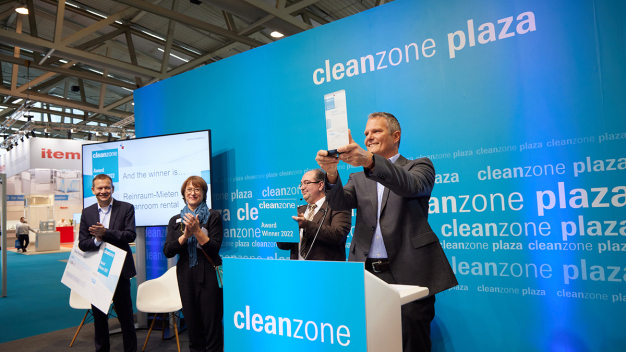
Cleanzone Award
Actually, the cleanroom industry is a domain dominated by rationality, numbers, data, and facts. It is a market where particles are counted instead of peas. At the same time, it is a market that thrives on innovation and continuous improvement of existing solutions. Yet, many decision-makers remain cautious, doubtful, and hesitant when an unconventional cleanroom concept appears. We have taken a look at the - possibly irrational - causes.
"A cleanroom tent is not a real cleanroom." This almost defiant statement is heard repeatedly by Wolfgang Hassa, owner of Reinraumzelt GmbH. Sometimes, the rejection of his "somewhat different" approach to the cleanroom topic sounds less drastic and comes across as an excuse with the tone: "We'll wait another year and then buy a real cleanroom." And so, Hassa, who is extremely knowledgeable about tents, airships, and any kind of air-supported structures, inevitably wonders what exactly constitutes a "real" cleanroom and why a fabric cleanroom should not be considered "real."
Fabric has proven itself 100 percent
Let's first look at the material used—fabric. On the customer side, there is concern that such a cleanroom tent could disintegrate, tear, or even collapse after a short period. In contrast, it can be argued that fabric has been used without hesitation for decades in hot air balloons. The stresses on the fabric envelope, which hangs a basket with people as passengers and is carried to high altitudes by open flames, are significantly greater, and the dangers to body and life are undeniably higher. Gift vouchers for hot air balloon rides are still very popular as gifts for close friends.
Another example is the Munich Allianz Arena, whose roof is made of 0.2 mm thick ETFE foil, which has withstood wind and weather for years and protects up to 75,000 not-so-daredevil visitors. Rescue boats built from tarpaulins that save people in distress at sea during storms and raging waves are also made from fabric and withstand various conditions. The list could go on, but it already shows that doubts about the durability of coated fabrics are rather unfounded. The hesitation must have other causes.
Tech enthusiasts should be excited
Technical weaknesses cannot be convincingly argued against the innovative cleanroom tent either. After all, the internal pressure of a cleanroom almost never exceeds 30 Pascals. For a 100 m² room, the roof must therefore be capable of supporting 300 kg. To illustrate: if one person stood every meter along the edge of the roof, they would need to hold about 8 kg to prevent the roof from lifting off. This is no challenge for the cleanroom fabric, which has been tested according to DIN standards and can withstand more than 2,600 kg per meter. This tensile strength is 300 times higher than the maximum load in cleanroom applications. Even in the event of a tear in the envelope, which could pose a risk of further tearing, the fabric's strength still remains at 300 kg per meter, providing more than 30 times safety margin.
Considering aesthetics and status
After the factual arguments against the fabric cleanroom tent are more than thin, the more diffuse emotional barriers remain, which are rarely voiced openly. First and foremost is the superficial argument of aesthetics, where the idea of status clearly plays a role. Prejudices against "tents" often sound like disparaging comments about neighbors' camping holidays, while the person making them stays in a 4-star hotel. Meanwhile, the widely adopted concept of glamorous camping (glamping) conveys a sense of luxury, reminiscent of the experiences of desert princes. For fans of high-priced concrete castles, there are still expensive cleanrooms made of glass and steel — to stick with the metaphor.
However, those who approach the ease of construction, the elegance of the fabric, and especially the simplicity of the cleanroom tent's design with an open mind see the core function of the cleanroom — "separating pure from contaminated air" — realized in its full clarity and beauty. This is "form follows function" in its purest form. More state-of-the-art than cheap imitation. These are cleanrooms that work and also inspire positively. Fun fact: It is no coincidence that everyone who first enters a cleanroom tent touches the fabric and then nods appreciatively.
Seemingly lacking experience
While in the world of technology even the slightest progress is usually celebrated loudly, the cleanroom world appears rather skeptical of anything new. Unlike the latest smartphone, which is quickly adopted, people seem to think that here it’s all about safety, purity, and reliability. The mind knows that the fabric won't tear, the balloon won't burst, the arena won't collapse, and the boats will sail. But the unconscious fear of making a wrong decision, the worry about failure, and the collective memory of a rainstorm during youth camp are stronger than rationality and cause decision-makers to hesitate.
However, cleanroom tents are not that new. After all, the first models have been in continuous operation for years and are safely housed in halls. The first tent managed by Reinraumzelt GmbH has been running nonstop since 2016. Over the past three years, 50 cleanrooms have been rented out, with 10 percent of customers purchasing them directly from the rental. Rooms over 200 m² in size have been built and delivered faster than an offer can be prepared elsewhere. Yet, some circles remain stubbornly hesitant.
Is it just a matter of type?
Is it fear of the too new, possibly unconventional, that paralyzes especially higher management decision-makers and auditors? Is it a lack of openness to new concepts that brings the superficial argument of lacking experience into play? Are existing standards and proven practices used as an excuse to avoid innovation? We don't know. Nonetheless, many decision-makers seem to operate according to the motto: "We've always done it this way."
Insights from innovation research offer an approach: According to Everett M. Rogers' diffusion theory, innovations spread through five main groups of users, who react to new developments at different speeds. First are the risk-taking innovators, who adopt new technologies quickly. They make up only 2.5% of the population. Early adopters account for about 13.5% and play a significant role in further dissemination of innovations. Then comes the so-called early majority, making up about 34%, who adopt innovations only once they are perceived as useful by the broader public. The late majority, also around 34%, wait until innovations are widely spread and well established. They tend to be more skeptical of new technologies and respond to social pressure to keep up with the crowd. The laggards, about 16%, are traditionalists and cautious late adopters who accept innovations very late or not at all.
More opportunities than risks
For the Aachen-based manufacturer, the apparent safety-driven focus of the majority of customers is not a problem. Wolfgang Hassa jokingly says, "We couldn't supply everyone at once anyway." He is pleased about interest from "completely new markets." Whether machine builders, packagers, or start-ups: all are gradually feeling the pressure from customers to produce in a controlled environment. This brings with it a focus on an increasingly cleaner working environment. Barriers to thinking differently and clinging to proven methods are absent here. Moreover, as elsewhere, budgets are often limited, making expensive standard cleanrooms unaffordable. In these markets, innovative ideas that work and are affordable are especially welcomed. Those who seize the opportunity to rent or buy a cost-effective cleanroom tent instead of worrying about fears and risks are likely to be better prepared for the future than those who hesitate.
"Innovation means connecting two existing things in a new way."
- Tom Freston, co-founder of MTV

Reinraumzelt GmbH
by Wolfgang Hassa
Rottstr. 33
52068 Aachen
Germany
Phone: +49 177 8890417
email: hassa@reinraum-mieten.de
Internet: http://Reinraum-Mieten.de



