


- Union, Association, Cluster
- Translated with AI
BPI: In use for decades to ensure safe medicines
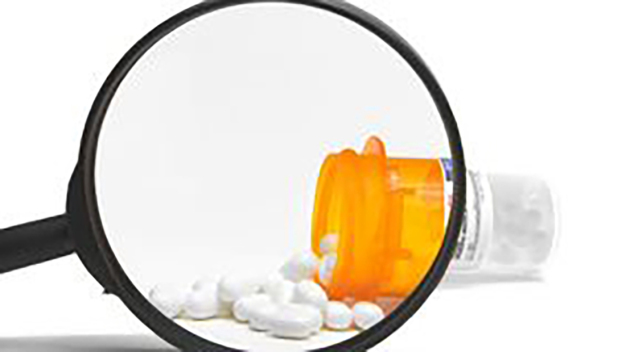
The Federal Association of the Pharmaceutical Industry has been actively committed to drug safety for decades. (Photo: ©Shutterstock/Rob Byron)
Medicines go through far more controls throughout their life cycle than any other product in Germany. Only when it has been ensured that a medicine is safe, of high quality, and effective, is it approved by the authorities and allowed to be supplied in Germany. But before it is used, every active ingredient must first pass a series of non-clinical tests and clinical trials from research to the finished product. Even after approval, it is continuously monitored. There are few industries where the safety, efficacy, and quality of a product are monitored so closely as in the pharmaceutical industry. This is ensured by national and European laws — but also by the pharmaceutical companies themselves. Good news! Dr. Sigrid Lang, Head of the Medicines Safety/Pharmacovigilance Department at the Federal Association of the Pharmaceutical Industry (BPI), provides an overview of the areas in which the BPI and its member companies have been committed to medicine safety for many decades.
BPI is a pioneer and sets milestones in medicine safety
1969: The BPI introduces the "Red Hand Letters" and registers the image mark of the red hand with the Federal Patent Office. "The Red Hand Letter remains the established communication tool in Germany to inform healthcare professionals responsibly about newly identified, serious risks associated with medicines to this day."
With the distinctive trademark of the letters — the raised red hand with the warning "Important message about a medicine" — pharmaceutical companies can recall faulty batches or communicate other important information about the medicine. Together with other associations, the BPI coordinates the Red Hand Letters across the board, supporting our member companies in their daily work. As the owner of the "Red Hand Letter" symbol, we hold the trademark rights to the image mark in the BPI. Those wishing to use it must request this officially from us," explains Lang. At the same time (1969), the BPI committed itself to reporting side effects to the German Medical Association's (AkdÄ) Medicine Commission. The legally binding reporting of individual cases of side effects by pharmaceutical companies to the responsible federal authority was only introduced in 1986.
1975: The BPI obliges its member companies to adhere to a "Package Leaflet Guideline," which prescribes warnings about possible side effects. To inform doctors and pharmacists, the BPI developed from 1979 the "Information for Professional Circles," a binding information system specifically for healthcare professionals.
1976: Following the Contergan crisis (1957–1961), the BPI accompanied the expansion of the first Medicines Act (AMG) from 1961 into the second AMG. For the approval of new medicines, pharmaceutical companies must demonstrate for the first time the pharmaceutical quality, efficacy, and safety of medicines. From manufacturing sites, through distribution, to the package leaflet, there are now precise procedural regulations — an advancement for consumer protection. For the first time, the reporting obligation for non-clinical tests and clinical trials was introduced. The second AMG of 1976 represented an adaptation to European medicines legislation.
1990: The BPI developed the established phrase: "Read the package leaflet for risks and side effects and ask your doctor or pharmacist." Since then, this phrase has been legally required according to the Medicinal Products Advertising Act and must be included primarily in audiovisual advertising for over-the-counter medicines outside of professional circles.
Protection against medicine counterfeiting
To make the legal supply chain in medicine distribution even safer, 15 years ago, the pharmaceutical industry, wholesale trade, and pharmacists formed the organization "securPharm." Together, they established the German protection system against medicine counterfeiting, which is regulated by law across Europe.
And here’s how it works: A square Data Matrix code, which must be present on most prescription medicines and some over-the-counter medicines, contains a unique serial number that the pharmacist scans before dispensing to the patient and checks for consistency with the manufacturer’s database. This verifies the authenticity of the package.
Making medicines even safer
How do pharmaceutical companies combat counterfeiting?
"On the one hand, pharmaceutical companies have invested a lot of time, money, and energy to establish the anti-counterfeiting system — always with the goal of providing patients with even safer medicines. Additionally, manufacturers equip prescription medicine packages with an tamper-evident seal — the so-called Anti-tampering Device — so they cannot be opened unnoticed. Furthermore, some companies add additional authenticity features to their packaging. This can include UV colors, DNA-containing dyes, holograms, microtext, or color-shifting elements," explains Lang.
"Moreover, the pharmaceutical industry is vigorously combating criminal activities that counterfeit, distribute, or illegally circulate medicines. To avoid risks, patients should always verify the authenticity of a website when purchasing medicines online," advises Lang. All official online pharmacies are listed in the Federal Institute for Drugs and Medical Devices (BfArM) mail-order register and bear verification seals.
Is medicine still monitored after approval?
The use of a medication is also monitored. The so-called "Pharmacovigilance" records and processes especially side effects and other medicine risks, thereby preventing therapy errors. Of particular importance are side effect reports from patients, doctors, and pharmacists to the responsible federal authorities.
"Pharmaceutical companies collect data on each medication and submit regular safety reports to the federal authorities. Clinical studies can also generate additional data after approval. If the benefit-risk assessment changes, short-term measures are taken, such as restricting indications or ordering special monitoring," explains Lang.
Who monitors the safety measures of pharmaceutical companies?
The medicines authorities oversee the work of pharmaceutical companies and their suppliers. They take samples themselves and check the results of company controls. They also inspect wholesalers, pharmacies, and parallel importers. These inspections are carried out by the European Medicines Agency (EMA), the German state authorities, and the federal authorities BfArM and the Paul-Ehrlich-Institut (PEI), as well as other authorities worldwide — including production sites outside the EU and US.
"Every incoming supply of pre-products, active ingredients, or excipients is also checked by each pharmaceutical company for authenticity and quality before combining them into a medicine," adds Lang.
The pharmacovigilance system of the companies is regularly audited and monitored by the responsible federal authorities during pharmacovigilance inspections. Pharmaceutical companies also conduct regular audits to ensure the functionality of their pharmacovigilance system.
What can patients do?
"Patients can also contribute to making medicines even safer by reporting possible side effects," emphasizes Lang. They can do this in various ways: either by contacting the responsible federal authorities directly: on the joint website of BfArM and PEI, nebenwirkungen.bund.de, consumers can enter possible side effects directly online (also anonymously).
"Even if adverse side effects are not always necessarily caused by the medicine, patients can of course also contact their doctors or pharmacists directly. Additionally, pharmaceutical companies also accept side effect reports. Patients can find the relevant contact details in the package leaflet," says Lang.
Bundesverband der Pharmazeutischen Industrie e.V.
10117 Berlin
Germany