




- Furnishing & equipment
- Translated with AI
Carsten Moschner
Body box measurements
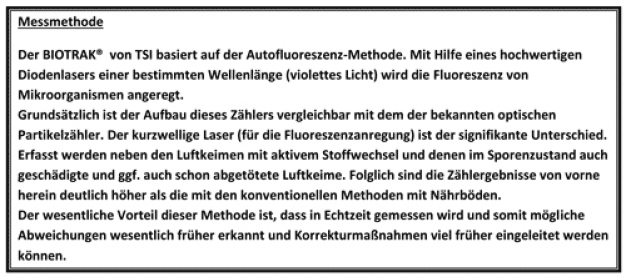
Measurement Method - TSI Biotrak
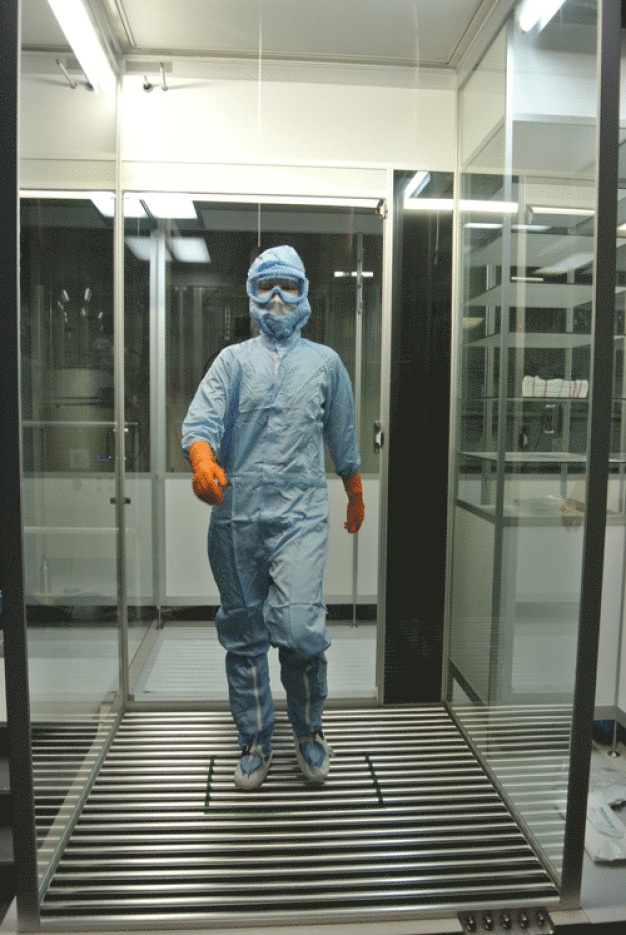
Subject in typical cleanroom clothing for A/B areas
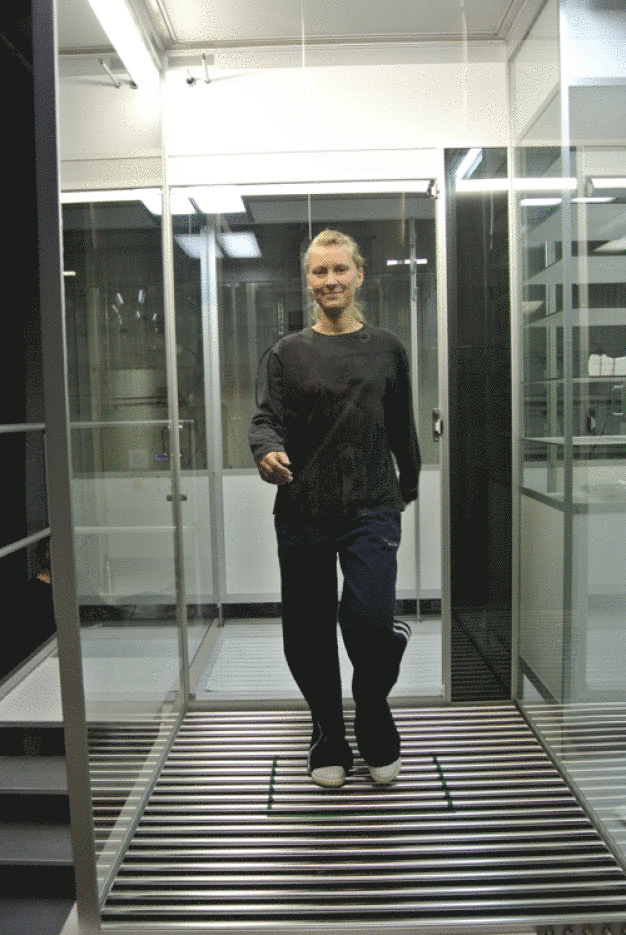
Test subject in cotton clothing
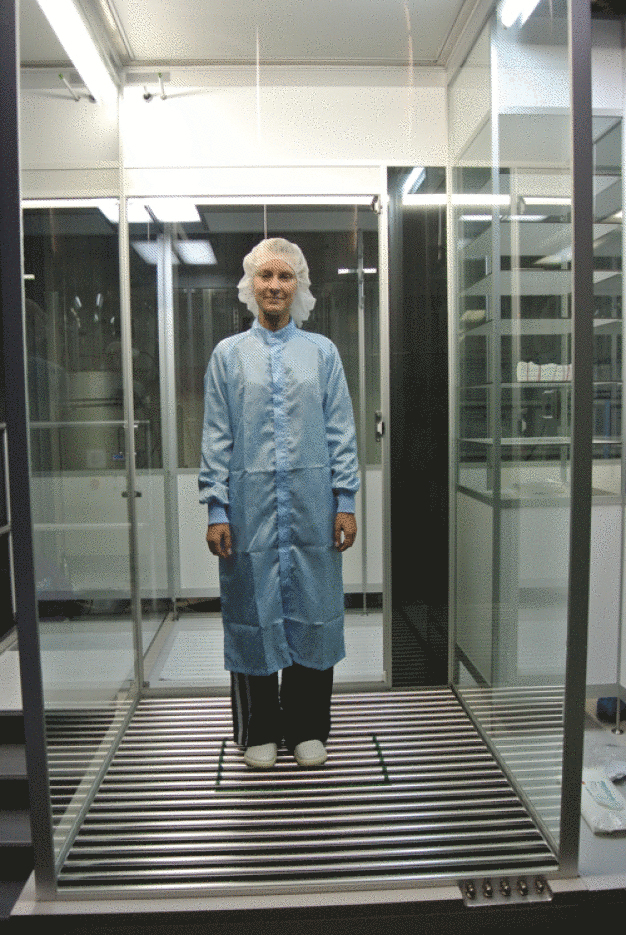
Subject in cleanroom suit with hairnet.
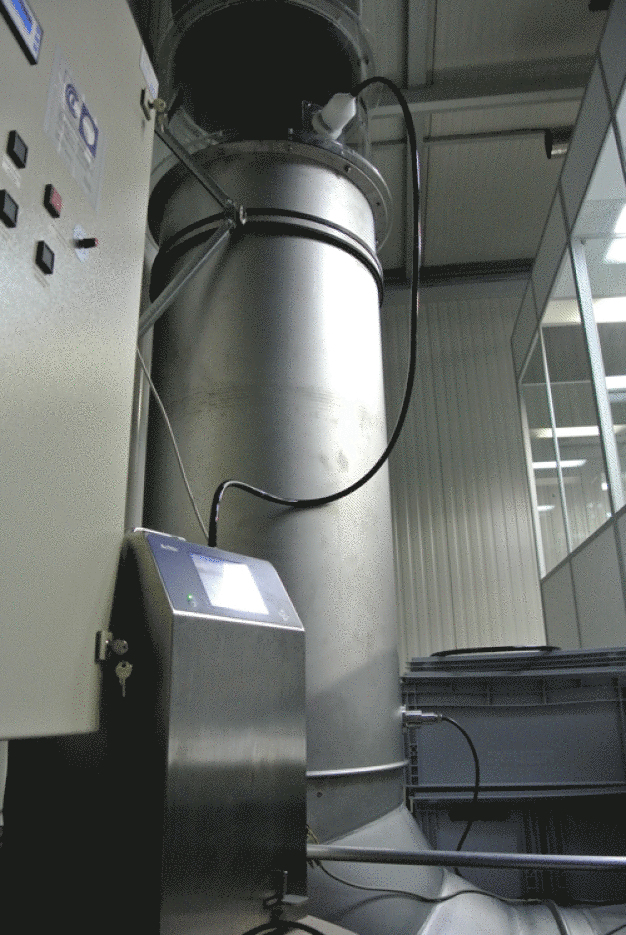
Counting device Body-Box with Biotrak.
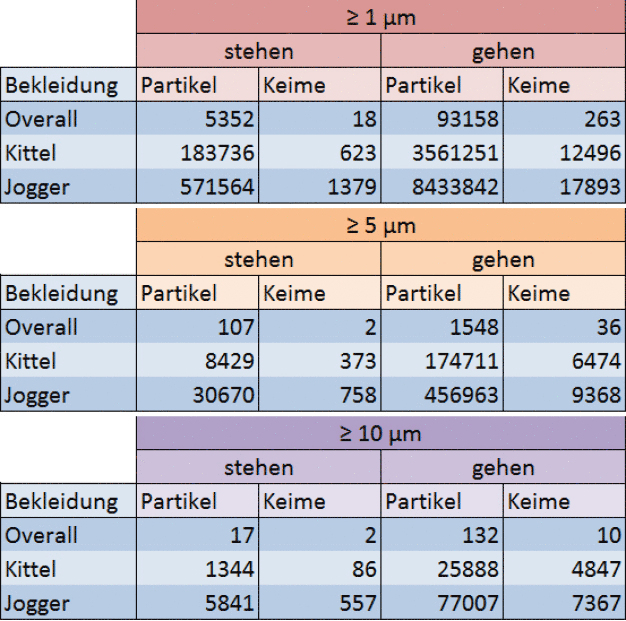
Number of particles and germs per size per m³ (extrapolated)
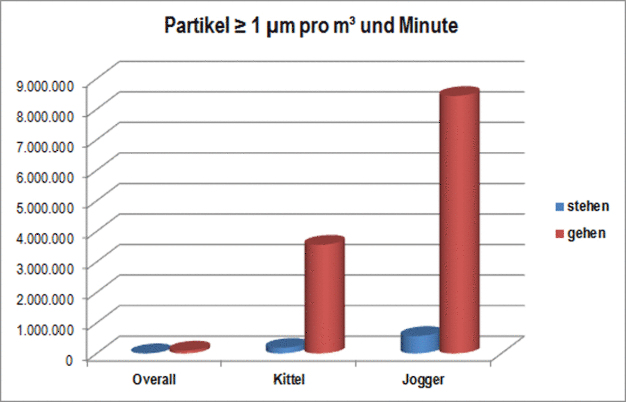
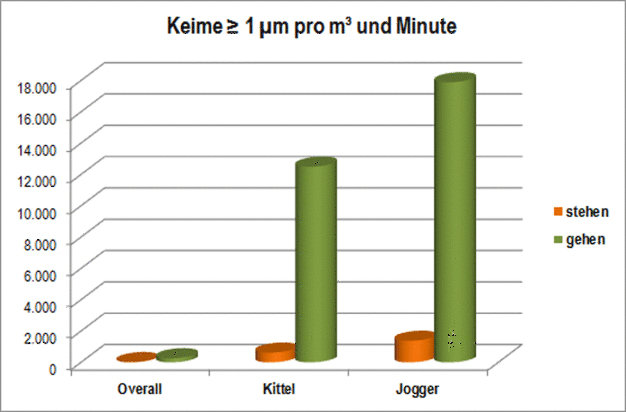
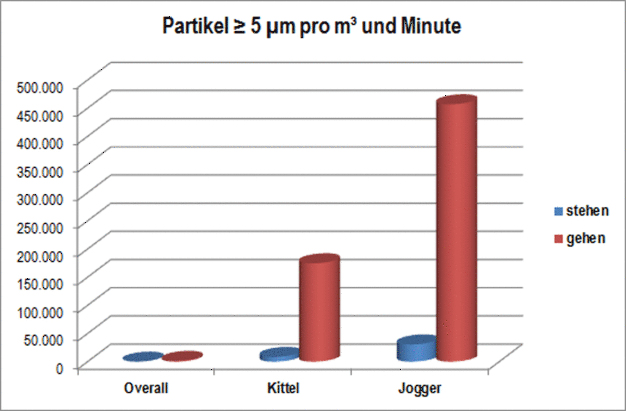
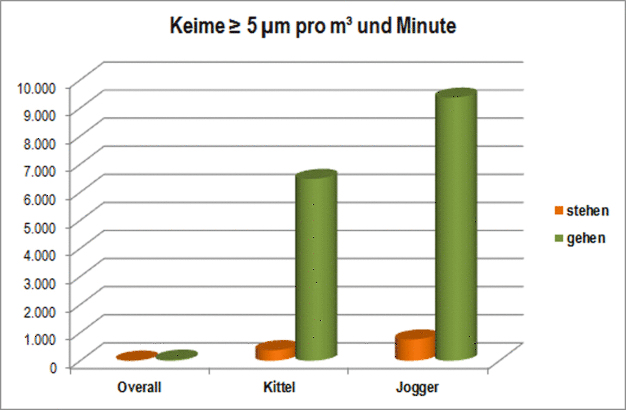
The human is still generally considered one of the largest sources of contamination in clean environments — regardless of whether it involves purely particulate monitored areas or microbiologically controlled zones. The fact that cleanroom clothing plays a crucial protective role — protecting pure processes from contamination originating from humans and their personal clothing — was convincingly demonstrated by a comprehensive study conducted in 2010, using a so-called Body-Box. The results (such as how many particles an employee releases on average depending on the clothing worn and the movement performed per minute) are summarized in Table 1. The microbiological follow-up question "Can we also infer possible germ counts based on these numbers?" could not be answered or substantiated with measurement results at that time. Although there are some publications on this topic that theoretically establish a connection, a study with measurement data similar to the particle emission measurements (see above) had not been available until then. This task was undertaken by Dastex, which conducted a corresponding study in 2014, again using the Body-Box measurement method.
The decisive factor for the feasibility of this latest study was the introduction of a new measuring device from TSI, the BIOTRAK® 9510-BD. With this counter, it was now possible to quantitatively capture and analyze airborne germs. The operation of the counter is described in more detail in the box "Explanation 1." Interestingly, the BIOTRAK not only allows for the measurement of airborne germs but also enables the simultaneous detection of airborne particulate contamination. This means a distinction could be made between viable and non-viable contaminants. An interesting question arising from this was: "Is there a direct correlation between particulate contamination originating from a person and the germ emission of that individual?" in other words, a kind of conversion factor.
Study Design:
In simple terms, the Body-Box measurement method can be described as follows: In a very confined environment (approximately 1.20 x 1.20 x 2.40 meters), high-clean conditions are maintained due to the construction of the Body-Box (full-surface FFU ceiling and a special floor construction ensuring nearly turbulence-free displacement airflow). A detailed description of the Body-Box measurement method is provided and explained in the technical article "A Test Method on the Test Stand" (ReinRaumTechnik 2/2004 - GIT Verlag). Before the actual measurements begin, the Body-Box runs in the so-called "empty state," i.e., without persons. In a relatively short time, stable environmental conditions are established that correspond to ISO3 / ISO4 cleanliness classes (ISO 14644-1). The zero measurements performed before each series confirm the high air cleanliness levels. When a person enters the Body-Box, all airborne contaminants detected are most likely from that person and their clothing. An additional challenge for the upcoming measurement series regarding microbiological contamination was to create a as sterile as possible environment within the Body-Box before each test, including in the return air duct and at measurement points where contamination was to be recorded. UVC lamps were installed at various points in the measurement system for this purpose. Before each series with sterile cleanroom clothing, the immediate measurement environment was irradiated with UVC light for several minutes to achieve broad-spectrum disinfection — even in areas that cannot be reached by standard wipe disinfection. To ensure the success of the UVC disinfection, a so-called zero measurement was also performed before each run. This involved measuring the flowing air over an extended period with the counter to verify that no microbiological contamination was detectable in the measurement environment before a person entered the Body-Box.
For the study, three standardized clothing systems were defined to be tested repeatedly. Based on extensive experience with the Body-Box measurement method, at least 10 repeat measurements were set per person and clothing system. Not only can each person release varying amounts of particles and/or germs, but the variation in contamination emissions from the same individual is also very high. Therefore, it is advisable to perform as many repetitions as possible with the same person and clothing system to obtain a reliable average value. Despite these numerous repetitions, the standard deviation across all measurements remains extremely high. This should be taken into account when interpreting the results later. The measurement values obtained with the Body-Box method are certainly not "point-accurate" absolute values but rather "well-founded estimates."
What was investigated?
Three typical clothing systems were compared. Initially, the basic, common street clothing was examined. This (street clothing) was simulated using jogging suits made of pure cotton — to obtain a reproducible clothing system (for baseline measurements). The second clothing system analyzed was the "cleanroom coat plus fleece hood plus cleanroom shoes" worn over the cotton jogger. The third clothing system consisted of a cleanroom-compatible intermediate clothing (a combination of two different materials, both based on synthetic fibers) and outerwear made from a cleanroom fabric, as commonly used in many A/B areas (a three-piece ensemble: full protective hood, coverall, and overshoes). This third clothing system was supplemented with sterile nitrile gloves, a sterile disposable face mask, and safety glasses, so that no human skin was exposed at any point.
After entering the Body-Box, each participant had five minutes to acclimate. During this period, no contamination was recorded — also considering that external contaminants could have been carried into the box upon entry. After these five minutes, measurements were taken in different movement states, each lasting 30 minutes. Alternately, a slight walking movement was simulated plus as much stationary standing as possible. The recorded values were also evaluated accordingly: "standing" and "walking." Considering the high expected variability of the data, at least ten repetitions per participant and clothing variation were planned from the outset. Due to the very high ratio of pure air (continuously supplied to the measurement system via the FFU) and the sample volume (a particle counter currently only measures 28 liters per minute), the results were finally extrapolated to the actual number of particles or germs per cubic meter of air.
Results:
Similar to the 2010 study (which only investigated airborne particulate contamination), the differences between regular cotton clothing, the coat plus fleece hood variant, and the third variant — overall, full protective hood, and overshoes — are striking. Once again, it becomes clear what contamination risk humans still pose in cleanrooms, both particulate and microbiological. The effectiveness of modern cleanroom clothing systems was clearly demonstrated — reducing germs of size 1 µm and larger to about 1% of the initial level, and germs of 5 µm and larger even to 0.3%. However, the results also show that even with very good cleanroom clothing, 100% protection or complete prevention of microbiological contamination is not achievable.
In the analysis of the airborne particulate contamination simultaneously recorded, caused by the participants with different clothing systems, two points stand out:
1. It is obvious that persons with high particulate contamination also likely emit many microbiological contaminants into their immediate environment.
2. A direct, consistent correlation coefficient cannot be determined based on the current results.
Interpretation of the Results:
Since there have been no previous investigations using the above measurement method in this context, a comparison with other study results is not possible. However, the plausible assumption that high particle emissions from humans are associated with higher microbiological contamination levels has been empirically supported. The good efficiency of a proper cleanroom clothing system was also demonstrated.
An interesting question derived from the measurement data obtained in this study is: "How should the measurement values be evaluated in direct comparison to the numerous monitor data available from various pharmaceutical sectors (which typically show significantly lower germ counts in environmental monitoring)?" The different measurement methods undoubtedly play a significant role in this comparison.

Dastex Group GmbH
Draisstraße 23
76461 Muggensturm
Germany
Phone: +49 7222 9696 60
Fax: +49 7222 9696 88
email: info@dastex.com
Internet: https://dastex-group.com/