- Company
- Translated with AI
"We solve our customers' problems"
Thomas Nürnberg in conversation
(Image: ebm-papst)
(Image: ebm-papst)
(Image: ebm-papst)
(Image: ebm-papst)
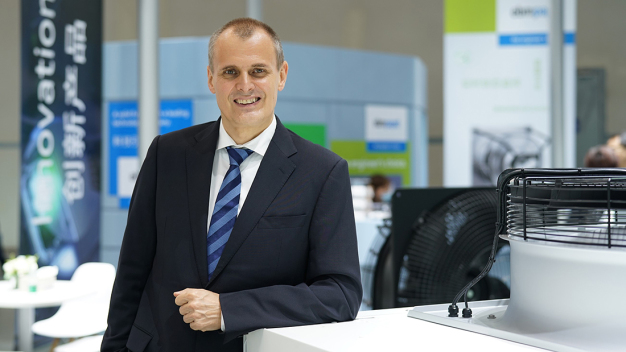
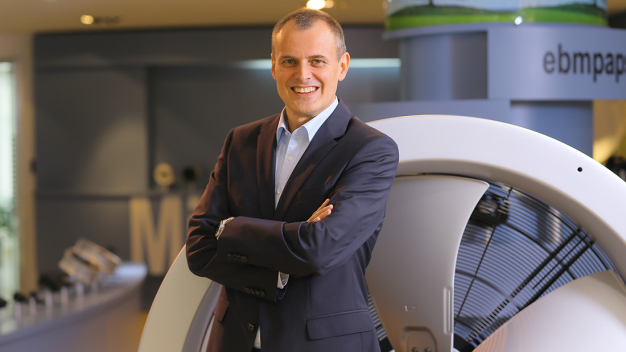
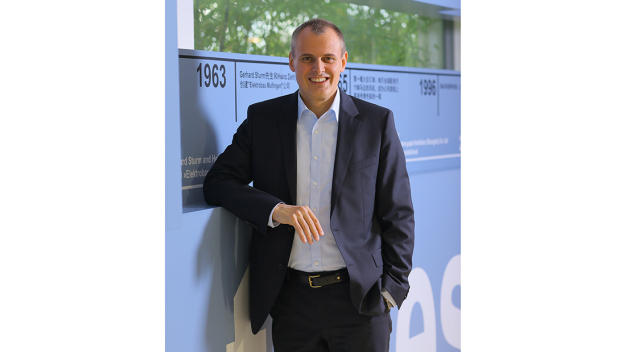
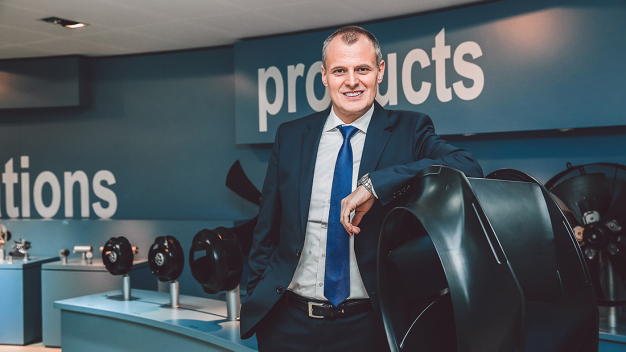
Thomas Nürnberger has been Managing Director of Sales and Marketing at the ebm-papst Group since April 2021 and has been President of ebm-papst China for five years. In the interview, he talks about internationality, what we can learn from China, and what customers can expect from him.
Mr. Nürnberger, you have lived in China for the past 15 years. How much has this time shaped you?
Fifteen years have a significant impact, making you more open to different perspectives and cultures and more adaptable. Of course, this helps when doing business in other regions. In China, the pace is incredibly fast. The development that Germany has achieved in 50 years, China has done in 15. It is difficult to integrate into Chinese society. Because I am married to a Chinese woman, I have succeeded. For Chinese people, family is very important. And the company is also a close-knit community. People do more with colleagues than in Germany. I like the way of life there.
You speak Mandarin and are married to a Chinese woman. What role does diversity play in the sales of a global technology leader?
Women, men, different generations, countries, cultures, areas of responsibility, languages: diversity is important because it brings more input and ideas into the company. I want ebm-papst to become even more international with me. Language also plays an important role here: we need to use English more as the corporate language. We are still at the very beginning of this. Additionally, we will involve our foreign subsidiaries more in strategy development. We are already working on this.
What can we learn from the Chinese market?
Certainly the speed mentioned above. Additionally, one can learn a strong customer orientation. This is not just a task for sales but runs through the entire company. A very characteristic trait is also the willingness to try new things. This is naturally good for everything related to digitalization.
China also has the dubious reputation of being a leader in product copying. How do you see this as an insider?
Yes, a lot is copied in China. The government more or less tolerates this. However, it is no longer acceptable to market products under false labels in China. We also take action against this. Copying a structural design, such as a wheel, is still difficult to prevent. Since the Chinese are quick, this is a problem. We can best protect ourselves by innovatively developing our products further and providing application support around the product. And that is definitely one of our strengths. We understand what the customer needs—and that offers added value that is not so easy to copy.
China is also becoming more than just an extended manufacturing hub.
In some industries, China is even the technology leader: battery technology, drones, software, and information technology—such as facial recognition software. There, programs can recognize a face even under a mask. China is approaching this very strategically: there is a clear vision and five-year plans to implement this vision. Under "Made in China 2025," the topic of modern manufacturing technologies is becoming increasingly prominent. Automation is also entering Chinese factories. However, there is still a significant gap between factories in urban centers like Shanghai and those in the hinterland.
You are now responsible for global sales. How does your approach differ for China and the Americas?
There are many parallels. Personal contact with the customer, for example, is very important in the Americas as well. And in both China and America, there is increased demand for metal wheels in tires. The approaches are therefore similar. In Johnson City, we are currently investing in a new plant to offer customers a good supply chain.
What focus do you set in sales when dealing with your customers?
We aim for strategic partnerships where we integrate the customer's roadmap with ours. We have done this in the past but need to do it even more in the future—and also beyond Europe. We already serve the Asian market from China with specific products. We want to expand this globally. The central question is how to meet existing demand. We need to develop products that meet the requirements—including price. Design-to-cost and design-to-market will guide us. Our modular solutions help us achieve this.
Do you focus on a specific application market?
We focus on our core business, driven by megatrends such as energy efficiency, digitalization, and indoor air quality. We have the right products for this. Therefore, we target data centers and commercial climate technology. In Europe, the heat pump market is also included. There is a strong shift away from fossil combustion systems toward electric systems. Additionally, we are positioning ourselves more as a solutions and service provider. This allows us to offer greater value to customers in their applications—for example, by helping improve efficiency not only through the motor but also through air management. And by services, we also mean digital services, where we can flexibly meet customer needs with our Think Tank ebm-papst neo.
Climate protection is one of the central topics of our time. How much does this concern you from a sales perspective?
Basically, we have been indirectly involved in climate protection for some time. For example, in e-mobility, where we offer solutions for both vehicles and charging infrastructure. The topic of heating also plays an important role. Gas heating will not disappear in the next three years. We see great potential in hydrogen and synthetic gases.
That ebm-papst not only moves air but also cares about its quality is a new aspect.
Well, ebm-papst moves air, but it also cools and heats it. That is at least indirectly related to quality. And we will continue to do so. There is no other way to move air efficiently. More buildings are being equipped with air conditioning and decentralized ventilation systems to improve comfort and health. Viruses, for example, will continue to concern us. Filtration plays a major role here. Our products are the first choice for all manufacturers of filtration systems. We can draw on extensive experience from the cleanroom sector. And in commercial buildings, air quality has a direct impact on the productivity of the people working there. We offer the appropriate sensors and data analysis for this.
What challenge is currently bothering you the most?
Currently, the most difficult issue is supply chain management. This is a challenge for the entire market. In the coming years, customers will also want to be supplied more flexibly, quickly, and cost-effectively. We need to stay competitive through innovation and our global footprint. By shifting to local supply chains, we avoid freight costs and stay close to the customer. Innovation can go in two directions: you can have the best and most energy-efficient product, or you can offer a good-enough product at a good price. We do not compromise on quality, but we tailor products to the specific requirements of the markets. We are the innovation leader and have increased not only our investments in concrete and equipment but also in our development this year.
What can customers expect from you in the near future?
Over the next three years, we will ignite a real firework of innovation. We just started with the latest generation of our Radial Fan RadiPac. We are increasingly offering products with digital services. And since we are the partner who understands customer applications best, we solve our customers' problems. We do this by discussing and initiating many topics internally, and now bringing them to completion and into the markets. What we already do well today, we want to do even better tomorrow.
ebm‑papst Mulfingen GmbH & Co. KGaA & Co. KG
74673 Mulfingen
Germany