



- Translated with AI
Two new ones for more hygiene and durability
(Photo: Höcker)
(Photo: Höcker)
(Photograph: Höcker)
(Photo: Höcker)
Höcker presents feeding carts for individual requirements
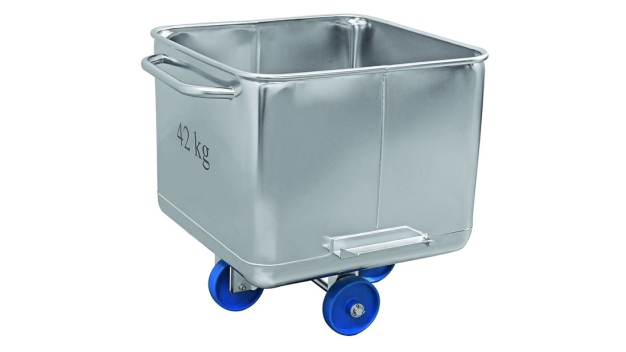
Feeding carts are part of the standard equipment in many companies within the meat and food industry as well as pharmaceuticals. Because their application varies depending on the use, the Höcker Group develops their feeding carts, like many other of their products made from high-quality stainless steel, with targeted modifications. Two examples are a reinforced cart for increased durability and one with a separate chassis to minimize hygiene risks during emptying.
"It is the direct contact with customers that inspires us to many new and further developments. After all, they deal with our products daily and often encounter potential improvements that can only be recognized in practice," explains Managing Director Benjamin Höcker. This was also the case in these two instances.
Reinforced feeding cart for increased robustness
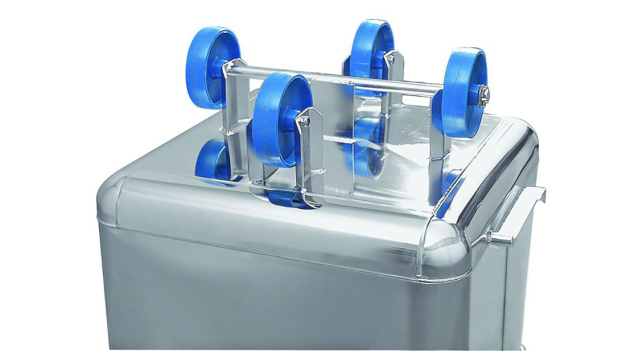
Depending on the use of a feeding cart, wear and damage can occur at different points. For example, in smaller operations without a drying system, carts are often turned upside down after cleaning to dry. Over time, the ground radius and flange edge can become worn through. "To prevent exactly that, all wear-prone parts on our reinforced feeding carts are modified to enhance robustness and thereby safety," explains Jörg Eekhoff from technical sales. In this case, this is reflected in massive flange edges and additional reinforcement plates on the ground radius. Generally, all Höcker feeding carts use lifting handles made from rolled steel. In the reinforced version, these are made from five-millimeter thick material.
An additional optimization concerns the wheel latches. These are subjected to sometimes greater lateral forces during maneuvering with four rigid wheels. While Höcker builds all feeding carts with three-millimeter-thick latches, the reinforced version is even one millimeter thicker and additionally more gusseted. As a solution for customers who frequently need to maneuver the carts around curves, there are also carts with special steering rollers.
Feeding carts with separate chassis
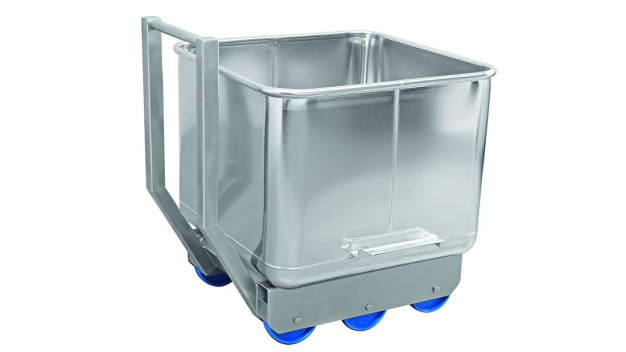
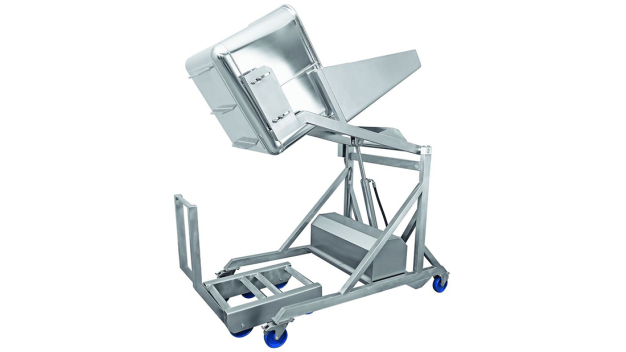
An additional optimization relates to the chassis. Background: During tipping, the wheels are located above the filling openings of the production machines. Dirt or, in the case of damaged wheels, even broken parts can enter the production. With carts that have a separate chassis, this hygiene risk is eliminated because only the container is tilted, while the wheels remain on the ground.
"Furthermore, we have positioned the push handle on the chassis instead of on the tub," reports Eekhoff. This allows the tub to be lowered and safely returned to the correct position. The employee is not at risk of injury. Thanks to this ergonomic placement of the handle at working height, strenuous bending is eliminated. Additionally, guides on the chassis and underneath the floor ensure automatic centering of the tub. For reduced noise during operation, the chassis can optionally be equipped with SilentDrive wheels.
Höcker GmbH
49134 Wallenhorst
Germany